
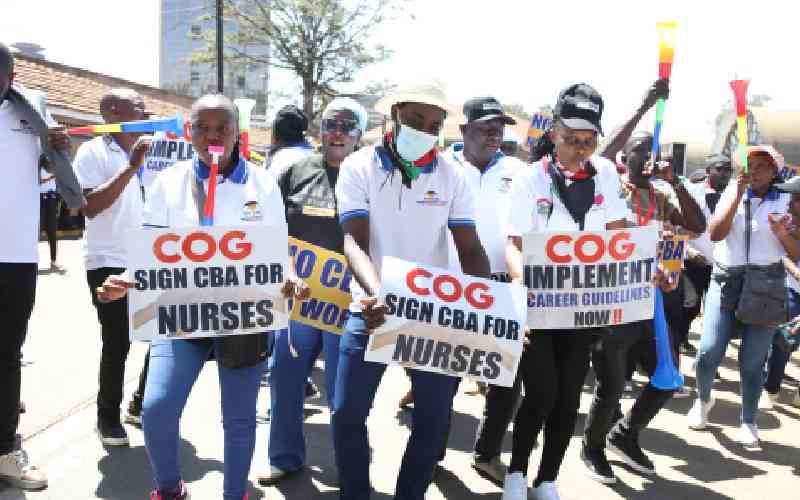
Kenya: Nurses Strike Return-to-Work Agreement Ends 43-Day Crisis
Summary
- A 43-day nurses' strike in Kenya's public health system concluded on September 9, 2026, with a signed return-to-work agreement.
- The industrial action had paralyzed healthcare services and resulted in the tragic deaths of 522 individuals.
- Seth Panyako, Secretary General of the Kenya National Union of Nurses and Midwives (KNUNM), signed the agreement at Delta House in Nairobi.
- The agreement formally ended the widespread suffering and loss of life caused by the prolonged absence of nursing care.
Resolution to a Protracted Strike
The resolution of this 43-day nurses' strike, culminating in a signed return-to-work agreement, carries significant implications for future labor relations within Kenya's public health sector.
A significant labor dispute in Kenya's public health sector concluded on September 9, 2026, with the signing of a return-to-work agreement. This pivotal accord, reached at Delta House in Nairobi, brought an end to a protracted nurses' strike that had severely impacted healthcare services across the nation. Seth Panyako, the Secretary General of the Kenya National Union of Nurses and Midwives (KNUNM), formally endorsed the agreement and subsequently addressed members of the press, signaling the cessation of industrial action.
For 43 consecutive days leading up to this resolution, the country's public health infrastructure had been rendered largely inoperative. The widespread withdrawal of nursing services created an unprecedented crisis, leaving countless patients without essential care and placing immense strain on the remaining healthcare resources.
The Profound Human Cost
The 43-day industrial action by nurses had devastating consequences for the Kenyan populace, manifesting as widespread suffering and a tragic loss of life. The paralysis of the public health system meant that critical medical services were unavailable to those in need, leading to severe health complications and preventable fatalities.
A stark indicator of the strike's severity was the reported death toll of 522 individuals. This figure underscores the profound and immediate impact that the absence of nursing care had on patient outcomes, highlighting the indispensable role nurses play in maintaining public health and saving lives. The period was characterized by immense pain and suffering experienced by patients and their families across the country.
Legal and Regulatory Context of the Agreement
The signing of the return-to-work agreement represents a formal and legally binding resolution to a significant public sector labor dispute. Such agreements are crucial instruments in employment law, defining the terms under which employees cease industrial action and resume their duties, often after negotiations addressing their grievances. The involvement of the KNUNM Secretary General, Seth Panyako, in signing the document at Delta House in Nairobi, signifies the union's official commitment to the terms stipulated.
This resolution falls within the broader context of collective bargaining, where employee representatives negotiate with employers—in this case, likely government health authorities—to settle disputes over working conditions, remuneration, or other employment-related matters. The successful conclusion of this agreement provides a framework for the future engagement between the union and the government, aiming to prevent similar disruptions to essential services.
Implications for Future Labor Relations
The resolution of this 43-day nurses' strike, culminating in a signed return-to-work agreement, carries significant implications for future labor relations within Kenya's public health sector. It establishes a precedent for how major medical labour disputes can be settled, emphasizing the role of formal agreements and negotiation in restoring essential services. The terms of this specific settlement will likely be scrutinized by legal professionals and union representatives alike, informing strategies for subsequent collective bargaining processes.
This settlement underscores the critical need for robust dispute resolution mechanisms in public service, particularly in sectors as vital as healthcare. The paralysis of the public health system and the tragic loss of 522 lives during the strike period highlight the severe consequences when such mechanisms fail or are not effectively utilized. The agreement's successful implementation will be key to rebuilding trust and ensuring stability in the provision of healthcare services across Kenya.
Practical Implications
This development signifies the resolution of a major public sector labour dispute, providing a precedent for future collective bargaining and return-to-work agreements in Kenya's healthcare sector. Lawyers advising unions or government bodies should analyze the terms of this agreement for implications on employment law, public service regulations, and dispute resolution mechanisms.
Source
Source: Original reporting via Standard
How does this affect you?
Get an AI analysis of this article grounded in your jurisdictions, practice areas, and any policy documents you've uploaded to Wansom.
Finish Reading the Full Story and the Expert Analysis.
Wansom is AI and can make mistakes.