
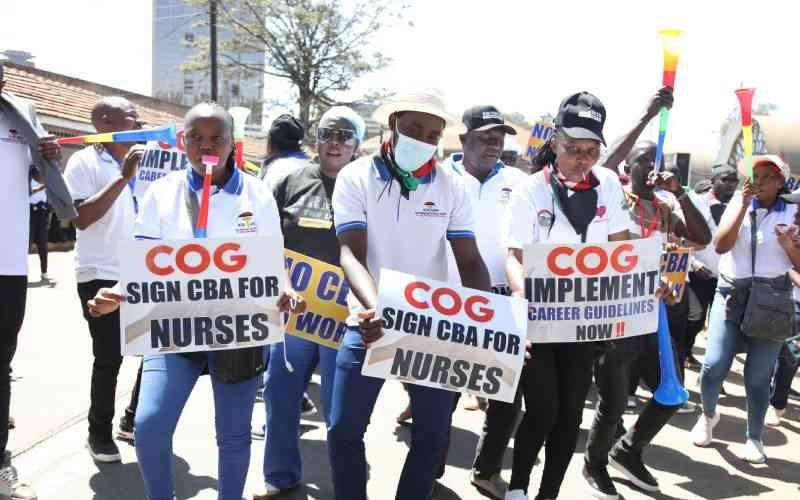
Kenya: Nurses End Strike, Sign Return-to-Work Formula
Summary
- Kenya's nurses ended a 43-day nationwide strike after signing a return-to-work formula with the Council of Governors.
- The agreement mandates a 45-day period to finalize negotiations on the 2017 Collective Bargaining Agreement and develop nursing career guidelines.
- Universal Health Coverage staff in all 47 counties will be employed on permanent and pensionable terms from July 1, 2026, at Salaries and Remuneration Commission-approved rates.
- The formula includes a non-victimisation clause for striking nurses and a resolution for 46 nurses dismissed by Kisii County in 2021.
- The National Government will cover gratuity obligations from two previous UHC contracts.
Resolution of the Kenya Nurses Strike
For legal and compliance teams advising Kenyan county governments and health sector employers, understanding the specifics of this return-to-work formula is paramount.
A protracted 43-day nationwide strike by Kenyan nurses has concluded following the signing of a comprehensive return-to-work formula between the Kenya National Union of Nurses and Midwives (KNUNM) and the Council of Governors. The industrial action, which commenced on July 29, had severely disrupted health services across the country, as nurses pressed for the implementation of a 2017 agreement, clear career progression guidelines, and improved employment terms for Universal Health Coverage (UHC) staff.
KNUNM Secretary General Seth Panyako officially announced the cessation of the strike on a Wednesday, instructing all nurses to report back to their duties immediately, with a strict 24-hour deadline for full resumption. This significant development marks a critical turning point in the ongoing dialogue surrounding public sector labour disputes in Kenya's health sector, providing a framework for addressing long-standing grievances.
Key Provisions of the Return-to-Work Formula
The newly agreed-upon Kenya nurses strike return-to-work formula outlines several crucial commitments from both parties. A central element is the establishment of a 45-day window for the conclusion of negotiations concerning the 2017 Collective Bargaining Agreement (CBA), a key demand that fueled the strike. Concurrently, the Council of Governors has pledged to facilitate the development of a standardized model career guideline for nursing personnel within the same 45-day timeframe.
Regarding the employment of UHC staff, the KNUNM Council of Governors agreement stipulates that all 47 county governments will transition these workers to permanent and pensionable terms starting July 1, 2026. These new Kenya UHC staff employment terms will be compensated at rates approved by the Salaries and Remuneration Commission. Furthermore, the National Government has committed to fulfilling gratuity obligations accrued from the two preceding UHC contracts. Crucially, the agreement includes a non-victimisation clause, ensuring that nurses who participated in the strike will not face repercussions. The formula also provides for the resolution of the specific case involving 46 nurses who were dismissed by the Kisii County Government in 2021.
Legal and Compliance Considerations for Employers
For legal and compliance teams advising Kenyan county governments and health sector employers, understanding the specifics of this return-to-work formula is paramount. The non-victimisation clause represents a critical legal obligation, requiring strict adherence to prevent retaliatory actions against striking nurses. The 45-day negotiation windows for both the Kenya nurses 2017 CBA negotiations and the development of career guidelines impose immediate deadlines that demand proactive engagement and resource allocation from employers.
Looking ahead, the commitment to employ UHC staff on permanent and pensionable terms from July 1, 2026, at SRC-approved rates, along with the National Government's responsibility for past gratuities, necessitates careful long-term financial and human resource planning. The resolution of the Kisii County nurses dismissal case further underscores the need for robust internal dispute resolution mechanisms and adherence to employment law. Council of Governors chairman Ahmed Abdullahi emphasized that the agreement was reached through sustained negotiations, urging both sides to prioritize dialogue to prevent future escalations into industrial action, a sentiment echoed by KNUNM Secretary General Seth Panyako, who affirmed the union's openness to dialogue and prior attempts at alternative dispute resolution.
Practical Implications
Legal and compliance teams advising Kenyan county governments and health sector employers must understand the terms of this return-to-work formula, particularly regarding non-victimisation, the 45-day negotiation windows for the 2017 CBA and career guidelines, and the future commitment to permanent UHC staff employment from July 2026.
Source
How does this affect you?
Get an AI analysis of this article grounded in your jurisdictions, practice areas, and any policy documents you've uploaded to Wansom.
Finish Reading the Full Story and the Expert Analysis.
Get the latest legal & regulatory intelligence in Kenya
Wansom is AI and can make mistakes.