
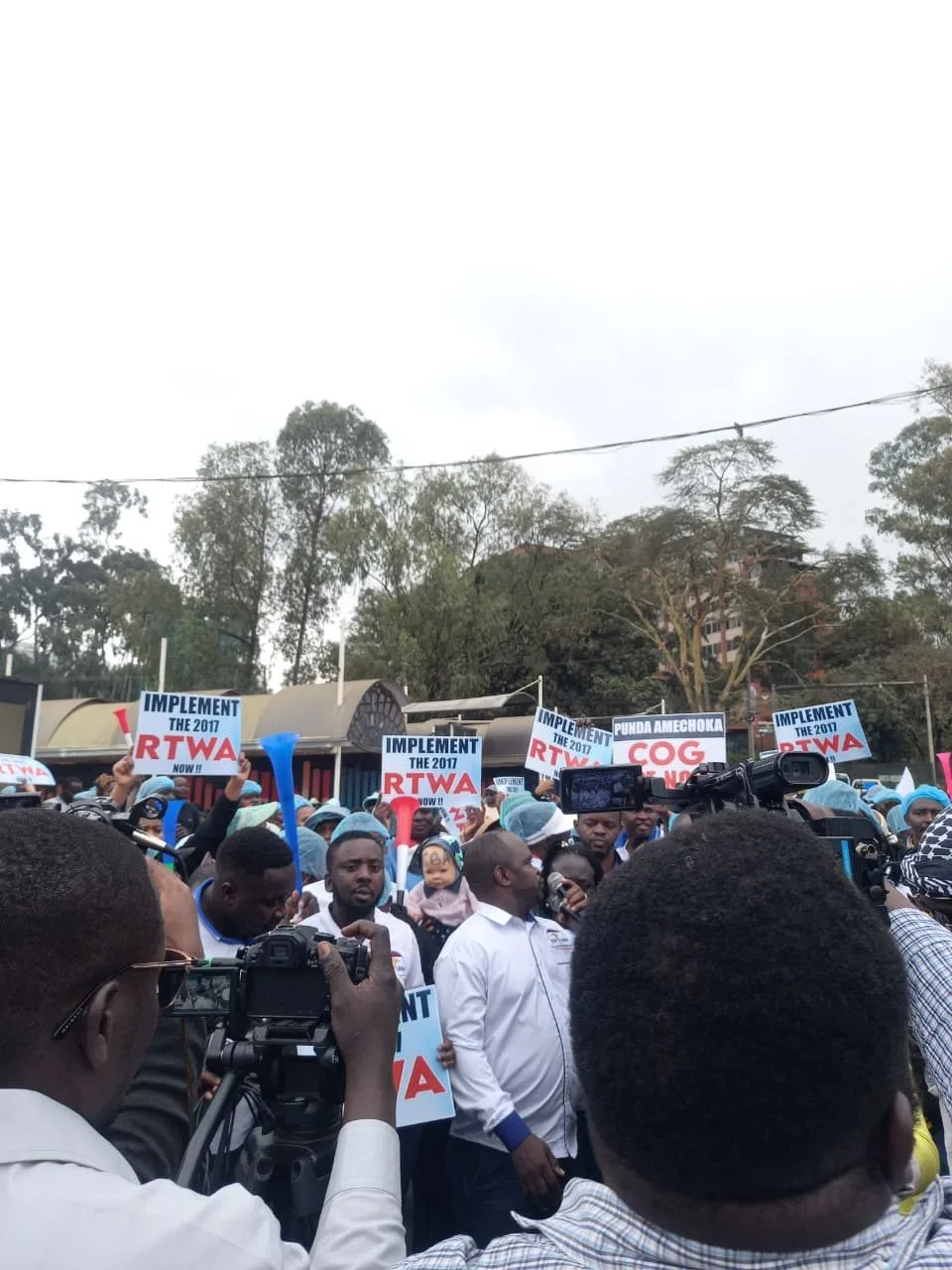
Kenya Nurses Strike: 2017 CBA Implementation Demanded
Summary
- Nurses in Kenya are on strike, demanding the implementation of the 2017 Collective Bargaining Agreement (CBA) and resolution of other grievances.
- The Kenya National Union of Nurses and Midwives (KNUNM) insists members will not return to work until commitments, including salary arrears and career progression, are honored.
- A 2018 Employment and Labour Relations Court record confirmed government agreement to specific nursing service allowances, which the union states remain largely unimplemented nearly a decade later.
- The Council of Governors claims the 2017 CBA was signed under duress, a position disputed by the union which asserts its validity.
- Beyond pay, nurses cite delayed promotions, poor working conditions, and staffing shortages as critical issues impacting morale and patient care.
Nationwide Healthcare Disruption Amidst Nurses' Strike
This Council of Governors CBA duress claim introduces a significant legal dimension to the ongoing dispute.
Public health services across Kenya are currently experiencing significant strain and disruption due to an ongoing nationwide strike by nurses. Thousands of healthcare professionals recently staged demonstrations in Nairobi, underscoring their urgent demand for the government and county administrations to honor long-standing labor agreements. The core of their grievances revolves around the non-implementation of the 2017 Collective Bargaining Agreement (CBA), alongside calls for improved remuneration, adequate staffing levels, and better working conditions.
The Kenya National Union of Nurses and Midwives (KNUNM) has firmly stated that its members will not resume duties until all outstanding commitments are fully addressed. Key among the KNUNM strike demands are the full implementation of the 2017 Collective Bargaining Agreement, the settlement of accumulated salary arrears, an increase in various allowances, and clear pathways for career progression. Boaz Bachari, an official with the KNUNM, confirmed that discussions between the union and government entities have been continuous. However, nurses insist that these negotiations must culminate in concrete, signed, and fully implemented agreements, rather than mere promises.
The Unimplemented 2017 Collective Bargaining Agreement
At the heart of the current industrial action lies the 2017 Collective Bargaining Agreement nurses Kenya. This agreement, which aimed to improve the welfare and professional standing of nurses, has been a central point of contention due to its non-implementation. Records from the Employment and Labour Relations Court in 2018 confirm that the government had previously consented to specific terms, including a monthly nursing service allowance. This allowance was set at KES 20,000 for nurses in job groups G through L, and KES 15,000 for those in job group M and above, with the payment structured to occur in two distinct phases.
Despite this judicial acknowledgment, the Kenya National Union of Nurses and Midwives asserts that critical provisions of the 2017 CBA remain unfulfilled, nearly a decade after the court record. This prolonged delay has fueled the current unrest. The Council of Governors (CoG), however, has presented a counter-argument regarding the validity of the agreement. Ahmed Abdullahi, the CoG chairman and Wajir Governor, recently claimed that the 2017 agreement was signed under duress, challenging its enforceability. Conversely, the union vehemently maintains that the agreement is legally binding and must be honored without further delay. This Council of Governors CBA duress claim introduces a significant legal dimension to the ongoing dispute.
Impact on Morale and Healthcare Delivery
The ramifications of the protracted dispute extend far beyond financial compensation, deeply affecting the morale and professional development of nurses. Beyond salary concerns, significant delays in promotions, re-designation processes, and the implementation of agreed-upon career guidelines have left many qualified nurses stagnant in their roles for years, despite acquiring additional qualifications. This professional stagnation, coupled with poor working conditions and persistent staffing pressures, severely impedes their ability to provide consistent and effective patient care.
KNUNM official Boaz Bachari acknowledged the difficult situation faced by patients due to the strike but emphasized that improved working conditions are fundamental for healthcare workers to deliver safe and high-quality services. While the government and county authorities continue to engage with the union, with recent discussions also touching upon the absorption of Universal Health Coverage (UHC) workers into permanent and pensionable employment, nurses are clear: they demand tangible action. They are resolute that signed agreements must be implemented, outstanding payments addressed, and their professional concerns resolved before they consider returning to work, highlighting the critical need for the Kenya nurses strike 2017 CBA implementation.
Practical Implications
This prolonged dispute highlights critical issues regarding the enforceability and non-implementation of Collective Bargaining Agreements (CBAs) in Kenya's public sector. Lawyers advising government bodies, county administrations, or labour unions should closely monitor the legal arguments, particularly the 'duress' claim by the Council of Governors, and the eventual resolution, as it will set precedents for future public sector labour negotiations and the legal standing of CBAs.
Source
How does this affect you?
Get an AI analysis of this article grounded in your jurisdictions, practice areas, and any policy documents you've uploaded to Wansom.
Finish Reading the Full Story and the Expert Analysis.
Wansom is AI and can make mistakes.