
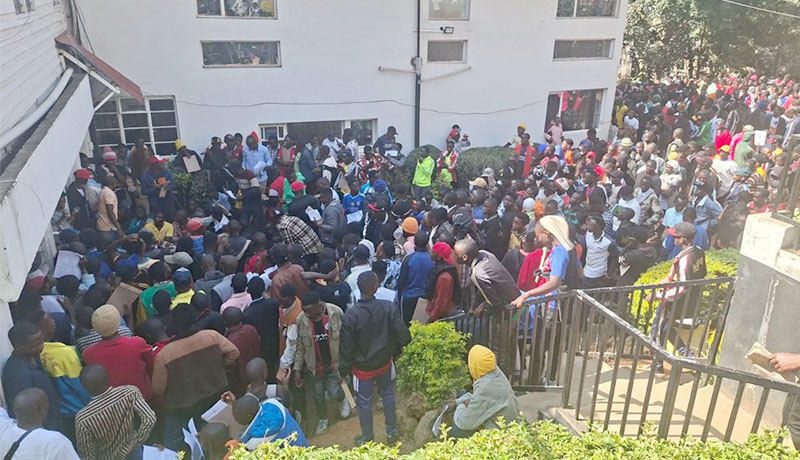
Kenya: Foreign Informal Sector Crackdown Impacts Burundian Nationals
Summary
- Kenyan authorities have initiated a firm crackdown targeting foreign nationals engaged in small trades within the informal sector.
- This policy has resulted in significant economic losses for numerous Burundian nationals residing in Kenya.
- The new measures have also compelled several Burundian citizens to return to their home country.
- Burundian civil society organizations have publicly raised an alarm over the impact of these actions.
- The crackdown has generated considerable bitterness among foreigners who had established new lives in Kenya, the leading economy of the East African Community.
Overview of the Crackdown
The assertive stance taken by Kenyan authorities has left a profound sense of bitterness among foreign nationals who had sought to establish new lives within the country.
Kenyan authorities have recently adopted a stringent approach towards foreign nationals engaged in small-scale commercial activities, initiating what observers describe as a significant Kenya foreign informal sector crackdown. This assertive policy, characterized by a marked 'firmness,' specifically targets individuals from other nations who operate within the informal economy, particularly those involved in various small trades and businesses. As the preeminent economic power within the East African Community (EAC), Kenya's actions in this domain carry substantial regional implications, influencing perceptions and policies across the bloc.
The intensified scrutiny and new measures implemented by the Kenyan government have had immediate and tangible consequences for many foreign residents. Specifically, numerous Burundian nationals have reported experiencing significant economic losses as a direct result of these updated regulations and enforcement efforts. These financial setbacks represent a severe disruption to their livelihoods and the stability they had sought to establish in Kenya.
Beyond the immediate financial impact, the regulatory changes have also compelled several Burundian citizens to accelerate their departure from Kenya and return to their home country. This involuntary repatriation underscores the profound disruption caused by the crackdown, forcing individuals to abandon their aspirations and established lives in Kenya. The overall sentiment among those affected is one of deep disappointment and bitterness, particularly for those who had invested time and effort into building a new life within the country's borders.
Human Impact and Regional Concerns
The robust stance adopted by Kenyan authorities has generated considerable resentment among the foreign community, especially those who had chosen Kenya as a place to forge new beginnings and establish a stable future. For many, the sudden shift in policy and its rigorous enforcement have dismantled years of effort and investment, leading to a pervasive sense of disillusionment. The economic losses sustained by various Burundian nationals are not merely financial figures but represent the erosion of their ability to sustain themselves and their families, highlighting the human cost of the crackdown.
The accelerated return of Burundian nationals to their home country is a particularly stark consequence, indicating that the environment in Kenya has become untenable for their continued stay and economic activity. This forced migration back to Burundi disrupts established communities and networks, creating further instability for those affected. The situation underscores the vulnerability of foreign informal sector workers to policy shifts in host countries, even within a regional economic bloc like the EAC.
In response to these developments, Burundian civil society organizations have publicly voiced their serious concerns, effectively raising an alarm regarding the welfare of their compatriots. Their intervention signals a broader recognition of the adverse effects of Kenya's policies on regional citizens and calls attention to the humanitarian and economic challenges faced by those caught in the regulatory crosshairs. This collective outcry from civil society highlights the far-reaching implications of the crackdown beyond individual economic hardship.
Broader Implications
The firm measures enacted by Kenyan authorities against foreign informal sector workers have created a challenging environment for individuals who had sought to build new lives within the nation. The bitterness expressed by these foreign nationals reflects a significant setback to their personal and professional aspirations, undermining the sense of security and opportunity they once perceived in Kenya. This sentiment is particularly acute given Kenya's status as the leading economy in the East African Community, a position that often attracts individuals seeking economic advancement from neighboring states.
The specific plight of Burundian nationals, marked by substantial economic losses and an accelerated return to their home country, serves as a poignant example of the direct human impact of these policies. Such outcomes not only affect the individuals involved but can also strain diplomatic relations and regional cooperation, especially when civil society groups become involved in advocating for their citizens. The alarm raised by Burundian civil society underscores the gravity of the situation and the need for attention to the welfare of foreign workers.
Ultimately, the crackdown's effects extend beyond individual cases, potentially influencing regional migration patterns and the perception of economic opportunities within the EAC. The disruption to livelihoods and the forced displacement of foreign workers, as evidenced by the Burundian experience, highlight the complex interplay between national immigration policies and regional economic integration. The long-term consequences of such assertive measures on regional mobility and economic interdependence remain a significant concern for all stakeholders.
Source
Source: Original reporting via Le Monde
How does this affect you?
Get an AI analysis of this article grounded in your jurisdictions, practice areas, and any policy documents you've uploaded to Wansom.
Finish Reading the Full Story and the Expert Analysis.
Get the latest legal & regulatory intelligence in Burundi
Wansom is AI and can make mistakes.