
Kenya: Education System AI Readiness Challenges From Rapid AI Adoption
Summary
- Generative AI is already used by Kenyan students for learning tasks and by teachers for instructional purposes, prompting a re-evaluation of teaching and assessment.
- A 2025 study of 13 Kenyan universities found educators recognize AI's potential but are concerned about academic dishonesty, data privacy, and over-reliance.
- Kenya is actively expanding digital access in schools through laptop and smart board distribution, alongside internet connectivity initiatives, though significant disparities persist.
- Generative AI complicates traditional assessment methods, necessitating new approaches that align with the 2025 National Qualifications Framework regulations and focus on genuine understanding.
- UNESCO warns that technology should complement, not replace, teachers, a caution particularly pertinent given Kenya's uneven digital infrastructure and educator training.
The AI Influx in Kenyan Education
The challenge for educators has shifted from merely preventing students from using AI to designing assessment methods that compel them to demonstrate genuine understanding and critical thinking.
Artificial intelligence is rapidly transforming learning environments across Kenya, with both students and educators actively integrating generative AI tools into their daily routines. Students are leveraging these advanced technologies to explain complex concepts, prepare presentations, and efficiently organize assignments. Concurrently, teachers are experimenting with AI to develop comprehensive lesson plans, generate quizzes, and adapt explanations to suit diverse learning needs.
This swift adoption compels educational institutions to undertake a fundamental re-evaluation of their pedagogical strategies, scrutinizing not only what content they deliver but also how they deliver it, and critically, how they accurately measure student learning outcomes. The pervasive presence of generative AI highlights significant Kenya education system AI readiness challenges that institutions must address.
A 2025 study, which gathered insights from 137 educators across thirteen Kenyan universities, underscored a dual perspective on generative AI. While lecturers acknowledged the technology's substantial potential, identifying its utility in areas such as literature searches, summarizing academic material, preparing teaching resources, and generating ideas, they also voiced considerable concerns. These included worries about academic dishonesty, data privacy, the accuracy of AI-generated content, and the risk of over-reliance on the technology.
Bridging the Digital Divide
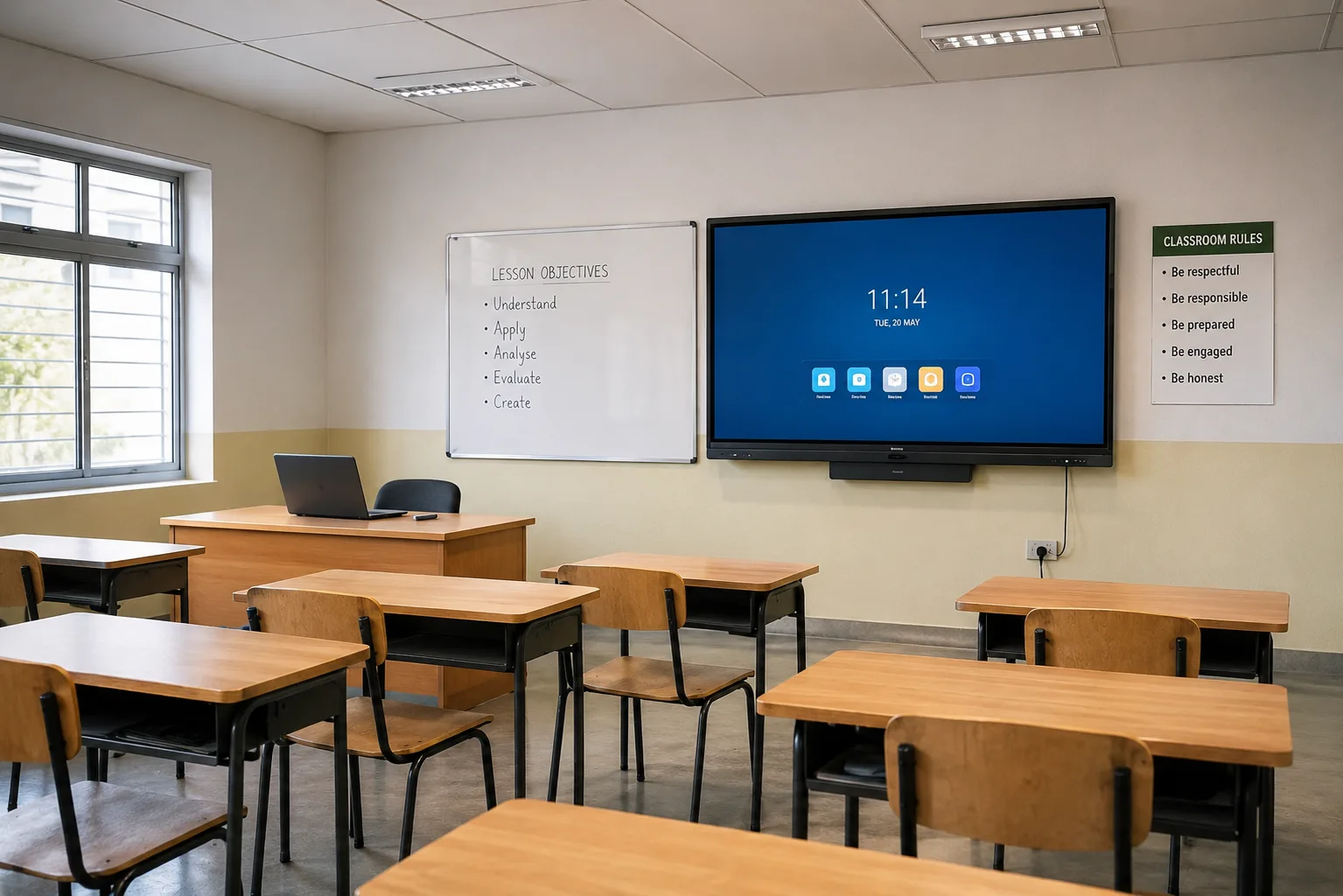
The ongoing integration of generative AI Kenyan classrooms is unfolding amidst concerted national efforts to expand digital access throughout the country's educational infrastructure. In July, the Ministry of Education announced a significant initiative under the Kenya Digital Economy Acceleration Project, involving the distribution of 10,382 laptops and an equal number of interactive smart boards to Junior Schools across all 47 counties. This rollout was preceded by comprehensive ICT integration training for more than 62,000 teachers.
Further bolstering connectivity, a UNICEF-supported program aimed to provide reliable internet access to 1,000 public primary schools. By December 2025, this program had successfully connected 363 schools, directly benefiting over 277,000 learners. Additionally, more than 4,400 teachers had commenced integrating digital tools into their classroom instruction. Despite these advancements, a notable disparity persists in the availability of devices, consistent connectivity, and adequately trained digital educators, raising crucial questions about equitable access to AI tools and the preparedness of teachers to utilize them responsibly.
Rethinking Assessment in the AI Era
Perhaps the most profound impact of generative AI on the Kenya education system lies in its disruption of traditional assessment methods. For decades, academic institutions have relied on established practices such as essays, take-home assignments, research projects, and examinations to gauge student knowledge. However, generative AI now enables learners to produce essays, summarize books, prepare presentations, or receive assistance with mathematical problems within seconds, significantly complicating the validity of these long-standing evaluation models.
The fundamental challenge for educators has therefore shifted from merely preventing students from using AI to designing assessment methods that compel them to demonstrate genuine understanding and critical thinking. A paper published in the Journal of the Kenya National Commission for UNESCO explored the potential of generative AI in developing examination test items, noting its capacity to generate a large volume of questions while still requiring subject-matter experts to ensure quality and appropriate cognitive levels. This aligns with Kenya's 2025 National Qualifications Framework regulations, which mandate that assessment methods be guided by expected learning outcomes and Bloom's Taxonomy, acknowledging diverse approaches to measuring learning achievement. Addressing academic integrity AI Kenya universities is paramount, requiring institutions to adapt their policies and assessment frameworks to this new reality.
This evolving landscape suggests a need for greater emphasis on assessment methods AI Kenyan schools where students explain their reasoning, defend conclusions, demonstrate practical skills, and apply knowledge to unfamiliar situations, rather than simply abandoning traditional examinations. This approach aims to foster deeper learning and critical engagement in an AI-augmented educational environment.
Navigating the Future of Learning
The integration of AI into education necessitates a careful and balanced approach, as underscored by UNESCO Director-General Khaled El-Enany. He cautioned that technology should serve as a complement to human educators, rather than a replacement. El-Enany explicitly stated that "Digital technology in schools should not be an end in itself, but a means to an end," further asserting that "no screen can replace a teacher." This warning holds particular relevance for Kenya, given the uneven distribution of devices, internet access, and teachers trained in digital competencies.
The ongoing debate highlights the imperative for educational institutions to proactively address the challenges and opportunities presented by generative AI. Some Kenyan universities are already taking steps to build capacity, with KCA University's Centre for Teaching and Learning Excellence hosting a workshop in February 2025. This event focused on training educators in the responsible use of generative AI in both instruction and research, demonstrating a proactive approach to the data privacy AI education Kenya concerns and the broader implications for the Kenya National Qualifications Framework AI.
Practical Implications
Lawyers and compliance officers advising Kenyan educational institutions should proactively review and update academic integrity policies, data protection protocols, and assessment frameworks to address the challenges and opportunities presented by generative AI, ensuring compliance with existing regulations like the National Qualifications Framework and mitigating risks related to academic dishonesty and data privacy.
Source
How does this affect you?
Get an AI analysis of this article grounded in your jurisdictions, practice areas, and any policy documents you've uploaded to Wansom.
Finish this article free. Just your email for instant unlock.
Wansom is AI and can make mistakes.