
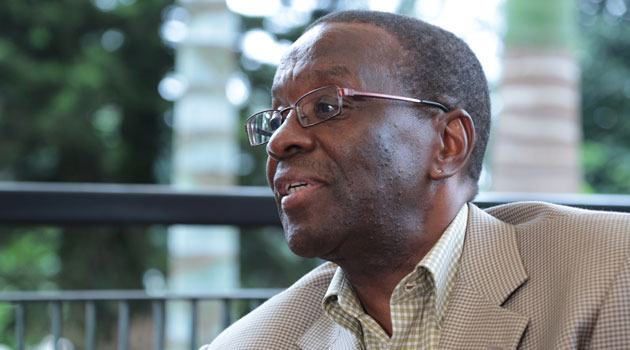
Willy Mutunga: Shujaa Wa Katiba Award Snubbed At Katiba@16 Event
Summary
- Former Chief Justice Willy Mutunga declined to attend the Katiba@16 celebrations where he was to receive the Shujaa wa Katiba Award and be admitted to the Roll of National Heroes.
- His absence meant he did not personally accept the recognition from President William Ruto during the event, which marked 16 years since the 2010 Constitution's promulgation.
- Mutunga, who served as Kenya's first Chief Justice from 2011 to 2016, is a prominent advocate for constitutionalism and the implementation of the 2010 Constitution.
- The annual Katiba Day, observed on August 27, commemorates the Constitution, which introduced devolution, an expanded Bill of Rights, and stronger checks and balances.
- Mutunga's decision adds a significant political and constitutional dimension to the celebrations, reflecting ongoing discourse on adherence to the 2010 Constitution.
Former CJ Declines National Honor
His absence from the event, however, introduced a notable political and constitutional dimension to the commemoration, particularly given his long-standing and vocal advocacy for the robust protection and full implementation of the nation's foundational legal document.
Former Chief Justice Willy Mutunga chose not to attend the recent Katiba@16 celebrations, an event where President William Ruto was scheduled to bestow upon him the Shujaa wa Katiba Award and induct him into the esteemed Roll of National Heroes. This decision meant that Mutunga did not personally receive the recognition from President Ruto during the proceedings. The celebrations, held on August 27, marked the sixteenth anniversary of the promulgation of Kenya's 2010 Constitution.
Mutunga was among several distinguished individuals recognized for their contributions to Kenya's constitutional reform journey. His absence from the event, however, introduced a notable political and constitutional dimension to the commemoration, particularly given his long-standing and vocal advocacy for the robust protection and full implementation of the nation's foundational legal document. The Katiba@16 gathering brought together a diverse group of participants, including senior government officials, constitutional experts, political leaders, and various other stakeholders, all convened to reflect on the progress achieved since the Constitution's enactment.
Constitutional Legacy and Commemoration
The annual observance of Katiba Day on August 27 serves as a crucial moment to commemorate the 2010 Constitution's promulgation, a date President Ruto officially designated as Katiba Day in 2025. President Ruto characterized the Constitution as a pivotal milestone in Kenya's democratic evolution, emphasizing its role in shaping the nation's governance. The yearly commemoration is designed to foster greater constitutional awareness, encourage civic engagement among citizens, and prompt reflection on Kenya's journey in governance.
The 2010 Constitution itself ushered in profound transformations to Kenya's governance framework. These significant changes included the introduction of devolution, a considerably expanded Bill of Rights, and the establishment of more robust checks and balances among state institutions. Dr. Mutunga played a central role in this constitutional era, having served as Kenya's inaugural Chief Justice and President of the Supreme Court from 2011 to 2016, a period during which he was a prominent advocate for constitutionalism and the diligent implementation of the new legal order.
Broader Discourse on Adherence
Dr. Mutunga has consistently been a leading voice on the principles of constitutionalism and the practical application of the 2010 Constitution. He has previously articulated extensive concerns regarding the challenges confronting Kenya's constitutional order, frequently stressing the imperative for state institutions and political leaders alike to uphold and respect the core principles enshrined within the 2010 Constitution. His decision to decline the Shujaa wa Katiba award therefore carries significant weight within this ongoing national discourse.
In parallel, President Ruto has actively encouraged Kenyans to leverage their constitutional freedoms to scrutinize public institutions and demand accountability from them, while simultaneously urging the protection of these institutions from destruction. The President has affirmed that citizens should feel empowered to criticize both the government and public institutions, but he has also underscored the collective responsibility to safeguard the constitutional order and the institutions established to serve the Kenyan populace. This interplay of perspectives highlights the dynamic and often complex public conversation surrounding the interpretation and adherence to Kenya's supreme law.
Practical Implications
While this event does not introduce new legal obligations or precedents, it highlights the ongoing political and public discourse surrounding the interpretation and adherence to Kenya's 2010 Constitution. Legal professionals should remain aware of such high-profile discussions as they reflect the broader constitutional environment and potential areas of future legal or policy debate.
Source
How does this affect you?
Get an AI analysis of this article grounded in your jurisdictions, practice areas, and any policy documents you've uploaded to Wansom.
Finish this article free. Just your email for instant unlock.
Wansom is AI and can make mistakes.