
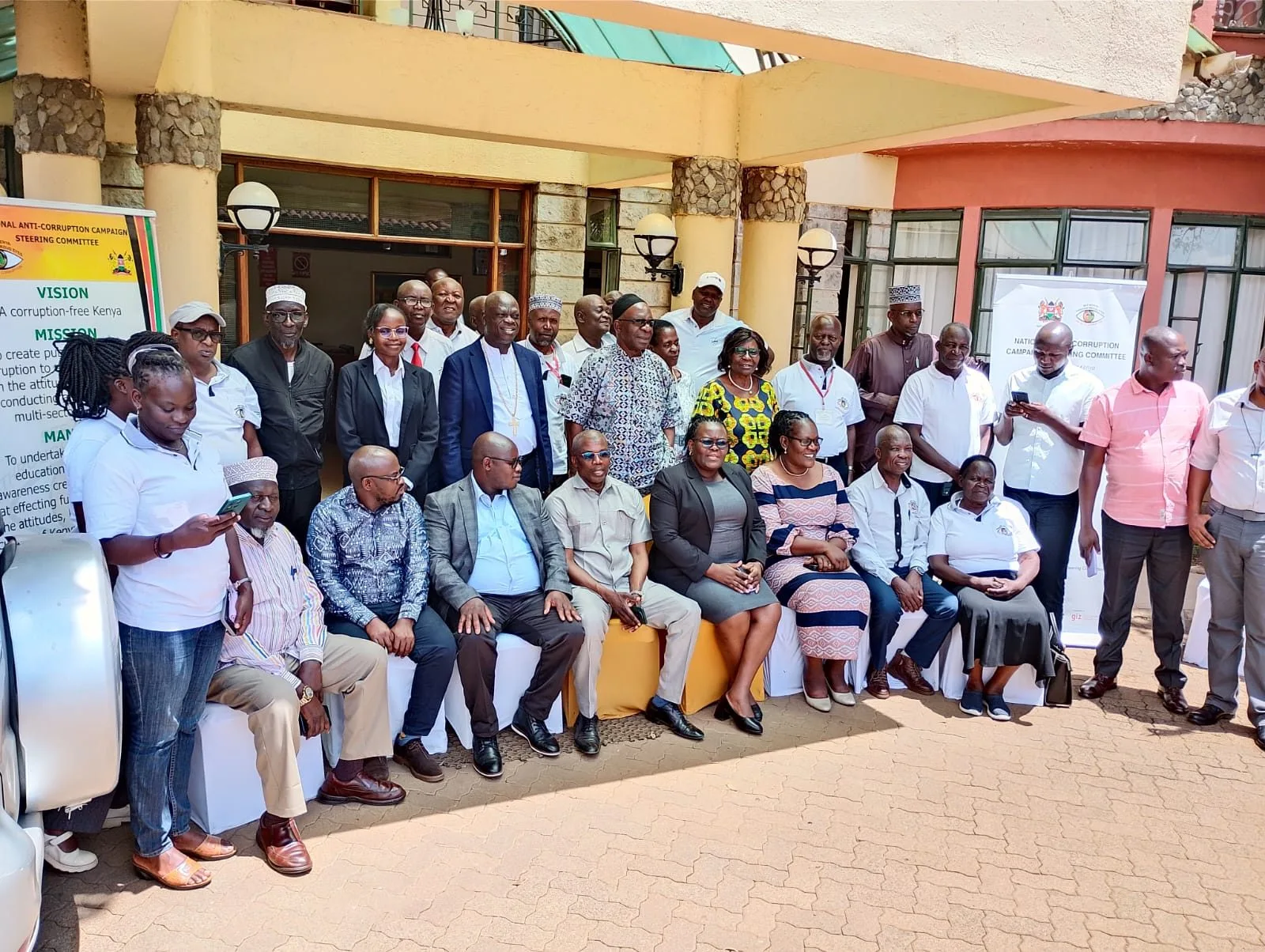
Kenya: Anti-Corruption Committees Social Audit Training Boosts Oversight
Summary
- A five-day training in Kisumu equipped County Anti-Corruption Civilian Oversight Committees from Kisumu, Siaya, and Busia counties with social audit skills.
- The initiative is part of a government effort, led by NACCSC, to enhance citizen participation in monitoring public projects and combating grassroots corruption.
- These committees, established in all 47 counties with members from local communities, will conduct social audits of both national and county projects to ensure intended benefits are delivered.
- The training is part of a larger governance program implemented by the Office of the Attorney General and State Department for Justice, Human Rights and Constitutional Affairs, in partnership with GIZ.
- The program aims to strengthen public accountability, gather citizen views on corruption, and will continue with similar engagements across Kenya.
New Push for Citizen Oversight in Kenya
By empowering communities with a direct role in monitoring government projects and raising concerns about the utilization of public resources, the program seeks to foster greater transparency and integrity.
A recent five-day training initiative in Kisumu has equipped members of County Anti-Corruption Civilian Oversight Committees from Kisumu, Siaya, and Busia counties with enhanced skills for conducting social audits. This specialized training forms a crucial part of the Kenyan government's intensified efforts to involve citizens directly in the monitoring of public projects, aiming to bolster accountability and combat corruption at the grassroots level. The program provided participants with a platform to exchange insights, grasp recent changes in legal and policy frameworks, and engage in practical social audits of ongoing government projects.
Evalyne Rono, the Acting Director of the National Anti-Corruption Campaign Steering Committee (NACCSC), emphasized that this capacity-building effort for civilian oversight committees is designed to empower citizens to scrutinize projects funded by public resources. These committees are expected to play a dual role: communicating the positive impact of government investments while simultaneously documenting any concerns raised by local communities regarding projects implemented in their areas. The ultimate goal is to ascertain whether both national and county government projects are delivering their intended benefits to the local populace.
Structuring Grassroots Accountability
The civilian oversight framework, which includes these anti-corruption committees, has been established across all 47 counties in Kenya. Committee members are strategically drawn from local communities and sub-counties, positioning them uniquely to capture the concerns of residents directly impacted by government initiatives. According to Rono, this community-based composition ensures that the committees are comprised of ordinary Kenyans who live among the populace, enabling them to effectively hear and represent the voices of the citizens.
Kisumu County Commissioner Ramadhan Mwabudzo underscored the necessity of close collaboration between the government and its citizens to effectively combat corruption. He highlighted that civic education and community participation are vital components of this fight. Mwabudzo noted that the training would provide committee members with the practical expertise needed to conduct social audits, and they would then disseminate this knowledge to other residents within their respective counties. He further added that Kenyans have consistently called for a corruption-free nation, recognizing the link between corruption and challenges affecting public services and development.
Broader Program and Future Outlook
This particular training session represents a key component of the second phase of a broader governance program. This extensive initiative is being implemented jointly by the Office of the Attorney General and the State Department for Justice, Human Rights and Constitutional Affairs, in collaboration with the German development agency GIZ. The program is slated to continue with similar engagements across other regions of the country, bringing together civilian oversight committees from various counties for further training, experience sharing, and practical social audits.
The overarching aim of this initiative is to significantly strengthen citizen participation in public accountability. By empowering communities with a direct role in monitoring government projects and raising concerns about the utilization of public resources, the program seeks to foster greater transparency and integrity. Furthermore, the program is expected to contribute valuable data to research on the prevalence of corruption in Kenya, by systematically collecting views from both citizens and the oversight committees on potential measures to enhance the fight against this pervasive vice.
Practical Implications
Companies and individuals involved in Kenyan government projects should anticipate heightened public scrutiny and potential challenges arising from social audits conducted by these newly trained civilian oversight committees. This initiative necessitates robust compliance frameworks and transparent project execution to mitigate risks of public complaints or legal issues related to alleged corruption or mismanagement.
Source
Source: Original reporting via KNA
How does this affect you?
Get an AI analysis of this article grounded in your jurisdictions, practice areas, and any policy documents you've uploaded to Wansom.
Finish Reading the Full Story and the Expert Analysis.
Get the latest legal & regulatory intelligence in Kenya
Wansom is AI and can make mistakes.