
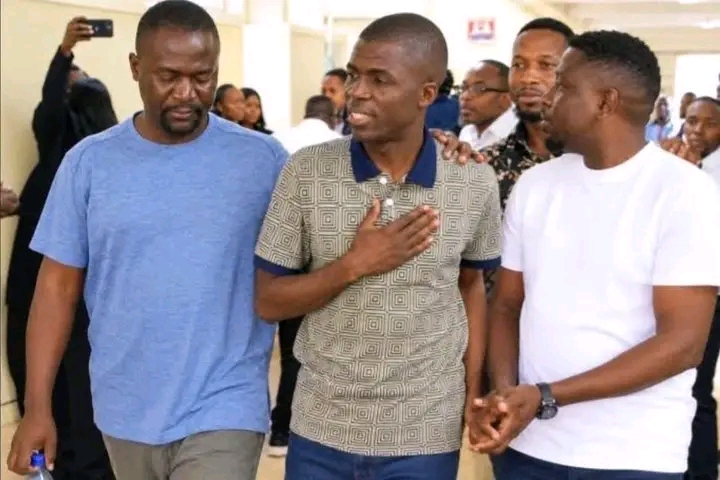
Lusaka High Court: Kelvin Kaunda Denies Lima Election Violence
Summary
- Kelvin Kaunda, MP for Lima Constituency, denied widespread violence during the August 13, 2026 general election in his testimony to the Lusaka High Court.
- Kaunda, 43, asserted that any disturbances were isolated incidents, not pervasive electoral misconduct.
- His testimony is part of an ongoing election petition challenging the results of the Lima Constituency election.
- The case is significant for establishing the legal interpretation of 'widespread violence' in Zambian electoral law.
- The court's decision will set a precedent for future election challenges regarding evidentiary standards for electoral violence.
Election Violence Claims Disputed in Lusaka High Court
The court's ruling on whether the incidents described by Mr. Kaunda qualify as 'isolated' or, conversely, as 'widespread violence' will provide critical guidance on the evidentiary standards required to nullify election results.
Kelvin Kaunda, the current Member of Parliament for Lima Constituency, recently appeared before the Lusaka High Court to address allegations of widespread violence during the August 13, 2026 general election. Representing the National Reconciliation Party for Unity and Prosperity (NRPUP), Mr. Kaunda, who is 43 years old, firmly refuted claims that the electoral process in his constituency was marred by extensive disturbances. His testimony forms a critical part of an ongoing election petition challenging the results of the Lima Constituency election.
Legal Framework for Election Petitions in Zambia
Election petitions in Zambia provide a crucial mechanism for challenging the validity of electoral outcomes, ensuring accountability and adherence to democratic principles. When a candidate or party contests an election result, they typically present evidence to the High Court, alleging irregularities, malpractice, or, as in this Kelvin Kaunda Lima election petition, the impact of violence. The court's role is to meticulously examine the presented facts and determine whether the alleged issues were significant enough to have materially affected the election's outcome, potentially leading to a nullification of results.
The concept of 'widespread violence' is particularly significant in Zambian electoral law. For an election to be overturned on grounds of violence, petitioners generally need to demonstrate that the disturbances were not merely isolated incidents but were pervasive enough to intimidate voters, disrupt the voting process, or otherwise compromise the integrity of the election across a substantial area or population. The Lusaka High Court election challenge involving Mr. Kaunda will therefore hinge on how the court interprets the scope and impact of the alleged violence, setting a precedent for future cases of Zambia election petition violence.
Implications for Future Electoral Challenges
The outcome of this particular election petition carries substantial weight for the future of electoral jurisprudence in Zambia. The court's ruling on whether the incidents described by Mr. Kaunda qualify as 'isolated' or, conversely, as 'widespread violence' will provide critical guidance on the evidentiary standards required to nullify election results. This interpretation will directly influence how future challenges to election outcomes, including those potentially arising from the August 2026 general election Zambia, are approached and adjudicated.
For legal practitioners and political candidates, the judgment in the NRPUP Lima Constituency election case will offer valuable insights into the judicial interpretation of electoral misconduct. It will clarify the burden of proof for those alleging violence and the criteria the courts will apply to distinguish between minor disruptions and systemic issues that undermine the democratic process. This case underscores the importance of precise legal definitions in maintaining the integrity of Zambia's electoral system.
Practical Implications
Lawyers involved in electoral law or advising political candidates in Zambia should monitor this case for insights into the evidentiary standards and judicial interpretation of 'widespread violence' in election petitions, which could set precedents for future challenges to election results.
Source
How does this affect you?
Get an AI analysis of this article grounded in your jurisdictions, practice areas, and any policy documents you've uploaded to Wansom.
Finish Reading the Full Story and the Expert Analysis.
Wansom is AI and can make mistakes.