
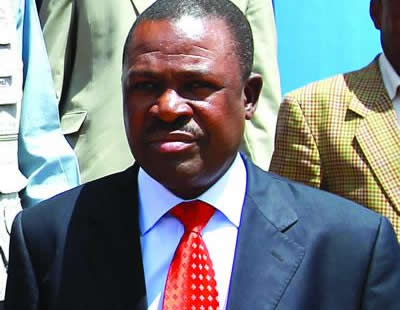
Kabimba Warning: Mundubile Treason Case Risks UPND Political Fallout
Summary
- Former Justice Minister Wynter Kabimba warned Zambia's ruling UPND of severe political consequences.
- The warning pertains to the treason case involving Brian Mundubile, Makebi Zulu, and sixteen other individuals.
- Kabimba stated that political backlash is likely if the case concludes without convictions.
- His concern specifically addresses the prolonged detention of opposition figures without securing a conviction.
- These remarks were made during a broadcast on Prime Television.
What Happened
The former Justice Minister's intervention serves as a stark reminder that while legal processes must run their course, the political ramifications of how these processes are managed, particularly concerning prolonged detentions without conviction, can expose the state to criticism regarding due process and the potential for political weaponization of the law.
Former Justice Minister Wynter Kabimba recently issued a stern caution to Zambia's ruling United Party for National Development (UPND), indicating that the party risks severe political fallout. This warning is directly tied to the ongoing treason proceedings involving prominent opposition figures Brian Mundubile and Makebi Zulu, alongside sixteen other co-accused individuals. Kabimba articulated his concerns during a broadcast appearance on Prime Television, where he highlighted the potential for significant political consequences should the high-profile case ultimately conclude without any convictions being secured against the accused.
The former minister's remarks underscore a critical juncture for the UPND government, as the handling of such a sensitive legal matter involving opposition leaders is under intense public and political scrutiny. The specific focus of his apprehension revolves around the implications of a prolonged legal process that does not culminate in a definitive judicial outcome. This situation, according to Kabimba, could lead to a substantial erosion of public trust and generate considerable political backlash against the governing party.
Legal and Political Context
The core of Kabimba's warning centers on the extended period that the accused opposition figures, including Brian Mundubile and Makebi Zulu, have spent in custody without the finality of a conviction. This situation, he argued, presents a significant vulnerability for the UPND, potentially leading to a perception of political persecution rather than legitimate legal action. The treason charges against Brian Mundubile in Zambia, along with his co-accused, have already drawn considerable attention, and the lack of a swift resolution or a clear path to conviction could exacerbate political tensions.
Wynter Kabimba's UPND warning emphasizes that the state's inability to secure convictions after holding individuals, particularly political opponents, for an extended duration can be interpreted as a failure of due process or, worse, an attempt to sideline political rivals through legal means. Such a scenario could fuel accusations of the political weaponization of the justice system, a charge that can severely damage a ruling party's credibility both domestically and internationally. The implications of the UPND treason case extend beyond the courtroom, touching upon fundamental principles of governance and justice.
Why It Matters
The potential for a Zambia political backlash treason case of this magnitude is considerable, as highlighted by the former Justice Minister. Should the case against Brian Mundubile, Makebi Zulu, and their co-accused falter without convictions, it could significantly impact the UPND's standing and public perception. Prolonged detentions without a clear judicial resolution often lead to questions about the strength of the evidence and the fairness of the legal process, especially when the accused are prominent opposition members. This situation can create an environment where the state is seen as using legal mechanisms to suppress dissent rather than uphold the rule of law.
This development underscores the significant political pressure and scrutiny that high-profile treason cases involving opposition figures can attract in Zambia. The UPND treason case implications are far-reaching, potentially influencing future political dynamics and the relationship between the government and the opposition. The former Justice Minister's intervention serves as a stark reminder that while legal processes must run their course, the political ramifications of how these processes are managed, particularly concerning prolonged detentions without conviction, can expose the state to criticism regarding due process and the potential for political weaponization of the law.
Practical Implications
This development underscores the significant political pressure and scrutiny that high-profile treason cases involving opposition figures can attract in Zambia. Lawyers should be aware of the potential for political ramifications to influence public perception and judicial processes, particularly concerning prolonged detentions without conviction, which can expose the state to criticism regarding due process and political weaponization of the law.
Source
How does this affect you?
Get an AI analysis of this article grounded in your jurisdictions, practice areas, and any policy documents you've uploaded to Wansom.
Finish Reading the Full Story and the Expert Analysis.
Get the latest legal & regulatory intelligence in Zambia
Wansom is AI and can make mistakes.