
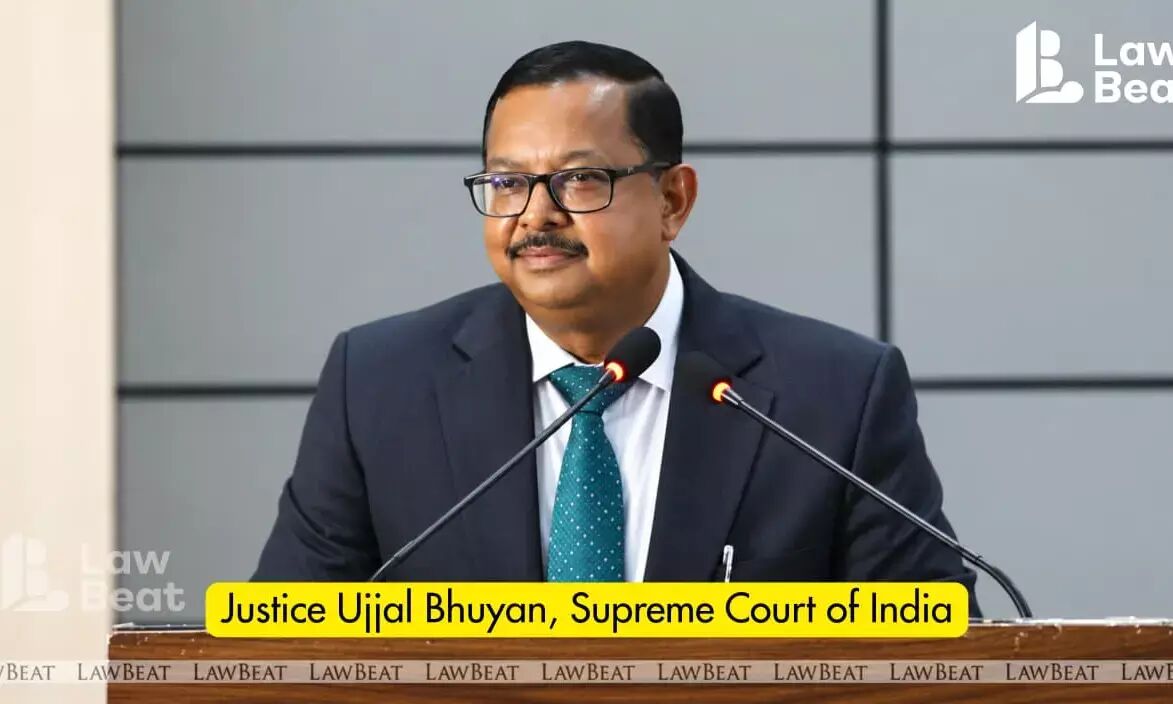
Justice Ujjal Bhuyan: India's Frivolous Criminal Cases Burden Justice System
Summary
- Supreme Court Justice Ujjal Bhuyan expressed concern over the registration of frivolous criminal cases in India for minor acts like consuming food or reciting poems.
- He highlighted that such cases contribute to the clogging of the India justice system, citing 4.27 crore pending criminal cases nationwide as of September 17.
- Justice Bhuyan specifically criticized the three-month detention of eight men in the Varanasi Iftar Chicken Biryani case, stating that consuming biryani is not an offense.
- The judge noted that accusations are often 'ridiculous' and lead to trials despite predictable outcomes, adding an 'unworkable burden' on courts.
- He also raised concerns about the shrinking space for democratic dissent and the criminalization of activities like social media comments or demonstrations.
Judicial Scrutiny on Frivolous Cases
Justice Bhuyan underscored that such accusations are often 'ridiculous' and 'border on an affront to one's intelligence,' yet their registration continues unabated, with charge sheets frequently filed despite predictable outcomes.
Supreme Court judge Justice Ujjal Bhuyan recently voiced significant apprehension regarding the proliferation of frivolous criminal cases that are increasingly burdening the India justice system. Speaking at the 4th Discourse organized by the Centre for Discourses on Criminal and Constitutional Jurisprudence at the India International Centre in New Delhi, Justice Bhuyan highlighted how minor acts and expressions are being criminalized, leading to unnecessary legal proceedings. His address, delivered on the topic 'Ethics in Criminal Litigation and the Duties of the Defence and the Prosecution,' underscored a growing trend of registering criminal cases for trivial reasons.
Justice Bhuyan enumerated various activities that have led to such frivolous FIR registration India, including the mere act of consuming certain foods, reciting poems, participating in public demonstrations, raising slogans, commenting on social media platforms, or performing as a stand-up comedian. He also noted instances where the content or titles of films and books have triggered criminal accusations. The judge observed that these cases often arise from individuals claiming their sentiments are hurt, leading to a continuous stream of registrations despite the often absurd nature of the allegations.
The Cost of Over-Criminalization
A stark illustration of this over-criminalization was provided by Justice Bhuyan through the Varanasi Iftar Chicken Biryani case from March of this year. He recounted the arrest of eight young men who were detained after consuming chicken biryani on the banks of the Ganga River while breaking their fast. The Supreme Court judge questioned the rationale behind such arrests, emphasizing that consuming chicken biryani is not an offense and no law prohibits its consumption near the Ganga River. These individuals were subsequently held in jail for three months, a period Justice Bhuyan found deeply concerning given the nature of the alleged 'crime'.
Justice Bhuyan also cited a case from Gujarat where a person reciting a poem about peace faced criminal charges for allegedly attempting to provoke enmity between different sections of society. He underscored that such accusations are often 'ridiculous' and 'border on an affront to one's intelligence,' yet their registration continues unabated, with charge sheets frequently filed despite predictable outcomes. This pattern, he noted, contributes significantly to the clogging of the India justice system, creating an unworkable burden on the courts.
Strain on India's Judicial Infrastructure
The impact of these frivolous criminal cases India is evident in the overwhelming statistics on judicial pendency. Justice Bhuyan referenced data from the National Judicial Data Grid, which, as of September 17, indicated a staggering 4.27 crore criminal cases pending across all courts in the country. A vast majority of these, 4.07 crore or 95.31 percent, are awaiting resolution in trial courts, while 19.84 lakh (4.64 percent) are before High Courts, and 22,143 cases are pending at the Supreme Court level.
This immense caseload is managed by a relatively small number of judicial officers; there are approximately 22,000 trial court judges and around 700 High Court judges. Justice Bhuyan highlighted that most of these judges, particularly those in trial courts, operate under extremely challenging conditions. The superimposition of frivolous cases on an already strained system, he argued, only exacerbates this unworkable burden, pushing the court system to its breaking point and hindering its ability to effectively address substantive legal matters.
Protecting Dissent and Free Expression
Justice Bhuyan's concerns extend beyond mere judicial efficiency to the fundamental principles of criminalization free speech India and democratic dissent. He previously raised questions in July about whether courts were inadvertently discouraging citizens from expressing dissent, noting a shrinking space for such democratic expression. His remarks underscore a significant judicial pushback against the over-criminalization of minor acts and expressions, providing a strong basis for defense lawyers to challenge frivolous FIRs and advocate for the protection of personal liberty in criminal proceedings.
Further emphasizing the gravity of the situation, Justice Bhuyan also shared his distress over reports from July detailing police officers assaulting protestors at Jantar Mantar, describing it as a 'very, very distressing' and 'matter of grave concern.' These observations collectively highlight the judiciary's increasing concern over the misuse of criminal law, signaling a potential shift in legal interpretations regarding public expression and minor infractions within the ethics criminal litigation India framework.
Practical Implications
This development signals a significant judicial pushback against the over-criminalization of minor acts and expressions in India, providing a strong basis for defense lawyers to challenge frivolous FIRs and advocate for the protection of free speech and personal liberty in criminal proceedings. Compliance officers should note the judiciary's concern over misuse of criminal law, which may influence future legal interpretations regarding public expression and minor infractions.
Source
How does this affect you?
Get an AI analysis of this article grounded in your jurisdictions, practice areas, and any policy documents you've uploaded to Wansom.
Finish Reading the Full Story and the Expert Analysis.
Get the latest legal & regulatory intelligence in India
Wansom is AI and can make mistakes.