
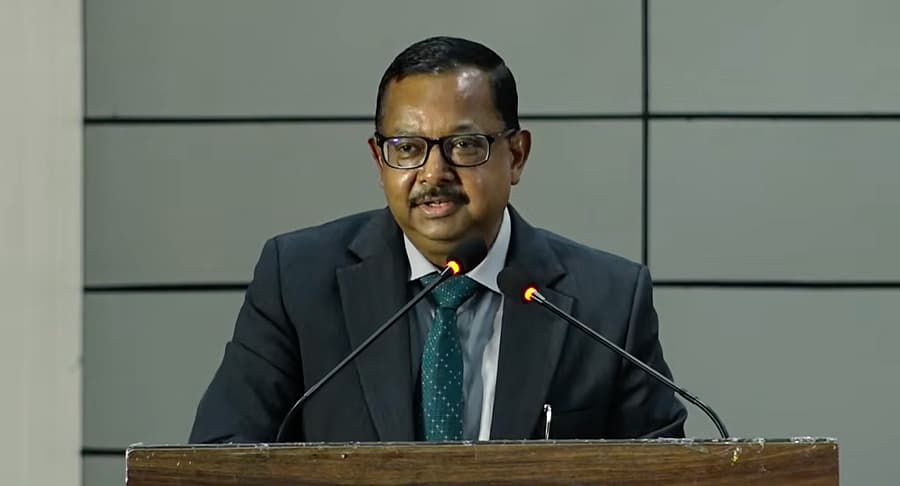
Justice Ujjal Bhuyan: Calls To Activate Distinguished Jurist Appointments
Summary
- Supreme Court Justice Ujjal Bhuyan recently called for a debate on appointing "distinguished jurists" to the Supreme Court, noting the constitutional provision has been unused for over 76 years.
- Article 124(3) of the Constitution permits the President to appoint a distinguished jurist as a Supreme Court judge, but no such appointment has ever been made.
- Justice Bhuyan suggested two reasons for this dormancy: a perceived lack of academic depth or, more probably, a failure by both the Central Government and the collegium to seriously explore the provision.
- The idea of including distinguished jurists originated from H.V. Kamath's proposal during the Constituent Assembly Debates to broaden the pool of eligible candidates.
- His remarks prompt a re-evaluation of India's Supreme Court judicial appointments process and the potential for including non-traditional candidates.
Call for Debate on Judicial Appointments
His intervention prompts legal professionals and policymakers to consider potential future debates on judicial selection reform, particularly concerning the inclusion of non-traditional candidates.
Supreme Court Justice Ujjal Bhuyan recently initiated a significant discussion regarding the appointment of "distinguished jurists" to India's highest court. Speaking at the 13th Convocation of National Law University Delhi, where he delivered the convocation address for postgraduate programmes, Justice Bhuyan highlighted a long-standing constitutional provision that has remained dormant for over 76 years since the nation's independence.
His remarks specifically centered on the non-utilization of Article 124(3) of the Constitution, which permits the President to appoint individuals deemed "distinguished jurists" as Supreme Court judges. Justice Bhuyan underscored the striking fact that, despite this explicit constitutional pathway, no such appointment has ever been made to the Supreme Court.
This observation by Justice Bhuyan serves as a powerful prompt for a broader re-evaluation of India Supreme Court judicial appointments and the criteria for selecting its members, drawing attention to an overlooked mechanism for enriching the judiciary with diverse expertise.
The Unused Constitutional Pathway
The constitutional provision in question, Article 124(3), explicitly grants the President the authority to appoint a person considered a "distinguished jurist" to the Supreme Court. This clause was designed to broaden the pool of eligible candidates beyond the traditional routes of elevation from high courts or direct appointment from the bar. However, Justice Bhuyan's recent speech at NLU Delhi brought into sharp focus that this particular avenue for judicial selection has never been activated.
Tracing its origins, Justice Bhuyan noted that the concept of including distinguished jurists emerged from the Constituent Assembly Debates. During these foundational discussions, H.V. Kamath notably proposed expanding the eligibility criteria for Supreme Court judges to include individuals recognized for their profound legal scholarship, moving beyond only sitting judges and practicing advocates. This historical context underscores the original intent to ensure a diverse and intellectually robust judiciary, a vision that has yet to be fully realized through this specific distinguished jurist constitutional provision.
Reasons for Non-Implementation
Justice Bhuyan offered two potential explanations for why the provision for Justice Ujjal Bhuyan distinguished jurist appointments has remained unused for more than seven decades. His first hypothesis suggested a perception, held both by the Central Government in earlier times and subsequently by the collegium system, that Indian academia lacks sufficient depth to produce candidates seriously considered for elevation to the Supreme Court.
However, Justice Bhuyan presented a second, more probable reason for the provision's dormancy. He posited that neither the Central Government nor the collegium has, to date, genuinely explored or seriously considered utilizing this constitutional allowance. This suggests a systemic oversight or a lack of proactive engagement with the full spectrum of judicial appointment possibilities outlined in the Constitution, rather than an inherent deficiency in the academic or legal landscape. The absence of Collegium system jurist appointments under this clause points to a broader institutional inertia.
Why This Discussion Matters
Justice Bhuyan's call for a debate on the appointment of distinguished jurists is significant because it highlights a long-unused constitutional pathway for Supreme Court appointments. His intervention prompts legal professionals and policymakers to consider potential future debates on judicial selection reform, particularly concerning the inclusion of non-traditional candidates. The discussion underscores the importance of revisiting foundational constitutional provisions that were intended to ensure the judiciary's intellectual breadth and diversity.
By drawing attention to Article 124(3) and its historical neglect, Justice Bhuyan has opened a crucial dialogue about how the Indian judiciary can best serve the nation in the 21st century. His NLU Delhi speech implicitly challenges the established norms of judicial appointments, urging a re-evaluation of whether the current system fully leverages all available constitutional mechanisms to appoint the most capable and diverse legal minds to the Supreme Court. This could pave the way for a more inclusive and intellectually varied judicial landscape in India.
Practical Implications
This discussion by Justice Bhuyan highlights a long-unused constitutional pathway for Supreme Court appointments, prompting legal professionals to monitor potential future debates on judicial selection reform and the inclusion of non-traditional candidates.
Source
How does this affect you?
Get an AI analysis of this article grounded in your jurisdictions, practice areas, and any policy documents you've uploaded to Wansom.
Finish Reading the Full Story and the Expert Analysis.
Wansom is AI and can make mistakes.