
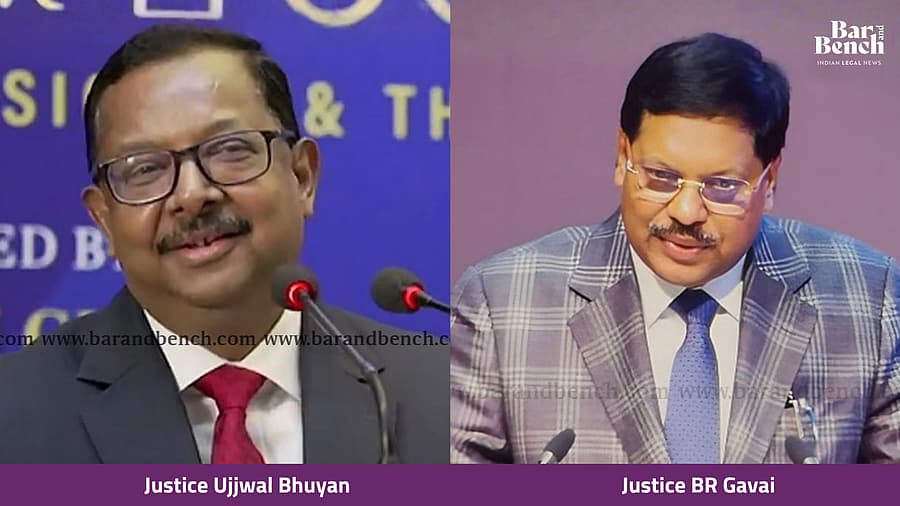
Justice Ujjal Bhuyan: Disenfranchisement Remarks Condemn Arbitrary Deletions
Summary
- Supreme Court Justice Ujjal Bhuyan publicly stated that disenfranchising millions of Indian citizens is arbitrary and negates the constitutional order.
- He argued that the Indian Constitution does not allow for two classes of citizens, those with and without voting rights.
- Justice Bhuyan specified that such wholesale disenfranchisement violates Articles 326 and 14 of the Constitution of India.
- He asserted that electoral roll deletions should only occur in cases of death and no institution is above the Constitution in this regard.
- Former Chief Justice of India BR Gavai criticized Justice Bhuyan for these remarks made on October 4.
What Happened
His public articulation of these principles serves as a powerful reminder of the constitutional safeguards intended to protect voting rights and prevent arbitrary disenfranchisement.
Supreme Court Justice Ujjal Bhuyan recently delivered a significant public address on October 4, articulating a strong stance against the widespread removal of voting rights. During his speech, Justice Bhuyan asserted that any process leading to the disenfranchisement of millions of Indian citizens is inherently arbitrary and fundamentally undermines the nation's constitutional framework. He unequivocally stated that no amount of rationalization or "whataboutery" could justify such actions, which he views as striking at the very core of the Constitution.
Justice Bhuyan further elaborated that the Indian Constitution does not countenance the creation of two distinct classes of citizens: those with voting rights and those without. He contended that any mechanism resulting in the wholesale disenfranchisement of citizens, effectively rendering them without the right to vote, would constitute a violation of key constitutional provisions. These Justice Ujjal Bhuyan disenfranchisement remarks, highlighting the critical importance of universal suffrage, subsequently drew criticism from former Chief Justice of India BR Gavai.
Legal Context
In his detailed exposition, Justice Bhuyan specifically identified Articles 326 and 14 of the Constitution of India as being contravened by processes that lead to arbitrary disenfranchisement India. Article 326 establishes the principle of adult suffrage for elections to the House of the People and to the Legislative Assemblies of States, while Article 14 guarantees equality before the law and equal protection of the laws, prohibiting discrimination. His argument posits that denying citizens the right to vote effectively reduces them to "second-class citizens" within their own country, an outcome he deems unconstitutional.
The Justice was particularly emphatic regarding the procedures for electoral roll deletion India. He maintained that such deletions should be permissible only in instances of a citizen's death, implying that any other basis for removal from the electoral rolls would be illegitimate. He stressed that no authority, including courts, is exempt from upholding these constitutional principles, declaring that "No one is above the Constitution" and that no court could condone such actions. This firm judicial stance underscores the sanctity of the right to vote as a fundamental aspect of Indian citizenship, directly addressing Justice Ujjal Bhuyan voting rights.
Why It Matters
Justice Ujjal Bhuyan's disenfranchisement remarks carry substantial weight, given his position as a sitting Supreme Court Justice. His public articulation of these principles serves as a powerful reminder of the constitutional safeguards intended to protect voting rights and prevent arbitrary disenfranchisement. The assertion that any process leading to widespread disenfranchisement is a "negation of the constitutional order" highlights the profound implications for democratic governance and the rule of law in India.
These comments are particularly relevant for legal practitioners involved in electoral law, constitutional challenges to voting processes, or public interest litigation. Justice Bhuyan's clear articulation of the unconstitutionality of widespread disenfranchisement and arbitrary electoral roll deletions provides a strong judicial perspective that could inform future legal arguments and interpretations. His insistence that the Constitution does not provide for citizens without voting rights reinforces the foundational democratic ethos of the nation, emphasizing that the right to vote is integral to full citizenship.
Practical Implications
Lawyers advising on electoral law, constitutional challenges to voting processes, or public interest litigation should note Justice Bhuyan's strong judicial stance on the unconstitutionality of widespread disenfranchisement and arbitrary electoral roll deletions, which could inform future legal arguments and judicial interpretations.
Source
How does this affect you?
Get an AI analysis of this article grounded in your jurisdictions, practice areas, and any policy documents you've uploaded to Wansom.
Finish Reading the Full Story and the Expert Analysis.
Get the latest legal & regulatory intelligence in India
Wansom is AI and can make mistakes.