
Supreme Court: Challenges Jamatia Customary Laws Act on Rape Settlement
Summary
- The Supreme Court has issued notice on a Public Interest Litigation challenging Section 143 of the Jamatia Customary Laws Act, 2017.
- This provision allegedly allows for the private settlement of rape cases with a fine up to Rs 1,00,000.
- The PIL contends that the Tripura Tribal Areas Autonomous District Council lacks the legislative competence under the Sixth Schedule to enact such a law.
- The petitioner argues that rape is a non-compoundable offense against society, conflicting with national criminal statutes like the CrPC and BNSS.
- The case will determine whether a District Council's customary law can supersede central enactments when they conflict on serious criminal matters.
Supreme Court Intervenes
This case is poised to clarify the precise extent of legislative power vested in District Councils and whether their customary laws can indeed supersede or run contrary to national criminal statutes, especially concerning the compounding of grave crimes like rape.
The Supreme Court of India has recently taken cognizance of a Public Interest Litigation (PIL) that challenges a specific provision within the Jamatia Customary Laws Act, 2017. This legal action targets Section 143 of the Act, which, according to the petitioner, controversially permits the private settlement and compounding of rape cases upon payment of a fine that can amount to Rs 1,00,000. The apex court's decision to issue notice signals the gravity of the constitutional questions raised by this challenge.
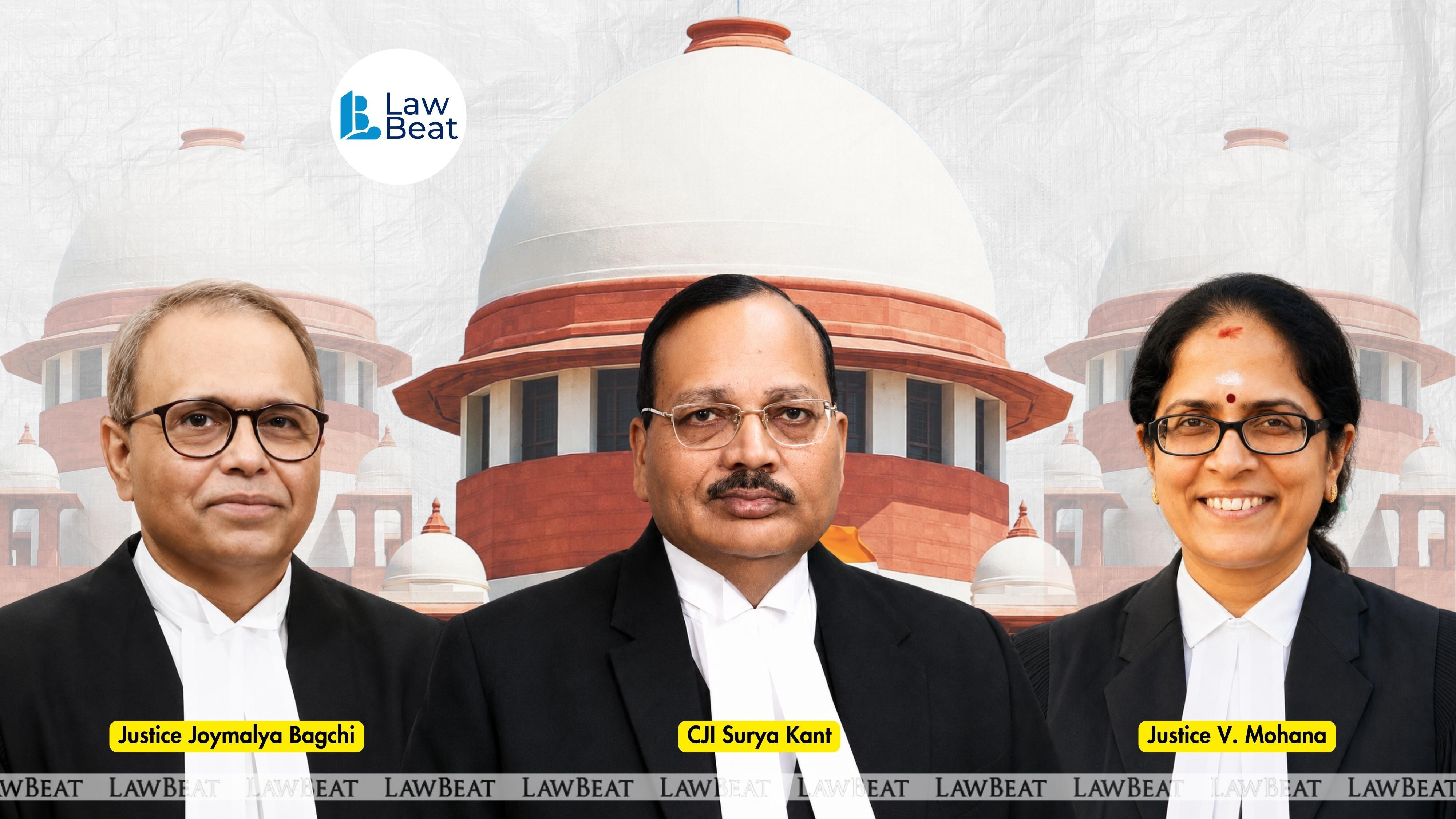
The PIL was lodged by Advocate Madhumita Bhattacharya, with Advocate-on-Record Shoumendu Mukherji representing the case. The Jamatia Customary Laws Act, 2017, was enacted by the Tripura Tribal Areas Autonomous District Council and subsequently received the Governor's assent. A bench comprising Chief Justice Surya Kant, Justice Joymalya Bagchi, and Justice V. Mohana is presiding over the matter. The Court has tagged this new petition with an existing writ petition, WP (C) No. 88 of 2026, scheduling a combined hearing for November 27, 2026.
Legislative Competence Under Scrutiny
At the heart of the challenge lies a fundamental question regarding the legislative competence of District Councils operating under the Sixth Schedule of the Constitution. The petitioner contends that while the Sixth Schedule is designed to protect tribal cultural identity, social customs, and land rights, the authority it grants to District Councils is strictly circumscribed. This power, the petition argues, is limited to administering civil disputes, personal laws such as marriage, inheritance, and divorce, and minor local offenses.
The core argument asserts that the Tripura Tribal Areas Autonomous District Council exceeded its constitutional mandate by legislating on an offense as grave as rape. The PIL explicitly states that the Sixth Schedule does not confer the power to formulate parallel penal codes that would override substantive national criminal laws, especially those governing heinous crimes. Consequently, Section 143 of the Jamatia Customary Laws Act is challenged on the grounds of an absolute lack of legislative competence, suggesting the Council ventured beyond its permissible legal boundaries.
Contradiction with National Criminal Law
The petition highlights a stark contradiction between Section 143 of the Jamatia Customary Laws Act and established principles of national criminal jurisprudence. It underscores the settled legal understanding that serious offenses, particularly those like rape, are not merely private disagreements between an accused and a victim but constitute wrongs against society at large. In such cases, the State acts as the primary prosecuting agency, representing the collective conscience of the community.
Under the statutory framework of India's criminal law, specifically Section 320 of the Code of Criminal Procedure, 1973, and its successor, Section 359 of the Bharatiya Nagarik Suraksha Sanhita, 2023, heinous offenses like rape are unequivocally categorized as strictly non-compoundable. The petitioner argues that a local enactment permitting the compounding of such an offense cannot coexist with this national legal framework. The PIL is sharply critical of the provision's effect, stating that Section 143, particularly when read with Section 164 concerning penalties and fines, effectively "places a price tag on a woman's dignity." This, it is argued, dangerously blurs the distinction between a minor infraction and a severe criminal act involving intent to cause harm, allowing an accused to evade the full consequences of sexual violence through monetary payment.
Broader Constitutional Implications
The Supreme Court's consideration of this PIL will delve into a significant constitutional question: which law takes precedence when a statute enacted by a District Council under the Sixth Schedule conflicts with a central enactment. This case is poised to clarify the precise extent of legislative power vested in District Councils and whether their customary laws can indeed supersede or run contrary to national criminal statutes, especially concerning the compounding of grave crimes like rape.
The outcome will have profound implications for constitutional law, tribal law, and criminal law, particularly within Sixth Schedule areas. Lawyers advising on these complex legal domains should closely monitor the proceedings, as the Court's ruling will define the boundaries of autonomous legislative authority versus the uniformity of national criminal justice principles. The resolution of this matter will be crucial in determining the balance between preserving tribal identity through customary laws and upholding the fundamental rights and protections guaranteed by the broader Indian legal system.
Practical Implications
Lawyers advising on constitutional law, tribal law, or criminal law in Sixth Schedule areas should closely monitor this case, as it will determine the extent of legislative power of District Councils and whether they can enact customary laws that conflict with national criminal statutes, particularly concerning the compounding of heinous crimes like rape.
Source
How does this affect you?
Get an AI analysis of this article grounded in your jurisdictions, practice areas, and any policy documents you've uploaded to Wansom.
Finish Reading the Full Story and the Expert Analysis.
Wansom is AI and can make mistakes.