
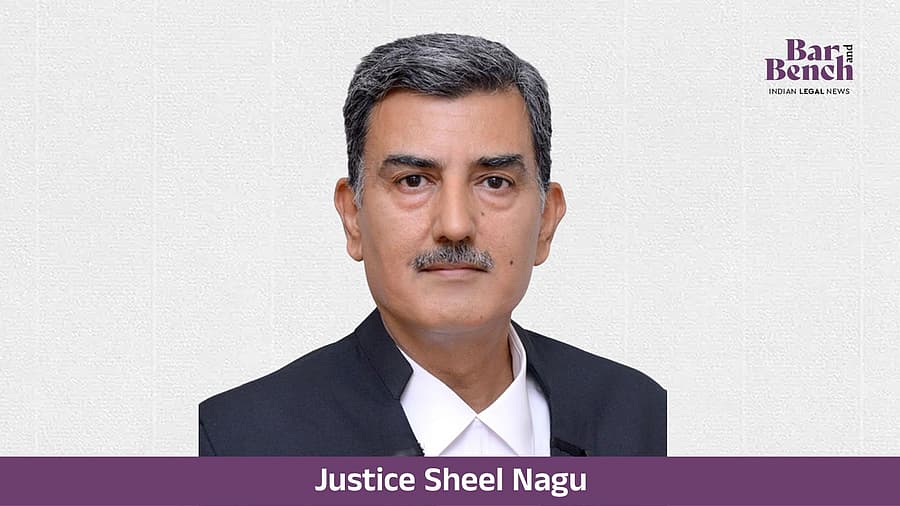
Supreme Court Justice Sheel Nagu Recuses From Punjab CBI Probe
Summary
- Supreme Court Justice Sheel Nagu recused himself from hearing an appeal concerning a CBI probe into the Punjab Chief Minister's OSD.
- The recusal was prompted by Justice Nagu's prior judicial involvement in other cases where the current respondent, advocate Nikhil Saraf, was a party.
- The State of Punjab's appeal challenges a Punjab and Haryana High Court order from October 5, directing the CBI to register a criminal case against Chief Minister Bhagwant Mann's OSD, Rajbir Singh Ghuman.
- Justice Dipankar Datta, sitting on the bench, emphasized the necessity of judicial impartiality and stated the case would be referred to the Chief Justice of India for reassignment.
Judicial Recusal in High-Profile Punjab Case
This decision underscores the judiciary's commitment to maintaining unimpeachable impartiality, particularly in high-stakes cases involving allegations of corruption against public officials.
On Friday, Supreme Court Justice Sheel Nagu stepped aside from presiding over an appeal initiated by the State of Punjab. This appeal directly challenges a directive issued by the Punjab and Haryana High Court, which mandated the Central Bureau of Investigation (CBI) to conduct a probe into alleged corruption linked to the office of Punjab Chief Minister Bhagwant Mann. The case, formally known as State of Punjab v Nikhil Saraf, was brought before a bench comprising Justices Dipankar Datta and Sheel Nagu, where Justice Nagu ultimately chose to recuse himself from the proceedings.
While the specific grounds for the Supreme Court Justice Nagu recusal were not formally articulated by the bench, it was noted that Justice Nagu had a prior professional connection to the matter. During his tenure as Chief Justice of the Punjab and Haryana High Court, he had heard and issued orders in other legal cases where advocate Nikhil Saraf, the respondent in the current Supreme Court appeal, was a party. This history, though not directly related to the merits of the present corruption allegations, prompted the decision for recusal, underscoring the judiciary's proactive approach to avoiding any potential perception of bias.
Genesis of the CBI Investigation
The State of Punjab's decision to approach the Supreme Court followed a significant order from the Punjab and Haryana High Court. On October 5, a High Court bench, consisting of Chief Justice Ashwani Kumar Mishra and Justice Rohit Kapoor, had directed the CBI to register a criminal case. This directive specifically targeted Rajbir Singh Ghuman, who serves as the Officer on Special Duty (OSD) to the Punjab Chief Minister.
The High Court's order initiated a full-fledged Punjab CBI probe into the conduct of a high-ranking official within the Chief Minister's immediate circle. The allegations of corruption against the Chief Minister's OSD prompted the High Court to intervene and call for a thorough investigation by the central agency, setting the stage for the subsequent appeal by the state government to the apex court.
Upholding Impartiality in the Judiciary
During the Supreme Court hearing, Senior Advocate Jaideep Gupta, representing one of the parties, informed the court that he would not be relying on any of Justice Nagu's previous decisions involving advocate Nikhil Saraf. Despite this assurance, Justice Datta maintained a firm stance on the recusal, emphasizing the critical importance of judicial impartiality, especially in the current climate. Justice Datta remarked, "No, no. We are in very difficult times Mr. Gupta. One doesn’t know, from where the attack will come from. There are 17 other benches. We will sign the order to place the case before the CJI, you mention."
This exchange highlights the stringent standards applied to judicial recusal in India for conflict of interest situations. The Supreme Court's decision to proceed with the recusal, even when the direct relevance of prior involvement was downplayed by counsel, demonstrates a commitment to safeguarding the integrity and perceived neutrality of the judicial process. The case will now be referred to the Chief Justice of India for allocation to an alternative bench, ensuring that the appeal is heard by judges without any prior connection to the parties involved.
Significance for Public Trust
The recusal of Justice Sheel Nagu from a case involving a Punjab Chief Minister OSD CBI investigation carries significant weight. It reinforces the principle that judicial officers must not only be impartial but also be seen to be impartial, particularly in matters concerning public officials and allegations of corruption. The Supreme Court's action, in this instance of Justice Sheel Nagu recusal Punjab CBI probe, serves as a powerful affirmation of the judiciary's commitment to transparency and fairness.
This decision underscores the judiciary's commitment to maintaining unimpeachable impartiality, particularly in high-stakes cases involving allegations of corruption against public officials. Such recusals, while potentially leading to minor delays in case progression, are crucial for upholding public confidence in the judicial system and ensuring that justice is administered without any shadow of doubt or perceived conflict. The careful handling of such situations is vital for the continued credibility of India's highest court.
Practical Implications
Lawyers should note this instance of judicial recusal, which underscores the Supreme Court's strict adherence to impartiality principles, even when prior involvement is not directly with the current case's merits. This may impact case timelines and bench composition, and highlights the importance of identifying potential conflicts of interest for judges involved in high-profile corruption cases.
Source
How does this affect you?
Get an AI analysis of this article grounded in your jurisdictions, practice areas, and any policy documents you've uploaded to Wansom.
Finish Reading the Full Story and the Expert Analysis.
Get the latest legal & regulatory intelligence in India
Wansom is AI and can make mistakes.