
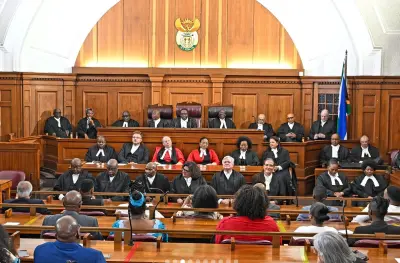
Justice Opperman: Generative AI Errors in FJL v TGO Judgment
Summary
- Justice Ingrid Opperman's judgment in FJL v TGO addressed the potential misuse of generative AI in judicial decisions, highlighting 11 discrepancies in an acting judge's ruling.
- The ruling suggested that fictitious case references in the acting judge's decision were plausibly a product of AI 'hallucinations', though no definitive finding was made on AI use.
- Justice Opperman emphasized that judicial authority must remain human, accountable, and transparent, warning that a machine acting as the 'true decision-maker' would contravene Section 34 of the Constitution.
- The judgment underscored the constitutional right to a fair public hearing and the necessity for a judge's considered view, not an opaque AI output, in legal decisions.
- The matter has been referred to the Legal Practice Council to investigate potential professional misconduct by the acting judge, setting a significant precedent for judicial ethics concerning AI in South Africa.
AI's Shadow Over a Family Law Case
Judicial authority must inherently remain human, accountable, and transparent.
A recent judgment by Justice Ingrid Opperman in the family law matter of FJL v TGO has brought the ethical and constitutional implications of generative artificial intelligence into sharp focus within South Africa's legal landscape. The case centered on a dispute regarding two children's schooling, specifically whether they should be moved from a private institution to a more affordable public one. An acting judge initially ruled in favor of the mother, allowing the children to remain in private school, and subsequently denied the father's application for permission to appeal.
Following this, the father sought permission to appeal from the Supreme Court of Appeal (SCA). While this application was pending, the acting judge issued another ruling, stipulating that the children should not be removed from the private school. This specific ruling became the subject of an urgent appeal to a full court comprising three judges, including Justice Opperman. The full court ultimately sided with the mother, affirming that the children should not be moved while the father's application for permission to appeal was still before the SCA.
Judicial Scrutiny and AI 'Hallucinations'
Justice Opperman's judgment, however, delved deeper than the immediate dispute, addressing significant irregularities in the acting judge's initial decision. She identified no fewer than 11 discrepancies, which included incorrect case citations, inaccurate quotations from legal precedents, and, most notably, a reference to a non-existent case. Justice Opperman posited that the most plausible explanation for these errors, particularly the fictitious reference, was the use of artificial intelligence, leading to what are commonly termed 'hallucinations' in generative AI outputs.
While Justice Opperman refrained from making a definitive finding on whether AI was indeed utilized, her ruling meticulously explored the profound implications of employing such technology in judicial decision-making. She explicitly framed the issue as one directly implicating Section 34 of the Constitution, which enshrines the right to have disputes resolved by law through a fair public hearing before an independent and impartial tribunal. This landmark ruling has positioned itself as a leading judicial discussion in the common law world concerning the risks associated with judges potentially delegating their decision-making processes to AI.
Constitutional Imperatives for Judicial Authority
Justice Opperman underscored that a judicial judgment must unequivocally reflect the judge's considered view, rather than being the product of an opaque process where the origin of conclusions remains concealed or obscure. She firmly asserted that judicial authority must inherently remain human, accountable, and transparent. The judgment warned that if a machine were to become the 'true decision-maker' in a legal dispute, it would constitute a direct contravention of the constitutional guarantees enshrined in Section 34.
This perspective highlights a critical distinction between legitimate human assistance in legal work, such as research or drafting under direction, and the delegation of core judicial reasoning to an AI system. The judgment's strong stance on human accountability and transparency in the judicial process serves as a crucial precedent. Consequently, Justice Opperman's judgment will be forwarded to the Legal Practice Council for investigation into whether the acting judge committed any professional misconduct.
Precedent and Professional Accountability
This judgment establishes a strong precedent on the ethical and constitutional risks of generative AI in legal decision-making in South Africa. It sends a clear message to legal practitioners and judicial officers alike regarding the imperative for human oversight and verification of any AI-generated content used in legal proceedings. The potential for 'hallucinations' and the resulting inaccuracies poses a significant threat to the integrity of the justice system and the fundamental right to a fair hearing.
The implications extend beyond the courtroom, impacting lawyers and compliance officers who must now scrutinize AI-generated legal content with heightened vigilance. Improper use of generative AI by judicial officers or legal practitioners could lead to severe consequences, including professional misconduct investigations or challenges to judgments under Section 34 of the Constitution. The ruling reinforces that while technology can assist, the ultimate responsibility for judicial decisions, and the human element of judgment, remains paramount.
Practical Implications
This judgment establishes a strong precedent on the ethical and constitutional risks of generative AI in legal decision-making in South Africa. Lawyers and compliance officers must scrutinize AI-generated legal content for 'hallucinations' and ensure human accountability, as improper use by judicial officers or legal practitioners could lead to professional misconduct investigations or challenges to judgments under Section 34 of the Constitution.
Source
How does this affect you?
Get an AI analysis of this article grounded in your jurisdictions, practice areas, and any policy documents you've uploaded to Wansom.
Finish Reading the Full Story and the Expert Analysis.
Get the latest legal & regulatory intelligence in South Africa
Wansom is AI and can make mistakes.