
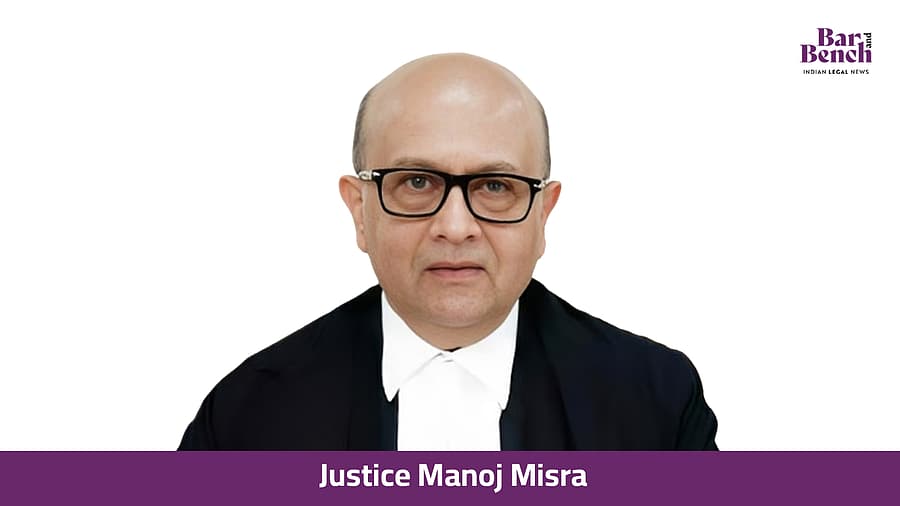
Supreme Court: Justice Manoj Misra Recuses From ISKCON Mumbai Bangalore Case
Summary
- Justice Manoj Misra recused himself from hearing review petitions in the ISKCON Mumbai vs. ISKCON Bangalore case on October 5.
- His recusal, citing personal reasons, necessitates a second reconstitution of the Supreme Court's three-judge bench.
- The review petitions seek to challenge a May 16 Supreme Court verdict that recognized ISKCON Bangalore as an independent legal entity.
- The original ruling affirmed ISKCON Bangalore's ownership of the Hare Krishna Temple in Bengaluru and its registration under the Karnataka Societies Registration Act, 1960.
- The impending retirement of Justice Satish Chandra Sharma in November further contributes to the need for a new bench composition.
What Happened
This procedural development introduces further delays in the resolution of the contentious dispute between ISKCON Mumbai and ISKCON Bangalore, which centers on the independent legal status and property ownership of the Bengaluru entity.
The Supreme Court recently faced a procedural shift in the ongoing legal battle between ISKCON Mumbai and ISKCON Bangalore, as Justice Manoj Misra recused himself from a set of review petitions. On October 5, Justice Misra indicated his decision to withdraw from hearing the matter, citing personal reasons. This development has necessitated the reconstitution of the three-judge bench assigned to the case, marking the second such change for this particular set of proceedings.
The bench initially comprised Justices MM Sundresh, Satish Chandra Sharma, and PK Mishra. However, it was subsequently reconfigured, with Justice Manoj Misra stepping in to replace Justice PK Mishra. With Justice Misra's recent recusal and the impending retirement of Justice Satish Chandra Sharma in November, the Supreme Court's Registry has been directed to present the case papers to the Chief Justice of India for yet another reconstitution. This ensures a new panel of judges will be assigned to deliberate on the review petitions filed by ISKCON Mumbai in the case titled ISKCON Mumbai vs. ISKCON Bangalore & Ors.
Legal Context
The review petitions from which Justice Manoj Misra recused himself seek a re-evaluation of a significant Supreme Court verdict issued on May 16. This earlier ruling definitively recognized ISKCON Bangalore as an independent legal entity, distinct from ISKCON Mumbai. Crucially, the verdict also affirmed ISKCON Bangalore's ownership of the Hare Krishna Temple located in Bengaluru. The core of the dispute revolves around the organizational structure and autonomy of the Bengaluru chapter.
The May 16 judgment specifically highlighted that ISKCON Bangalore is registered under the Karnataka Societies Registration Act, 1960, thereby establishing its separate legal standing. The Supreme Court's decision upheld the findings of the trial court, which had similarly concluded that ISKCON Bangalore operates as an autonomous body and is not merely a branch or subordinate entity of ISKCON Mumbai. This ruling has profound implications for the governance and assets of the respective ISKCON organizations involved in the protracted legal contest.
Why It Matters
The recusal of Justice Manoj Misra and the subsequent requirement for a fresh Supreme Court bench reconstitution introduce an element of procedural delay into the already complex ISKCON Mumbai vs. ISKCON Bangalore dispute. This procedural development introduces further delays in the resolution of the contentious dispute between ISKCON Mumbai and ISKCON Bangalore, which centers on the independent legal status and property ownership of the Bengaluru entity. This development means that the review petitions, which aim to challenge the May 16 verdict affirming ISKCON Bangalore's independent legal entity status, will face an extended timeline before they can be fully heard and decided. The need for a new bench could also bring different judicial perspectives to the forefront, potentially influencing the future trajectory of the ISKCON case.
For legal professionals tracking the ISKCON case, this situation underscores the dynamic nature of high-stakes litigation, where judicial changes can significantly impact strategy and expectations. The original ruling, which recognized ISKCON Bangalore as an independent entity and owner of the Hare Krishna Temple in Bengaluru under the Karnataka Societies Registration Act, 1960, remains a pivotal point. Any further delays or changes in judicial composition could prolong the final resolution of this long-standing and significant inter-organizational conflict.
Practical Implications
Lawyers involved in or tracking the ISKCON Mumbai vs. ISKCON Bangalore dispute should note the procedural delay caused by Justice Misra's recusal and the subsequent need for a new bench reconstitution. This will impact the timeline for the review petitions and could introduce new judicial perspectives, requiring a re-evaluation of case strategy.
Source
How does this affect you?
Get an AI analysis of this article grounded in your jurisdictions, practice areas, and any policy documents you've uploaded to Wansom.
Finish Reading the Full Story and the Expert Analysis.
Get the latest legal & regulatory intelligence in India
Wansom is AI and can make mistakes.