
Justice L Nageswara Rao: India Arbitration Reform Crucial for Global Hub Ambition
Summary
- Justice L Nageswara Rao urged India to resolve domestic arbitration issues before aiming to become a global arbitration hub.
- He identified delays, court interference, and a lack of confidence as key problems within India's current system.
- Rao noted that Indian parties often seek foreign arbitration seats despite the country's high volume of disputes attracting foreign practitioners.
- He proposed that specialized High Court benches should exclusively hear challenges to domestic arbitral awards under Section 34 of the Arbitration and Conciliation Act, 1996.
- This reform aims to reduce judicial involvement and enhance confidence in India's domestic arbitration framework.
Call for Domestic Reform
Specifically, he proposed that challenges to domestic arbitral awards, particularly those filed under Section 34 of the Arbitration and Conciliation Act, 1996, should be exclusively heard by specialised High Court benches.
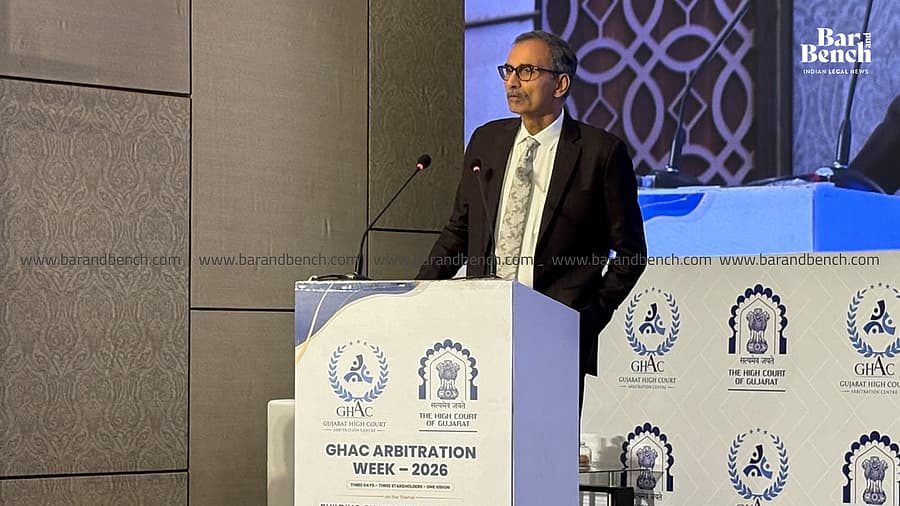
Former Supreme Court Justice L Nageswara Rao recently issued a strong call for fundamental reforms within India's domestic arbitration system, asserting that such improvements are a prerequisite for the nation's aspirations to become a global arbitration hub. Speaking on Saturday at the GHAC Arbitration Week 2026, an event meticulously organized by the Gujarat High Court and the Gujarat High Court Arbitration Centre at GIFT City, Gandhinagar, Justice Rao underscored a critical message: "Unless we improve domestic arbitration, there is no point in thinking about international arbitration."
He highlighted persistent issues plaguing the current framework, including pervasive delays, undue judicial interference, and a palpable lack of confidence among stakeholders. This critical assessment emphasizes that India must first address these internal shortcomings before it can credibly position itself as a leading international arbitration destination.
The Paradox of India's Arbitration Scene
Justice Rao pointed to India's unique position as a "fertile ground for disputes," which translates into hundreds of thousands of arbitrations occurring annually across the country. Despite this significant volume, a glaring deficiency exists in reliable data, particularly concerning the exact number of pending ad hoc arbitrations. This paradox is further accentuated by the observation that while arbitration practitioners from international hubs like London, Singapore, and Dubai frequently visit India, drawn by the sheer quantity of available disputes, Indian parties themselves are increasingly opting for foreign seats to secure more efficient and predictable resolution outcomes.
This trend, according to Justice Rao, serves as a clear indicator that "people who are going out do not have confidence in our system." These India domestic arbitration challenges present a significant hurdle to both local and international trust in the country's dispute resolution mechanisms.
A Concrete Proposal for Systemic Improvement
To address these deep-seated issues and restore faith in the system, Justice Rao put forth a concrete proposal centered on reducing the number of judicial touchpoints in arbitration proceedings. His key recommendation involves a significant structural change: challenges to domestic arbitral awards, specifically those brought under Section 34 of the Arbitration and Conciliation Act, 1996, should be exclusively heard by specialised High Court benches. This would represent a departure from the current practice where such petitions are often handled by district courts.
Justice Rao explicitly stated, "Have at least a High Court having a specialised bench to take up Section 34 petitions," emphasizing that dedicated benches would enhance expertise, streamline processes, and ultimately foster greater confidence in the integrity and efficiency of arbitral award enforcement. This focus on specialised High Court benches arbitration India aims to mitigate judicial delays and interference.
Paving the Way for Global Recognition
The former Supreme Court judge's remarks underscore a critical strategic imperative for India's global arbitration hub ambition. He firmly believes that without first rectifying the inefficiencies and trust deficits within its own borders, the nation's pursuit of international arbitration prominence will remain an elusive goal. The proposed establishment of specialised High Court benches for Section 34 challenges is not merely a procedural tweak; it is envisioned as a foundational step towards building a robust, predictable, and respected domestic arbitration framework.
Such reforms are crucial to demonstrating India's commitment to effective dispute resolution, thereby laying the groundwork for genuine international recognition and trust. This strategic approach highlights the interconnectedness of domestic reform and international standing in the arbitration landscape.
Practical Implications
Lawyers should note the ongoing critical assessment of India's domestic arbitration system by prominent legal figures, particularly the proposal for specialized High Court benches to hear Section 34 challenges. This indicates potential future reforms that could impact the efficiency and predictability of arbitral award enforcement, informing strategic advice on dispute resolution clauses and client expectations in India.
Source
How does this affect you?
Get an AI analysis of this article grounded in your jurisdictions, practice areas, and any policy documents you've uploaded to Wansom.
Finish Reading the Full Story and the Expert Analysis.
Wansom is AI and can make mistakes.