
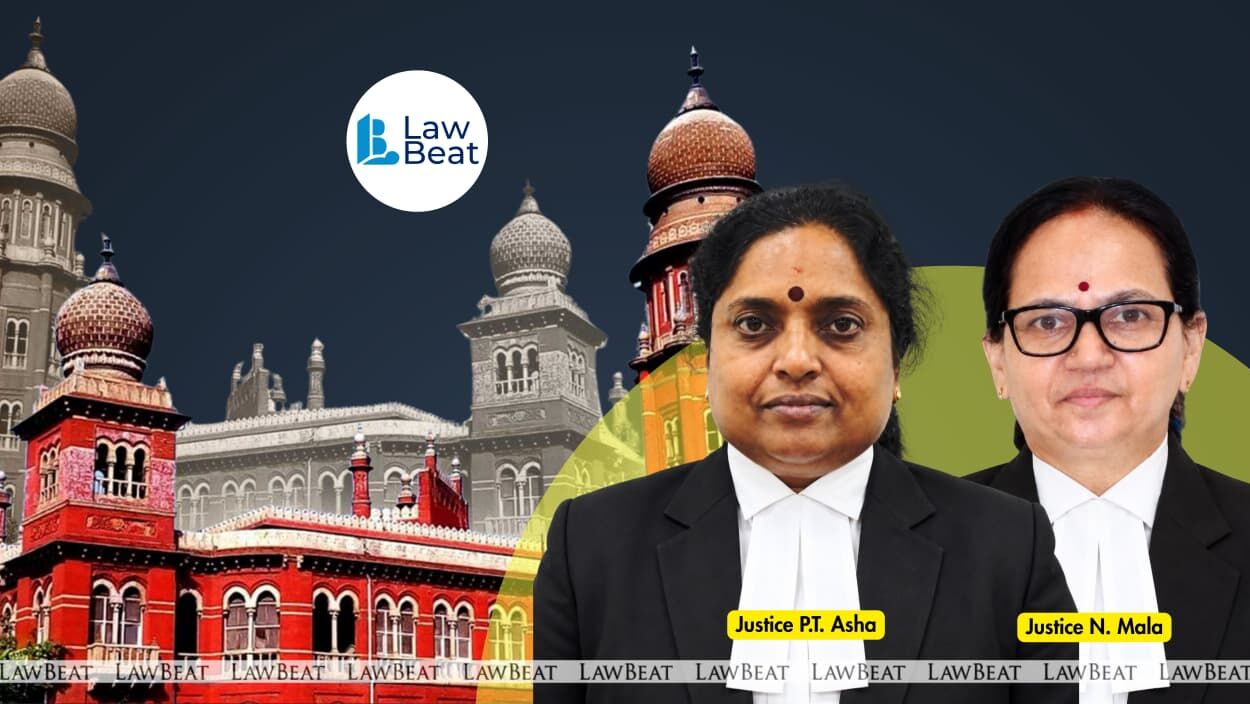
Madras HC: Christian Woman Cannot Seek HMA Conjugal Rights
Summary
- The Madras High Court ruled that a Christian woman cannot seek restitution of conjugal rights under the Hindu Marriage Act against a Hindu man.
- The court affirmed that the Hindu Marriage Act applies exclusively to Hindus and marriages solemnized according to its specific requirements.
- Despite claims of a marriage performed with Hindu rites, the court found the petitioner to be Christian, rendering the Hindu Marriage Act inapplicable.
- The ruling emphasized that Section 9 of the Hindu Marriage Act, concerning conjugal rights, cannot be interpreted in isolation from the Act's overall scheme and definitions.
- This decision clarifies that interfaith unions, even if involving Hindu rituals, do not fall under the Hindu Marriage Act unless both parties are Hindu as defined by the statute.
The Court's Decision and Background
The court unequivocally stated that the Hindu Marriage Act's provisions, including those for restitution of conjugal rights, are not applicable to unions where one party is Christian, regardless of whether Hindu rites were performed.
The Madras High Court recently delivered a significant ruling, affirming that a Christian woman cannot invoke the Hindu Marriage Act (HMA) to seek restitution of conjugal rights against a Hindu man. This decision, handed down by a Division Bench comprising Justices P.T. Asha and N. Mala, underscored the specific applicability of the HMA to Hindu individuals and marriages that strictly adhere to its statutory framework. The court's pronouncement came in response to a civil miscellaneous appeal, which challenged an earlier dismissal by the Family Court in Villupuram.
The petitioner, a Christian woman, had sought legal recourse under Section 9 of the HMA, claiming to be the wife of a Hindu man. Her petition requested the court to order the restitution of conjugal rights, alleging that her husband had subjected her to cruelty and that his family had physically abused her before she was ultimately driven out of their shared home. Despite her attempts to return, she asserted that she was unable to resume cohabitation, prompting her to seek judicial intervention.
Factual Allegations and Lower Court Findings
The woman's claims centered on an alleged marriage solemnized on July 10, 2008, which she stated took place according to Hindu rites and customs at a temple situated near Villupuram. She contended that following this ceremony, they cohabited for a period before the marital discord began. In stark contrast, the respondent, the alleged husband, vehemently denied all allegations, including the existence of any relationship, a purported pregnancy, and the marriage itself. Crucially, he argued that the petitioner's Christian faith precluded the alleged union from being recognized as a valid Hindu marriage under the HMA.
The Family Court in Villupuram meticulously examined the presented evidence and concluded that the petitioner had failed to substantiate her claim of marriage. Furthermore, the lower court definitively established the petitioner's Christian religious identity, determining that a marriage between the parties could not be considered valid under the Hindu Marriage Act. Consequently, the Family Court ruled that she was not entitled to seek restitution of conjugal rights or any other relief provided by the Act. The Madras High Court subsequently concurred with these findings, noting that the petitioner's school records consistently identified her as a Christian belonging to the Adi Dravidar community, a fact further corroborated by her own nephew's testimony regarding their family's profession of Christianity.
Legal Arguments and High Court's Interpretation
During the High Court proceedings, counsel for the petitioner advanced an argument focusing on the specific wording of Section 9 of the Hindu Marriage Act. It was contended that this section, which addresses restitution of conjugal rights, employs the general terms "husband" and "wife" without explicitly qualifying them as "Hindu husband" or "Hindu wife." Based on this linguistic observation, the petitioner's legal team submitted that it was not a prerequisite for both parties to be Hindus for a petition under Section 9 to be maintainable, thereby suggesting a broader applicability for interfaith marriages.
However, the Division Bench firmly rejected this interpretation, asserting that Section 9 cannot be treated as an isolated provision within the statute. The court emphasized the fundamental principle of legal interpretation that no independent provision of law should be read in isolation from the rest of the statute. To ascertain the true scope and intent of the legislation, the High Court referred to the Preamble, along with Sections 2, 5, and 7 of the Hindu Marriage Act. The Preamble explicitly describes the HMA as an Act designed to amend and codify the law relating to marriage specifically among Hindus. Moreover, Section 5 unequivocally states that a Hindu marriage may be solemnized only between "any two Hindus," subject to other statutory conditions. This comprehensive review led the court to conclude that the overall scheme of the legislation dictates its exclusive application to Hindu marriages.
Broader Implications for Interfaith Marriages
This ruling from the Madras High Court carries significant implications for legal practitioners advising on matrimonial disputes, particularly those involving inter-religious couples in India. The court unequivocally stated that the Hindu Marriage Act's provisions, including those for restitution of conjugal rights, are not applicable to unions where one party is Christian, regardless of whether Hindu rites were performed. This strict interpretation of the HMA's scope reinforces that merely conducting a ceremony with Hindu customs does not automatically bring an interfaith marriage under the purview of the Act if the fundamental definition of a "Hindu marriage" as per the statute is not met.
Lawyers advising on such cases must therefore note that the Hindu Marriage Act cannot be invoked for remedies like restitution of conjugal rights if the marriage does not strictly conform to the HMA's requirements, even in instances where Hindu rites were observed. The court's emphasis on considering the HMA's Preamble and other foundational sections, such as Section 2 and Section 5, highlights that the Act's provisions cannot be read in isolation from its overall scheme and definitions. This judgment underscores the limited applicability of the HMA to Hindu marriages, providing crucial guidance on the HMA scope Hindu marriage definition and the applicability of Hindu Marriage Act Section 9 in interfaith marriage scenarios.
Practical Implications
Lawyers advising on matrimonial disputes involving inter-religious couples in India, particularly Christian-Hindu unions, must note that the Hindu Marriage Act cannot be invoked for remedies like restitution of conjugal rights if the marriage does not strictly conform to HMA requirements, even if Hindu rites were performed. This ruling clarifies the limited applicability of the HMA to Hindu marriages, emphasizing that the Act's provisions cannot be read in isolation from its overall scheme and definitions.
Source
How does this affect you?
Get an AI analysis of this article grounded in your jurisdictions, practice areas, and any policy documents you've uploaded to Wansom.
Finish Reading the Full Story and the Expert Analysis.
Wansom is AI and can make mistakes.