
Justice KV Viswanathan: AI Legal Translation Error Misinterprets 'Leave Granted'
Summary
- Supreme Court Justice KV Viswanathan highlighted the risks of AI in legal translation on Thursday.
- An AI tool translated the judicial expression 'leave granted' from his first judgment into Hindi as 'Chutti swikriti'.
- In the Supreme Court, 'leave granted' means a special leave petition is admitted as a full appeal, requiring a reasoned judgment.
- The translation 'Chutti swikriti' literally implies a sanctioned leave or holiday, fundamentally altering the legal meaning.
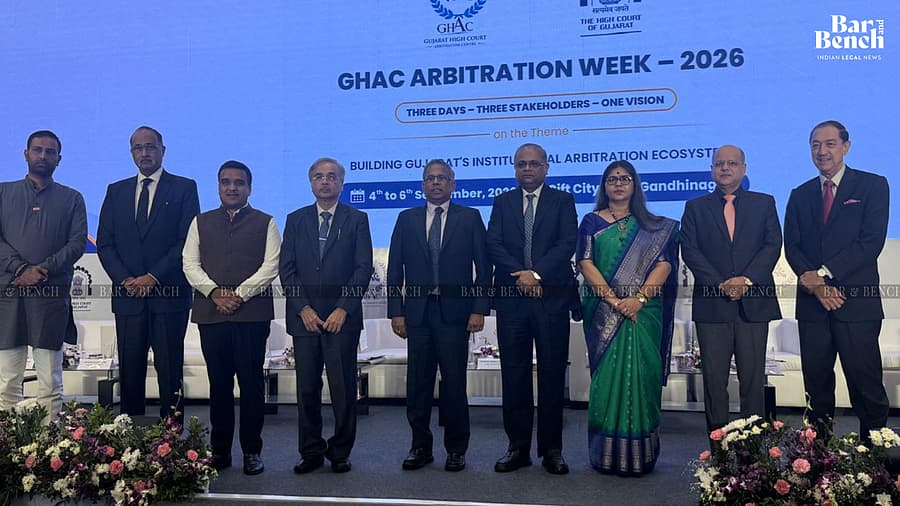
- Justice Viswanathan shared this anecdote at the Gujarat High Court Arbitration Centre Arbitration Week 2026 to illustrate AI's promise and pitfalls in legal contexts.
A Critical Translation Error
The AI's translation of 'leave granted' to 'Chutti swikriti' fundamentally misrepresents this critical legal process.
Justice KV Viswanathan of the Supreme Court recently brought to light significant challenges associated with employing Artificial Intelligence (AI) tools for translating legal documents and judgments. Speaking on Thursday, he recounted a specific instance involving his inaugural judgment as a Supreme Court judge, which he had submitted for translation into Hindi. The incident serves as a stark illustration of a potential Justice KV Viswanathan AI legal translation error.
His curiosity about the Hindi rendition of his judgment, which, like many Supreme Court rulings, commenced with the phrase 'leave granted,' led to a revealing discovery. The AI-generated translation rendered this crucial legal term as 'Chutti swikriti.' Justice Viswanathan humorously noted the literal interpretation of this translation, quipping that it effectively conveyed to the litigant that 'your leave is sanctioned,' a meaning far removed from the original legal intent.
The Nuance of Legal Terminology
The phrase 'leave granted' carries a very specific and profound meaning within the Supreme Court's procedural framework. When the Supreme Court uses this expression, it signifies that a special leave petition (SLP) has been formally admitted, thereby transforming it into a full-fledged appeal. This admission then obligates the Supreme Court to issue a detailed, reasoned judgment on the matter. In contrast, a special leave petition can otherwise be summarily dismissed at its initial stage without any requirement for the Court to provide reasons for its decision.
The AI's translation of 'leave granted' to 'Chutti swikriti' fundamentally misrepresents this critical legal process. 'Chutti swikriti meaning' a sanctioned holiday or permission for absence, completely distorts the judicial act of admitting an appeal. This highlights a significant Supreme Court AI translation risk, demonstrating how even seemingly minor linguistic inaccuracies can profoundly alter the legal implications and understanding of a judicial pronouncement, underscoring the legal AI pitfalls India faces as it integrates technology into its legal system.
Broader Implications for AI in Judiciary
Justice Viswanathan shared this compelling anecdote during the inaugural session of the Gujarat High Court Arbitration Centre Arbitration Week 2026. His address used this specific Justice KV Viswanathan AI legal translation error to underscore both the immense potential and the inherent dangers of integrating AI into adjudication and arbitration processes. The three-day Arbitration Week served as a crucial platform, convening a diverse group of stakeholders including judges, legal professionals, government representatives, business leaders, arbitral institutions, and international practitioners.
The event, centered around the theme 'Three days, three stakeholders, one vis,' provided an opportune moment to discuss the evolving role of technology in law. The incident serves as a critical reminder of the AI in Indian judiciary risks, particularly concerning the accuracy and contextual understanding required for legal language. While AI offers promise for efficiency, the Gujarat High Court Arbitration Week AI discussions likely emphasized the necessity for robust human oversight and critical evaluation to prevent such significant misinterpretations from impacting legal outcomes.
Practical Implications
Lawyers and compliance officers must exercise extreme caution and implement robust human oversight when using AI tools for legal translation, particularly for official documents or judgments, as inaccuracies can fundamentally alter legal meaning and create significant compliance or litigation risks.
Source
How does this affect you?
Get an AI analysis of this article grounded in your jurisdictions, practice areas, and any policy documents you've uploaded to Wansom.
Finish Reading the Full Story and the Expert Analysis.
Wansom is AI and can make mistakes.