
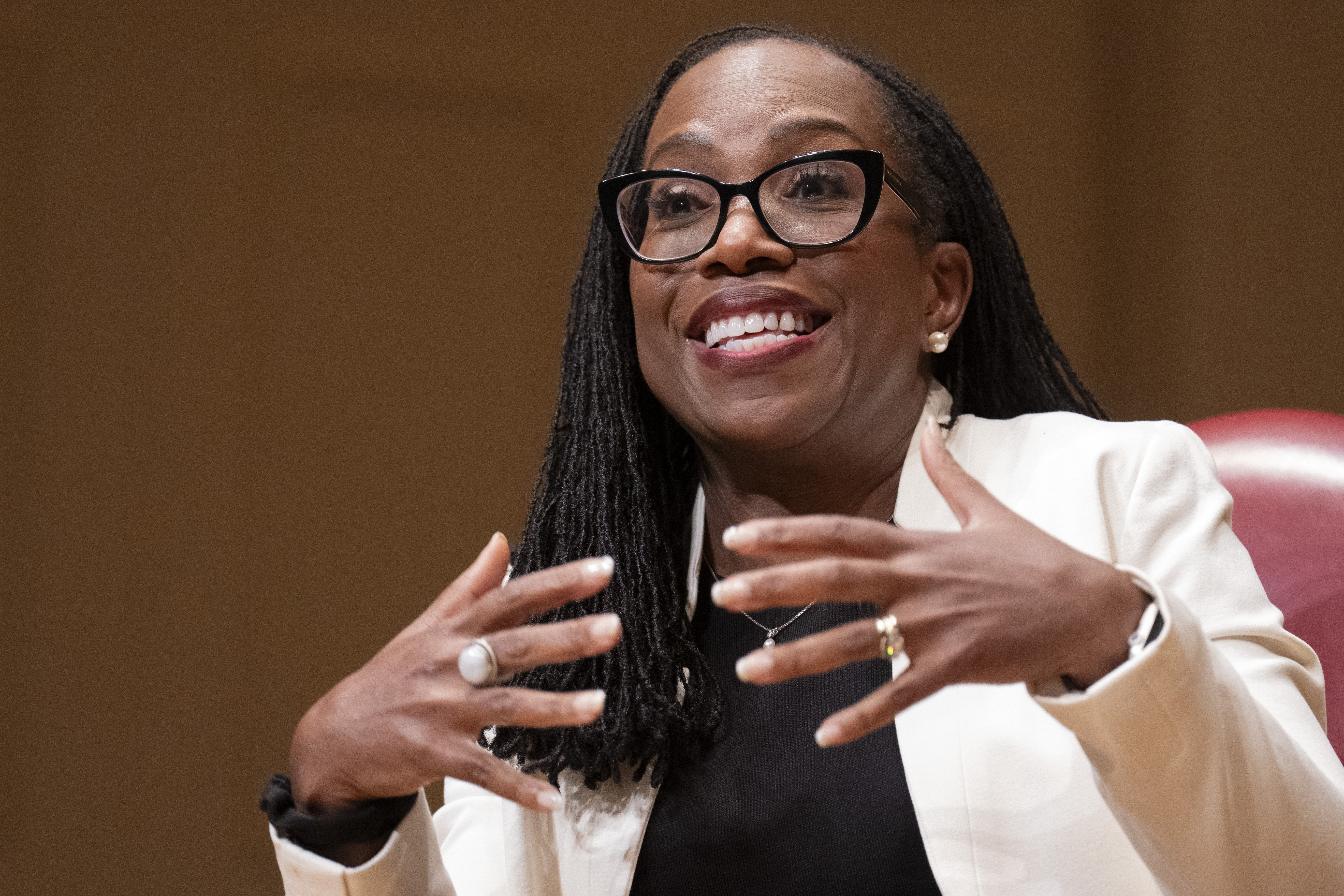
Justice Jackson: Raises SCOTUS Emergency Docket Criticism
Summary
- Justice Ketanji Brown Jackson criticized the Supreme Court's heavy reliance on emergency docket orders.
- She stated that this practice grants the federal government unfair access to the justices' time and attention.
- Jackson also argued that granting emergency stay requests, particularly from the Trump administration, disrespects trial judges' work.
- She warned that such decisions could weaken public trust in the judicial system.
- Jackson questioned the fairness of some parties receiving a "fast pass" to the Supreme Court.
Justice Jackson's Concerns Over Emergency Docket
Justice Jackson warned that the Supreme Court's decisions to reinstate blocked Trump administration policies through the emergency docket could erode public confidence in the judicial system.
Justice Ketanji Brown Jackson recently articulated significant concerns regarding the Supreme Court's increasing reliance on its emergency docket. Speaking at the University of the District of Columbia David A. Clarke School of Law, Justice Jackson highlighted how this procedural mechanism grants the federal government what she perceives as undue access to the justices' limited time and attention. Her remarks, reported by Law.com, underscore a growing judicial scrutiny of the Supreme Court's emergency orders.
She questioned the fairness of a system where certain litigants appear to receive a "fast pass" to the nation's highest court, bypassing the standard appellate process, while numerous other parties patiently await their turn. This sentiment was further emphasized by her observation that some emergency docket filers seem to have the Supreme Court on "speed dial," suggesting a privileged and expedited pathway to judicial review.
Impact on Judicial Process and Public Trust
Justice Jackson's criticism extended to her colleagues' past willingness to grant emergency stay requests, particularly those originating from the Trump administration. She characterized these actions as disrespectful to the meticulous work performed by trial judges, whose decisions are often overturned or stayed without full briefing and argument. This aspect of her critique highlights a potential undermining of the lower courts' authority and the traditional judicial hierarchy.
Furthermore, Justice Jackson warned that the Supreme Court's decisions to reinstate blocked Trump administration policies through the emergency docket could erode public confidence in the judicial system. The perception that the Court is acting swiftly on politically charged matters, often without transparent reasoning, risks weakening the public's trust in the impartiality and integrity of the judiciary. This concern about the judicial system's public trust regarding emergency orders is a central theme of her critique.
The "Shadow Docket" and its Implications
The issues raised by Justice Ketanji Brown Jackson pertain directly to what is often termed the "shadow docket," a term used to describe the Supreme Court's decisions made outside of its regular merits docket, typically through emergency applications, injunctions, and stays. These decisions are often rendered quickly, with minimal explanation, and without oral arguments, making them less transparent than standard rulings. Her pointed remarks contribute to the ongoing debate surrounding the appropriate use and scope of this expedited process.
The Justice's comments about the federal government's "unfair access" and the specific mention of "Jackson criticism Trump administration" policies being reinstated via emergency orders underscore how the shadow docket has become a significant arena for high-stakes legal battles, often with profound immediate effects on national policy. The frequency of SCOTUS emergency stay requests has drawn increasing attention from legal scholars and practitioners alike.
Why This Scrutiny Matters
Justice Jackson's public articulation of these concerns, particularly from within the Supreme Court itself, signals a significant internal debate about the Court's procedural norms and its public image. Her Justice Jackson SCOTUS emergency docket criticism suggests a potential shift in how future emergency applications might be viewed or adjudicated, prompting lawyers to consider the heightened scrutiny these filings may now face.
This internal critique by a sitting Justice could influence future filings or challenges to 'shadow docket' decisions, potentially leading to calls for greater transparency or stricter criteria for granting emergency relief. The ongoing discussion about Supreme Court emergency orders and their impact on judicial integrity is likely to continue shaping legal strategy and public discourse around the Court's role.
Practical Implications
Lawyers should note the growing judicial scrutiny of the Supreme Court's emergency docket, as articulated by Justice Jackson, which may influence future filings or challenges to 'shadow docket' decisions. This signals a potential shift in how emergency applications are perceived and adjudicated, impacting strategy for urgent appeals and highlighting potential areas for procedural reform.
Source
Source: Original reporting via Law.com
How does this affect you?
Get an AI analysis of this article grounded in your jurisdictions, practice areas, and any policy documents you've uploaded to Wansom.
Finish Reading the Full Story and the Expert Analysis.
Get the latest legal & regulatory intelligence in United States
Wansom is AI and can make mistakes.