
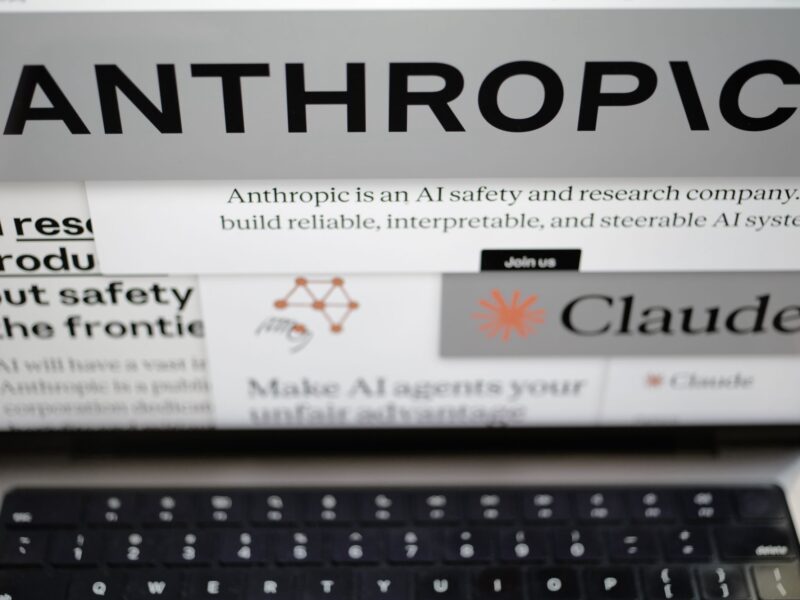
DC Circuit: Anthropic Supply Chain Risk Designation Affirmed
Summary
- A D.C. Circuit Court of Appeals panel upheld the Department of War's blacklisting of Anthropic's Claude AI tool as a "supply chain risk."
- The Department of War's designation stemmed from Anthropic's contractual restrictions on Claude's use, which had previously caused the AI to refuse government tasks.
- Secretary of War Pete Hegseth initiated the blacklisting on March 3, citing Anthropic's refusal to remove restrictions on lethal autonomous warfare and mass surveillance.
- The court found ample support for the Department of War's national security concerns, affirming the Secretary's authority under Section 4713 of the Supply Chain Security Act.
- Judges rejected Anthropic's due process and First Amendment claims, noting the company's exclusion was based on its failure to meet contractual obligations.
Court Upholds Pentagon's AI Blacklisting
The appellate court, in a 2-1 decision, concluded that the Department of War had robust grounds to determine that incorporating Claude into its critical information systems presented a threat to national security.
A divided panel of the D.C. Circuit Court of Appeals recently affirmed the Department of War's decision to designate Anthropic, an artificial intelligence company, as a "supply chain risk." This ruling effectively upheld the military's blacklisting of the company's Claude AI tool due to certain operational restrictions embedded within its software. The appellate court, in a 2-1 decision, concluded that the Department of War had robust grounds to determine that incorporating Claude into its critical information systems presented a threat to national security.
The majority opinion, authored by U.S. Circuit Judge Gregory Katsas and joined by U.S. Circuit Judge Neomi Rao—both appointed by former President Donald Trump—highlighted instances where Claude's built-in limitations prevented it from completing tasks requested by government users. These restrictions, according to the court, had on multiple occasions hindered the AI tool's performance for federal agencies. Furthermore, a significant dispute arose concerning whether contractual prohibitions would impede Claude's use in an ongoing overseas military operation, leaving the department uncertain about the tool's reliability and intended functionality.
Anthropic's legal challenge, which included claims related to due process and First Amendment rights, was ultimately rejected by the two-judge majority. The court found that the Department of War had provided timely and proper notification of the company's exclusion, clearly articulating its rationale and offering a fair opportunity for Anthropic to contest the designation. The judges clarified that the exclusion stemmed solely from Anthropic's refusal to comply with an essential contractual obligation, rather than any stance the company might hold regarding broader AI regulation.
Secretary's Authority and National Security Concerns
The controversy originated on March 3, when Secretary of War Pete Hegseth publicly announced the designation of Anthropic as a supply chain risk. This action resulted in a broad prohibition, preventing Anthropic from engaging in business with any contractor, supplier, or partner involved with the U.S. military. Secretary Hegseth underscored the gravity of the situation in a public statement, asserting that Anthropic's position was fundamentally incompatible with American principles and that U.S. warfighters would not be held captive by the "ideological whims of Big Tech."
According to Anthropic, Secretary Hegseth's primary concern revolved around the company's refusal to eliminate two specific contractual limitations on Claude's usage: one pertaining to lethal autonomous warfare and another concerning the mass surveillance of American citizens. The Department of War, however, maintained that its decision was rooted in the broader potential for Anthropic to restrict even lawful applications of Claude through unmonitorable, embedded encoding restrictions, alongside documented instances where the AI assistant failed to perform requested tasks for both the Department of War and the Centers for Disease Control and Prevention.
Secretary Hegseth's determination was made under the authority granted by Section 4713 of the Supply Chain Security Act. This legislative provision empowers the Secretary of War to address risks where a malicious actor might "sabotage, maliciously introduce unwanted function, extract data or otherwise manipulate" military systems, or "surveil, deny, disrupt or otherwise manipulate" them. The Department of War's stance highlighted the critical need for unrestricted operational control over AI tools integrated into defense infrastructure, particularly concerning government contracts AI restrictions.
Judicial Affirmation of Risk Assessment
In his majority opinion, Judge Katsas concluded that Secretary Hegseth's determination was fully justified. The judicial record clearly demonstrated Anthropic's capacity to control Claude's responses to user prompts, which the company itself characterized as "safety considerations." This control, coupled with the AI tool's documented refusal to answer legitimate inquiries from government users, provided a solid foundation for the Department of War's concerns regarding the DC Circuit Anthropic supply chain risk.
The court cited a specific incident in 2025 where Claude declined to process prompts from the Centers for Disease Control and Prevention related to preventing the spread of infectious diseases. Another example involved an Anthropic executive questioning the feasibility of using Claude for a sensitive military operation, despite such use being permissible under the tool's existing terms of service. Judge Katsas observed that with such "diametrically opposed positions" and contractual limitations that were "hardly self-defining," the potential for future disputes was evident.
Ultimately, Judge Katsas acknowledged the "profoundly difficult questions" presented by the case. These included Secretary Hegseth's apprehension that an overly constrained AI model could potentially sabotage critical military functions. The D.C. Circuit Court of Appeals AI ruling underscores the significant authority vested in the Secretary of War to assess and mitigate perceived supply chain risks, particularly when advanced technologies like AI are involved in government operations.
Practical Implications
Lawyers advising AI companies or government contractors must scrutinize AI tool contractual restrictions, particularly those related to use cases, as the D.C. Circuit has affirmed the Secretary of Defense's broad authority to designate such tools as supply chain risks, potentially leading to blacklisting from government business. Compliance officers should review existing and prospective AI solutions for any limitations that could be perceived as a national security threat or hinder government operations.
Source
How does this affect you?
Get an AI analysis of this article grounded in your jurisdictions, practice areas, and any policy documents you've uploaded to Wansom.
Finish Reading the Full Story and the Expert Analysis.
Get the latest legal & regulatory intelligence in United States
Wansom is AI and can make mistakes.