
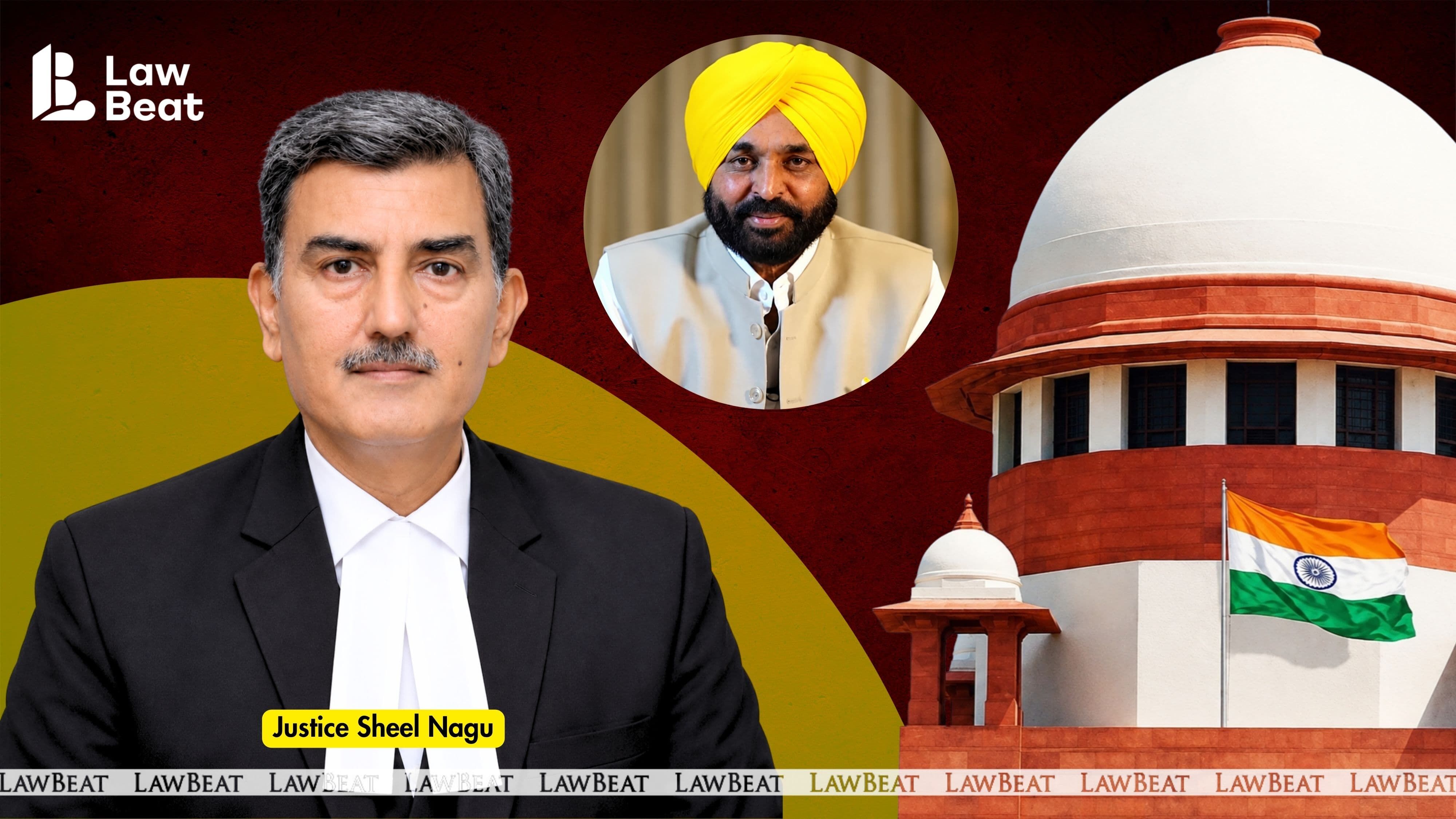
Justice Datta Recusal: Punjab CM Office CBI Probe Case Reassigned
Summary
- Justice Dipankar Datta recused from hearing the Punjab Government's challenge to a CBI probe into the Chief Minister's office.
- Justice Sheel Nagu also recused, having previously served as Chief Justice of the Punjab and Haryana High Court.
- The Supreme Court will reassign the Punjab government's appeal against a High Court order mandating a CBI investigation into corruption allegations.
- The Punjab government argues the High Court lacked sufficient justification to transfer the corruption probe to a central agency.
- The case, involving allegations linked to Chief Minister Bhagwant Mann's office, is scheduled for consideration on Monday, October 9, 2026.
Judicial Recusals and Reassignment
The Supreme Court's eventual ruling will provide crucial clarity on the scope and justification required for High Courts to mandate investigations by central agencies against state authorities.
Justice Dipankar Datta recently recused himself from presiding over the Punjab Government's appeal against a Punjab and Haryana High Court directive. This directive mandated a Central Bureau of Investigation (CBI) probe into allegations of corruption linked to the Chief Minister's office. During the proceedings, the bench, led by Justice Datta, specifically instructed that the case should not be assigned to Justice Sheel Nagu, indicating that the order would be formally signed and then presented to the Chief Justice for allocation to one of the seventeen other available benches.
Justice Sheel Nagu also independently recused from the same appeal. Notably, Justice Nagu had served as the Chief Justice of the Punjab and Haryana High Court prior to his elevation to the Supreme Court. While no explicit reason was provided for Justice Nagu's recusal, the context of his previous role might be inferred. During the hearing, Senior Advocate Jaideep Gupta informed the bench that certain aspects were not being relied upon, to which Justice Datta remarked, "I know. One doesn’t know… from where the attack will come." Senior Advocate Vikram Chaudhari concurred with this sentiment, acknowledging the unpredictable nature of such high-stakes legal challenges.
Following these recusals, Justice Datta confirmed that the matter would be referred to the Chief Justice of India for administrative reassignment. He reiterated the availability of numerous other benches, ensuring the case would proceed. Consequently, the appeal will now be listed before a newly constituted bench, under the Chief Justice's administrative authority, with the explicit condition that Justice Nagu will not be part of the new composition. This procedural step ensures impartiality and addresses any potential conflicts of interest arising from the recusals.
The Underlying Legal Challenge
The Supreme Court is set to review the Punjab Government's challenge to a significant order issued by the Punjab and Haryana High Court. This High Court order directed the CBI to not only register a criminal case but also to conduct a thorough investigation into corruption allegations purportedly connected with the office of Chief Minister Bhagwant Mann. The State of Punjab formally lodged its appeal with the Supreme Court on October 6, seeking to overturn this directive.
The core of the Punjab Government's contention lies in its questioning of the High Court's authority and justification for entrusting such an investigation to a central agency like the CBI. The state argues that the High Court ought not to have transferred the matter to the CBI without demonstrating sufficient cause or necessity for an independent central body to take over the probe. The allegations themselves revolve around purported corrupt practices and the alleged involvement of individuals associated with the Chief Minister's Office, making the High Court's directive particularly sensitive and consequential for the state administration.
Broader Implications
This development highlights the procedural implications of judicial recusals in high-profile cases, particularly those involving state governments and central investigative agencies. The Supreme Court's eventual review of the Punjab and Haryana High Court's order will carry significant weight, as it will scrutinize the parameters within which High Courts can mandate investigations by central agencies against state authorities. The outcome will provide crucial clarity on the scope and justification required for such directives, especially when allegations are directly linked to the office of an incumbent Chief Minister.
The Punjab Government's plea seeks relief from the CBI probe, emphasizing that the High Court's decision to involve a central agency lacked adequate justification. The case, titled 'State of Punjab v. Nikhil Saraf,' was originally heard by a bench comprising Justices Dipankar Datta and Sheel Nagu. The Supreme Court is scheduled to consider the Punjab Government’s challenge on Monday, October 9, 2026, following the reassignment process initiated by the Chief Justice. The resolution of this matter will set important precedents regarding the balance of power between state and central investigative bodies and the judiciary's role in overseeing such high-stakes corruption allegations.
Practical Implications
This development highlights the procedural implications of judicial recusals in high-profile cases, particularly those involving state governments and central investigative agencies. Lawyers should monitor the Supreme Court's reassignment and subsequent hearing of the Punjab government's challenge, as the ruling will provide clarity on the scope and justification required for High Courts to mandate CBI investigations against state authorities.
Source
How does this affect you?
Get an AI analysis of this article grounded in your jurisdictions, practice areas, and any policy documents you've uploaded to Wansom.
Finish Reading the Full Story and the Expert Analysis.
Get the latest legal & regulatory intelligence in India
Wansom is AI and can make mistakes.