
Judge sinks homeowners’ case over Navy shipyard cleanup fraud
Summary
- A federal judge granted summary judgment to U.S. Naval contractor Tetra Tech, ruling it immune from claims related to alleged radioactivity cleanup fraud at the Hunters Point Naval Shipyard.
- U.S. District Judge James Donato based his decision on the Price-Anderson Act (PAA), which shields private entities in the nuclear industry from certain liability claims.
- The lawsuit, filed by current and former property owners, accused Tetra Tech of falsifying soil samples during the cleanup of the former Navy site, where radiation experiments and decontamination activities occurred.
- The PAA requires plaintiffs to demonstrate specific bodily injury or property damage to recover for radioactive exposure, a threshold the court found was not met.
- Developers Lennar Corporation and Five Point Holdings previously settled with plaintiffs for $6.3 million over related claims, but litigation against Tetra Tech continued for eight years.
What Happened
This ruling underscores the robust liability protections afforded to contractors under the Price-Anderson Act for nuclear-related incidents, even when fraud is alleged.
A federal judge has granted summary judgment to U.S. Naval contractor Tetra Tech, finding the company immune from a lawsuit brought by property owners concerning alleged radioactivity cleanup fraud at the Hunters Point Naval Shipyard near San Francisco. U.S. District Judge James Donato issued the ruling on Tuesday, concluding that the claims fall under the protective umbrella of the Price-Anderson Act (PAA), a federal statute designed to limit liability for private entities involved in nuclear activities. This decision effectively shields Tetra Tech from allegations that its subsidiary, Tetra Tech EC, engaged in a scheme to falsify soil samples during the remediation of the former Navy site. A representative for Tetra Tech did not immediately respond to requests for comment regarding the ruling.
The lawsuit originated from accusations that Tetra Tech EC workers were instructed to destroy soil samples exhibiting "highest radioactive readings" and substitute them with samples from other, less contaminated areas, thereby avoiding "radioactive hot spots." These alleged actions came to light after two former Tetra Tech supervisors entered plea agreements, unsealed in May 2018, admitting to manipulating soil samples to conceal potential radioactivity. The plaintiffs, current and former homeowners who purchased properties on the site, claimed their homes subsequently lost up to hundreds of thousands of dollars in value due to these revelations.
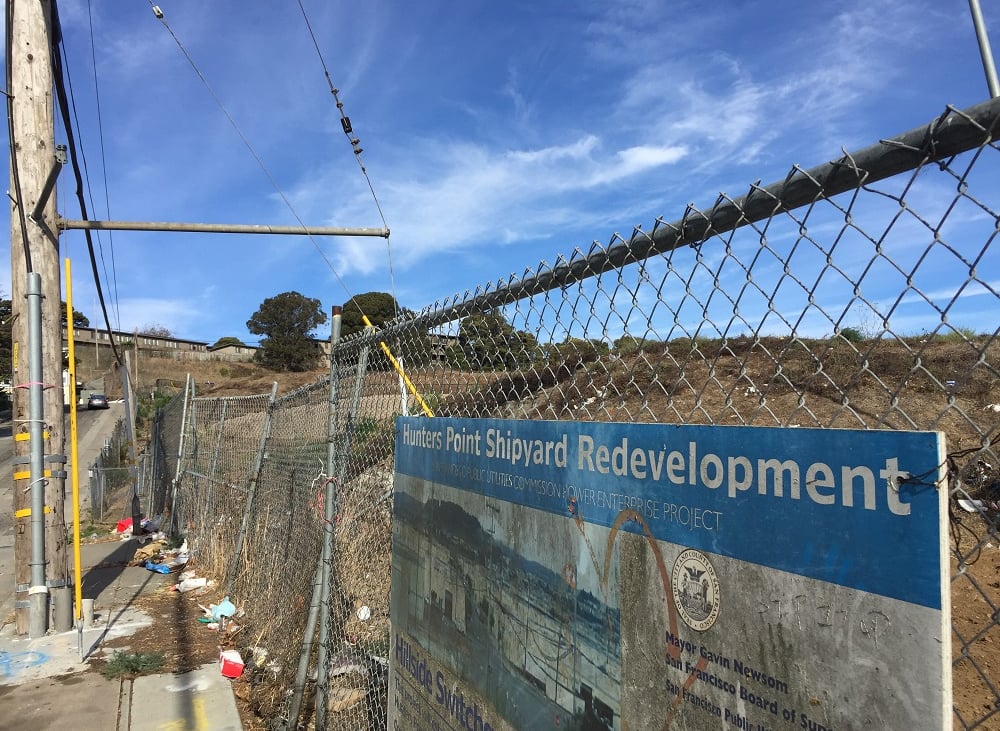
The Hunters Point shipyard, located in San Francisco's Bayview neighborhood, has a history of nuclear-related activities, including hosting radiation experiments between 1946 and 1969 and serving as a decontamination site for ships returning from hydrogen bomb tests. These operations are identified as potential sources of radioactive waste. The proposed class action, initially filed in August 2018, named Tetra Tech and its affiliates, alongside developers Lennar Corporation and Five Point Holdings, as defendants. While the developers settled with plaintiffs for $6.3 million in August 2020, a settlement approved by Judge Donato in March 2022, the litigation against Tetra Tech continued, with Donato denying class certification against the contractor in 2024 before this latest radioactivity cleanup fraud summary judgment.
Legal Context: The Price-Anderson Act
Judge Donato's ruling hinges on the broad scope of the Price-Anderson Act, a federal law enacted to encourage private sector participation in the nuclear industry by limiting liability for nuclear incidents. The Act designates certain lawsuits stemming from nuclear waste injuries as "public liability actions" covered by federal law, thereby preempting state-level claims. In his nine-page order, Judge Donato, an appointee of Barack Obama, explicitly stated that the plaintiffs' claims constituted a "public liability action" asserting "legal liability arising out of or resulting from a nuclear incident" against Tetra Tech, thus bringing them squarely under the PAA's purview.
A critical aspect of the PAA, as highlighted in the Judge James Donato Tetra Tech ruling, is its specific prohibition against plaintiffs seeking recovery for exposure to radioactive materials unless they can demonstrate "bodily injury, sickness, disease, or death, or loss of or damage to property, or loss of use of property." This stringent requirement for establishing recoverable damages under the PAA proved decisive in the court's decision. Judge Donato concluded that "Tetra Tech is entitled to judgment as a matter of law that plaintiffs cannot recover against them pursuant to the Price-Anderson Act," underscoring the robust protections the statute offers to contractors like Tetra Tech involved in nuclear-related cleanup efforts.
Why It Matters
The summary judgment in favor of Tetra Tech Price-Anderson Act immunity Hunters Point represents a significant setback for the hundreds of families involved in the Hunters Point shipyard cleanup lawsuit. Plaintiffs' attorneys expressed strong disappointment, with Bradley Bowles of Bowles & Verna condemning the ruling and stating that all legal options are being evaluated. Anne Marie Murphy of Cotchett, Pitre & McCarthy described the outcome as "hugely disappointing" and "tragic," noting the eight years of litigation and the months-long wait for this particular decision. Murphy emphasized the severe harm suffered by "hundreds of families out there that have been very badly harmed by the fraudulent cleanup, largely lower-income and retirement populations," who, she argues, are not seeing justice.
This ruling underscores the robust liability protections afforded to contractors under the Price-Anderson Act for nuclear-related incidents, even when fraud is alleged. For those involved in environmental remediation or development on sites with potential radioactive contamination, particularly those with government contracts, the decision highlights the PAA's broad scope and the stringent requirements for plaintiffs to establish recoverable damages. The $1 billion cleanup of the Hunters Point shipyard, a site where over 10,000 homes are planned, remains a complex and contentious issue, with this ruling significantly shaping the legal landscape for future claims related to such projects and the scope of Price-Anderson Act contractor liability.
Practical Implications
This ruling underscores the robust liability protections afforded to contractors under the Price-Anderson Act for nuclear-related incidents, even when fraud is alleged. Lawyers advising clients involved in environmental remediation or development on sites with potential radioactive contamination, particularly those with government contracts, must understand the PAA's broad scope and the stringent requirements for plaintiffs to establish recoverable damages.
Source
How does this affect your business?
Get an AI analysis of this article grounded in your jurisdictions, practice areas, and any policy documents you've uploaded to Wansom.
Wansom is AI and can make mistakes.