
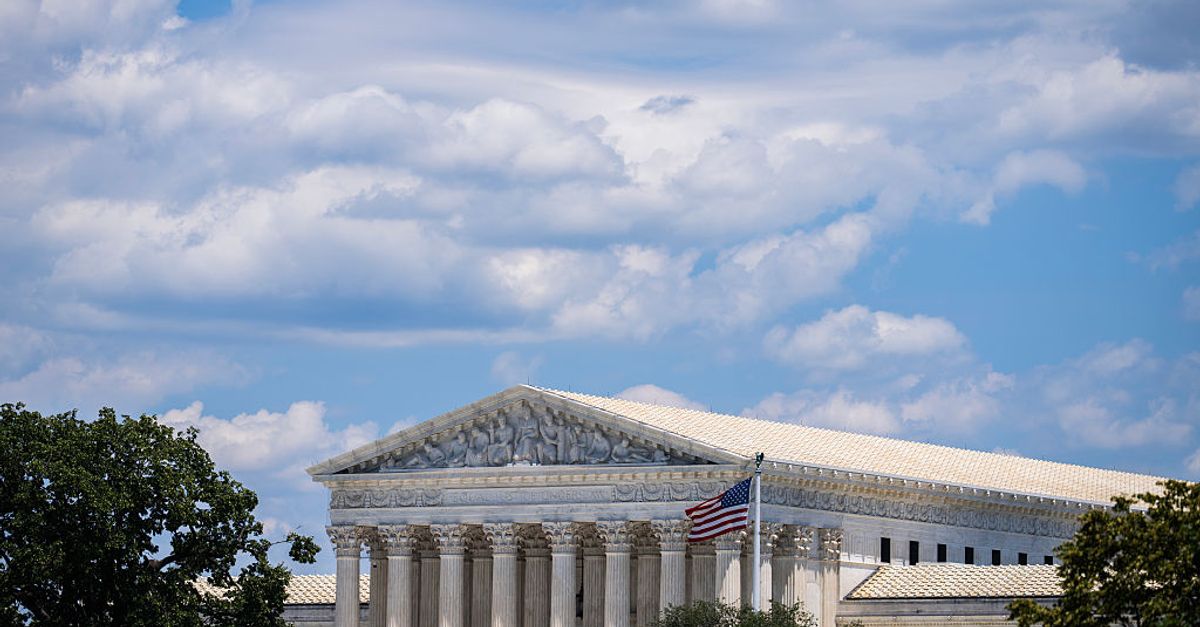
Court announces cases it will hear in October, which include significant disputes on climate change and immigration detention
Summary
- The Supreme Court will open its 2026-27 term on October 5 with oral arguments in Suncor Energy (U.S.A.) v. Commissioners of Boulder County.
- This initial case involves a Colorado county seeking millions from oil and gas companies for their alleged role in climate change exacerbation.
- The Court will consider whether federal law preempts state-level climate claims and if it has jurisdiction to hear the case.
- Other significant cases in October include Genalo v. Black, concerning constitutional rights to bond hearings for detained noncitizens, and Salazar v. Paramount Global, a digital privacy dispute.
- The justices are scheduled to hear arguments in seven cases over five days during the October session.
Supreme Court Kicks Off New Term with Climate Case
The outcome of these questions could have profound implications for future climate change litigation, potentially shaping the landscape of corporate accountability and the division of regulatory power between federal and state governments concerning environmental issues.
The Supreme Court of the United States is set to commence its 2026-27 term with oral arguments in a high-stakes climate change lawsuit. The justices' calendar for the October argument session, which was released on Tuesday afternoon, indicates that the case of Suncor Energy (U.S.A.) v. Commissioners of Boulder County will be the very first to be heard. This significant dispute is scheduled for Monday, October 5, marking the official start of the Court's new term.
This particular case originates from a Colorado county that is seeking substantial financial damages, totaling millions of dollars, from various oil and gas corporations. The county's claims allege that these companies bear responsibility for their role in exacerbating global climate change, leading to adverse impacts. The Court's decision to open its term with this case underscores the growing legal scrutiny faced by the energy sector regarding environmental liabilities.
Key Legal Questions in Suncor Energy v. Boulder County
At the heart of the Suncor Energy v. Boulder County dispute are two pivotal legal questions that the Supreme Court will address. The first concerns whether existing federal law serves to preempt, or override, claims brought under state law. These state-level claims specifically seek relief for injuries purportedly stemming from the effects of greenhouse gas emissions that cross state and international borders, impacting the global climate.
The second critical inquiry for the Court involves its own jurisdictional authority. The justices will consider whether the Supreme Court itself possesses the power to hear and decide this particular case. The outcome of these questions could have profound implications for future climate change litigation, potentially shaping the landscape of corporate accountability and the division of regulatory power between federal and state governments concerning environmental issues.
Beyond Climate: Other Noteworthy October Arguments
While Suncor Energy v. Boulder County will lead the docket, the Supreme Court's October argument session is packed with other significant cases. Over five days, the justices are slated to hear arguments in a total of seven cases. Among these, two additional disputes stand out for their potential impact on fundamental rights and digital privacy.
One such case is Genalo v. Black, which delves into the constitutional rights of noncitizens subjected to prolonged detention. The Court will examine whether there is a specific point at which a noncitizen's detention becomes so extended that it triggers a constitutional right to a bond hearing. Furthermore, if such a right exists, the justices will determine the standard the government must satisfy to justify continued detention. Another significant case is Salazar v. Paramount Global, a digital privacy matter that requires the interpretation of a federal law enacted in 1988. This statute was originally passed in response to an incident where a store disclosed a list of movies rented by Judge Robert Bork, an unsuccessful Supreme Court nominee, to a Washington reporter, highlighting enduring concerns about personal data protection.
Why These Cases Matter
The cases on the Supreme Court's October 2026 arguments calendar carry substantial weight for various sectors of American law and society. The Suncor Energy v. Boulder County case, with its focus on `SCOTUS climate change preemption`, could establish critical precedents for how climate-related damages are litigated and whether state or federal law will govern such claims. A ruling in favor of federal preemption could significantly limit the ability of states and local governments to pursue climate litigation against energy companies.
Meanwhile, `Genalo v. Black Supreme Court`’s consideration of `immigration detention bond hearing` rights will directly impact the lives of countless noncitizens and could redefine the limits of government power in immigration enforcement. The decision in `Salazar v. Paramount Global` will be crucial for interpreting digital privacy rights in an increasingly data-driven world, demonstrating how an older federal law, born from a specific privacy breach, applies to contemporary technological challenges. These cases collectively underscore the Court's role in addressing complex legal issues that resonate across environmental policy, civil liberties, and technological advancements.
Source
How does this affect your business?
Get an AI analysis of this article grounded in your jurisdictions, practice areas, and any policy documents you've uploaded to Wansom.
Wansom is AI and can make mistakes.