
Jonathan Rinderknecht: Palisades Fire Arson Retrial Underway
Summary
- Jonathan Rinderknecht is undergoing a second trial for allegedly starting the Lachman Fire, which led to the devastating Palisades Fire in January 2025.
- The first trial resulted in a mistrial after the jury split 10-2 in favor of acquitting Rinderknecht.
- Prosecutors presented digital evidence, including cellphone data, surveillance footage, and Rinderknecht's ChatGPT queries, to link him to the fire.
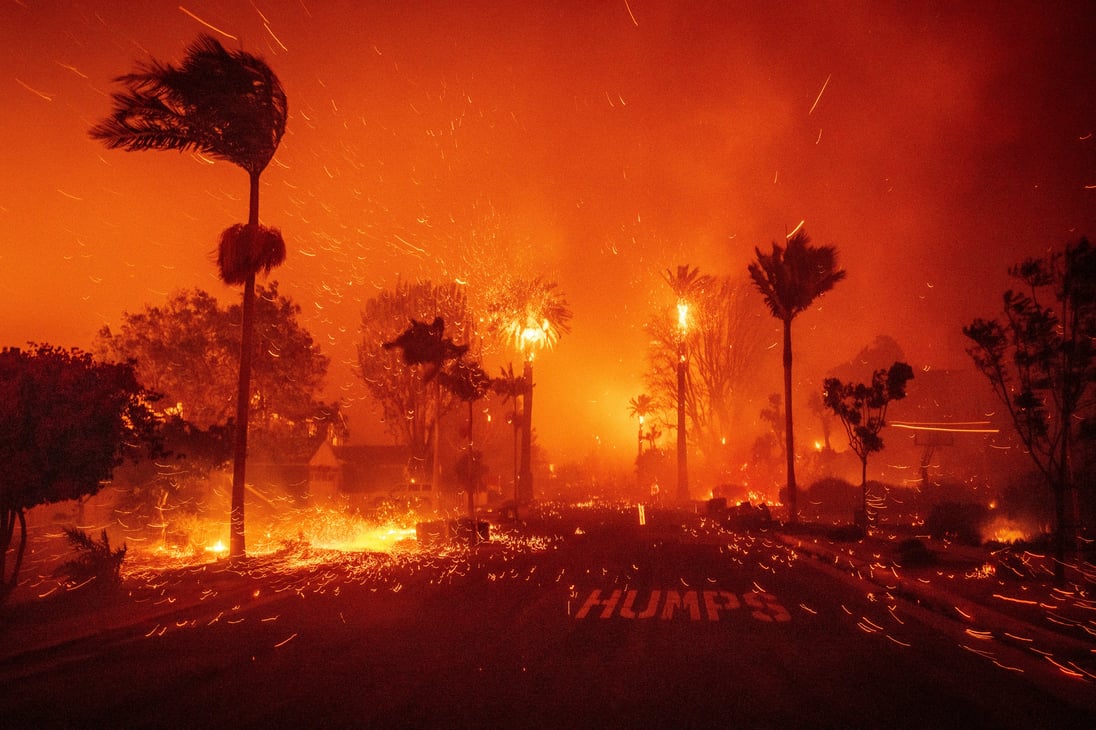
- The Palisades Fire destroyed thousands of homes in Los Angeles and Malibu and caused 12 fatalities.
- The defense argues there are too many gaps in the government's evidence to prove guilt beyond a reasonable doubt.
The Retrial for the Palisades Fire
The previous mistrial, where the jury leaned heavily towards acquittal, underscores the inherent difficulties in securing a conviction in cases heavily reliant on circumstantial and digital evidence, particularly when intent is a central element.
Federal prosecutors have once again presented their case to a jury, seeking a conviction against former Uber driver Jonathan Rinderknecht, 30, for his alleged role in igniting a devastating brush fire. This marks the second time Rinderknecht has faced trial concerning the incident, which began as the Lachman Fire on January 1, 2025, and subsequently escalated into the catastrophic Palisades Fire. The initial trial in June concluded with a hung jury, as jurors voted 10-2 in favor of acquittal, prompting U.S. District Judge Anne Hwang to declare a mistrial.
The prosecution contends that Rinderknecht intentionally started the Lachman Fire shortly after midnight on New Year's Day. This initial blaze, they argue, left smoldering embers that, six days later, were reignited by extreme Santa Ana winds on January 7, 2025, leading to the much larger Palisades Fire. This subsequent conflagration caused immense destruction, destroying thousands of homes in affluent areas like Pacific Palisades and Malibu, and tragically resulted in the deaths of 12 individuals before it was finally contained on January 31, 2025. Rinderknecht is currently facing two counts of arson: one for the Lachman Fire and another for the Palisades Fire.
Digital Footprints and Circumstantial Evidence
Assistant U.S. Attorney Mark Williams outlined the prosecution's narrative, suggesting Rinderknecht was in a state of extreme agitation on New Year's Eve. Evidence presented included angry text messages sent to a girlfriend who had requested space from him the previous night, alongside testimony from Uber passengers who reported enduring his rants during rides that evening. According to the prosecution, after dropping off a passenger in the Pacific Palisades area, near where he had previously resided, Rinderknecht parked his vehicle near a trailhead.
From there, he allegedly hiked in the dark to a location known as the "Hidden Buddha clearing" in the hills above residential properties. Surveillance camera footage from nearby residences, coupled with data from Rinderknecht's cellphone, placed him in the vicinity. Shortly after midnight, surveillance systems designed to detect early signs of wildfires recorded the initial indications of a brush fire near the clearing, precisely where Rinderknecht's cellphone data indicated his presence. Prosecutors claim he used a large grill lighter, later discovered in his car's glove compartment, to ignite the shrubs. Furthermore, they allege he lingered as the fire spread, then made a 911 call to report the blaze, a move Williams characterized as an attempt to establish an alibi. The prosecution also highlighted Rinderknecht's query to ChatGPT, asking if he could be held responsible for a fire started by a cigarette, which they presented as another effort to create a potential alibi.
Defense Challenges and Legal Precedent
Investigators, having identified Rinderknecht through his cellphone data and surveillance footage of his car in the neighborhood, brought him back to the clearing three weeks after the fire. During this visit, Rinderknecht informed them that he had gone there alone to observe fireworks, but found none and was the sole person present. Despite the detailed account from the prosecution, defense attorney Steven Haney, echoing his arguments from the first trial, maintained in his closing statement that the government's evidence contained too many inconsistencies and gaps.
Haney argued that these evidentiary shortcomings prevented the jury from concluding guilt beyond a reasonable doubt. He specifically highlighted that the possibility of other causes for the fire could not be definitively ruled out. The previous mistrial, where the jury leaned heavily towards acquittal, underscores the inherent difficulties in securing a conviction in cases heavily reliant on circumstantial and digital evidence, particularly when intent is a central element. U.S. District Judge Anne Hwang had also instructed the jurors in the first trial not to consider the Los Angeles Fire Department's response in their deliberations.
Practical Implications
This case highlights the complexities of prosecuting arson, particularly when relying heavily on circumstantial and digital evidence like cellphone data and ChatGPT queries. For criminal defense attorneys, it underscores the potential for hung juries even with strong prosecutorial claims and the importance of challenging the government's narrative regarding intent and alibi. Prosecutors should note the challenges in securing convictions in such cases, especially when a previous jury was split.
Source
Source: Original reporting via CN
How does this affect you?
Get an AI analysis of this article grounded in your jurisdictions, practice areas, and any policy documents you've uploaded to Wansom.
Finish Reading the Full Story and the Expert Analysis.
Get the latest legal & regulatory intelligence in United States
Wansom is AI and can make mistakes.