
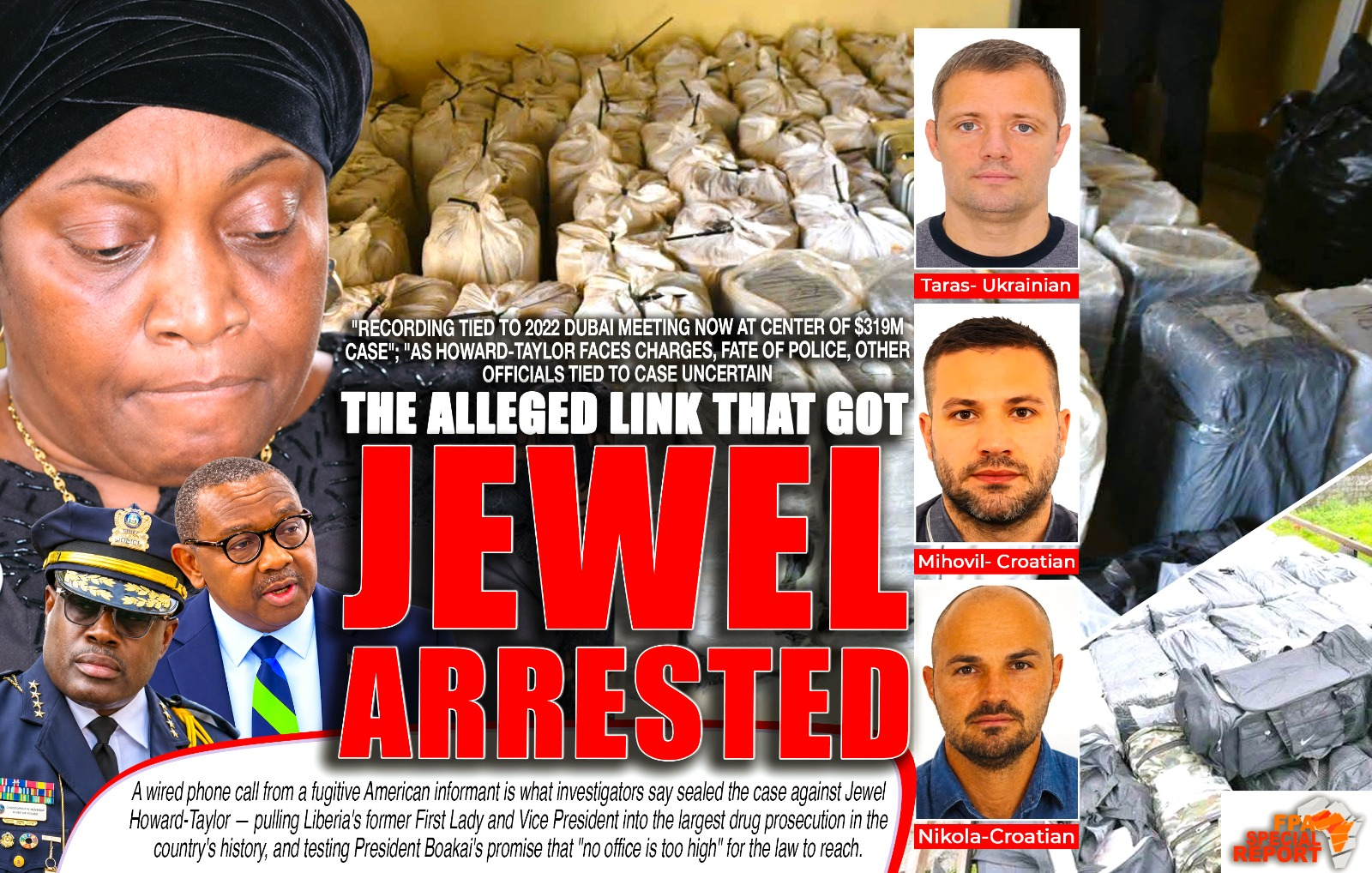
Jewel Howard-Taylor: Liberia Drug Case Recording Is Key Evidence
Summary
- Jewel Howard-Taylor, Liberia's former First Lady and Vice President, faces charges in the nation's largest drug prosecution, valued at $317 million.
- Investigators state that a wired phone call from a fugitive American informant provided the decisive evidence against her.
- The crucial recording is linked to a 2022 Dubai meeting, suggesting a transnational aspect to the alleged drug operation.
- This case tests President Boakai's pledge that no official is above the law, signaling a strong anti-corruption stance in Liberia.
- The fate of police and other officials potentially connected to the extensive drug case remains undetermined.
What Happened
This case serves as a potent demonstration of the Liberian government's stated commitment to combating corruption and drug offenses at all levels, including among the nation's most influential figures.
Liberia's largest drug prosecution in history, valued at $317 million, now directly implicates Jewel Howard-Taylor, the nation's former First Lady and Vice President. Investigators assert that a crucial piece of evidence, a wired phone call, was instrumental in solidifying the case against her. This development places a high-profile political figure at the center of a significant legal battle, testing the resolve of the current administration's commitment to accountability.
The charges against Ms. Howard-Taylor stem from an investigation that utilized a recording from a fugitive American informant. This particular wired phone call is reportedly linked to a meeting that took place in Dubai in 2022. The evidence gathered from this communication is considered by law enforcement to be the decisive factor in advancing the prosecution against the former Vice President, marking a pivotal moment in Liberian jurisprudence.
Legal Context and Evidence
The use of a wired phone call originating from a fugitive American informant as primary evidence highlights sophisticated investigative techniques being deployed in Liberia. Such electronic evidence, particularly when involving an informant, can be complex to introduce and defend against in court, yet investigators are confident it sealed the case. The connection of this recording to a 2022 Dubai meeting suggests a transnational dimension to the alleged drug trafficking operation, indicating a broad scope of criminal activity.
This prosecution underscores the growing emphasis on leveraging electronic surveillance and informant cooperation in high-stakes criminal cases within Liberia. The involvement of a fugitive informant adds another layer of complexity, raising questions about the circumstances under which the evidence was obtained and its admissibility. The sheer scale of the $317 million drug prosecution also signals a significant blow to organized crime networks operating within or through the country.
Why It Matters
The charges brought against Jewel Howard-Taylor carry substantial weight, particularly in light of President Boakai's public declaration that "no office is too high" for the law to reach. This case serves as a potent demonstration of the Liberian government's stated commitment to combating corruption and drug offenses at all levels, including among the nation's most influential figures. It sends a clear message that past or present political status may not offer immunity from legal scrutiny.
Beyond Ms. Howard-Taylor, the future of various police officers and other officials who may be connected to this extensive drug case remains uncertain. Their potential involvement, and the subsequent legal actions, could further expose systemic issues within Liberian institutions. This high-profile Liberia $317M drug prosecution, with its focus on a prominent political figure and its reliance on a critical Jewel Howard-Taylor Liberia drug case recording, is poised to redefine the landscape of anti-corruption and anti-narcotics efforts under President Boakai's administration.
Practical Implications
This case signals Liberia's heightened commitment to prosecuting high-level corruption and drug offenses, emphasizing that no official is immune. Lawyers should anticipate increased scrutiny in financial and drug-related cases, particularly concerning electronic evidence and the potential for informant cooperation.
Source
How does this affect you?
Get an AI analysis of this article grounded in your jurisdictions, practice areas, and any policy documents you've uploaded to Wansom.
Wansom is AI and can make mistakes.