
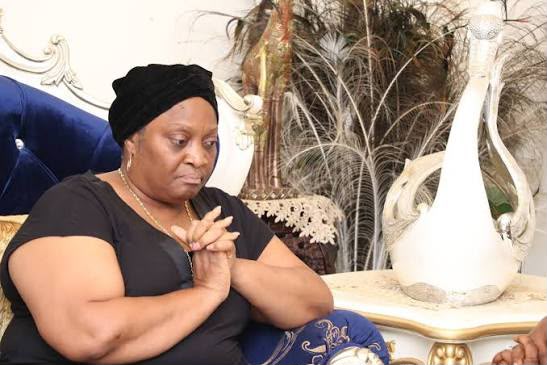
Jewel Howard-Taylor Drug Trafficking Charges Filed in Liberia
Summary
- Former Liberian Vice President Jewel Howard-Taylor has been charged with drug trafficking and money laundering following an airport detention.
- Authorities intercepted Howard-Taylor at Roberts International Airport on August 19 in connection with a transnational narcotics probe.
- Howard-Taylor's office denied all allegations, stating she was treated unfairly despite offering full cooperation.
- The defense team claims state officials intend to introduce fabricated, AI-generated evidence during court proceedings.
High-Profile Interception at Roberts International Airport
Spokespersons for Howard-Taylor alleged that state officials are actively preparing fabricated digital proof, suggesting that investigators may introduce deepfaked or AI-generated evidence in the criminal trial in Liberia to secure a conviction.
Following an August 19 operation at Roberts International Airport, former Liberian Vice President Jewel Howard-Taylor has been formally charged with serious criminal offenses linked to an ongoing transnational narcotics probe. Law enforcement authorities intercepted Howard-Taylor as she traveled through the country's primary international aviation hub, leading to formal charges that include drug trafficking and money laundering alongside several related criminal counts. The high-profile Roberts International Airport narcotics arrest represents a dramatic legal turn involving one of the nation's most prominent political figures.
The government's action marks a major development in cross-border law enforcement efforts within West Africa. By bringing the Jewel Howard-Taylor drug trafficking charges into public court proceedings, prosecutors have signaled an aggressive stance on transnational contraband syndicates. The inclusion of financial counts in the Jewel Howard-Taylor money laundering case demonstrates that authorities are targeting both the physical transit of controlled substances and the underlying illicit financial structures allegedly tied to international trade.
Defense Rejects Accusations and Cites AI Fabrication
In response to the criminal filing, representatives from Jewel Howard-Taylor’s office issued a sweeping denial of all claims, insisting on her complete innocence. According to official statements from her team, the former vice president had voluntarily offered full cooperation to investigating authorities prior to her detention. Despite this proactive posture, her office maintains that state actors subjected her to mistreatment and arbitrary enforcement procedures during her airport detention and subsequent processing.
Crucially, the defense team raised alarm over the integrity of the prosecution's evidentiary record. Spokespersons for Howard-Taylor alleged that state officials are actively preparing fabricated digital proof, suggesting that investigators may introduce deepfaked or AI-generated evidence in the criminal trial in Liberia to secure a conviction. This claim introduces a contentious technological challenge into the legal battle, putting the authenticity of the government's digital records at the center of the dispute.
Digital Forensics and Evidence Verification in Complex Litigation
The allegations surrounding fake digital materials underscore a growing crisis of evidentiary proof in high-stakes criminal matters across West Africa. As transnational investigations rely increasingly on electronic intercepts, financial records, and digital communications, the potential for manipulation—or the strategic assertion of manipulation—has reshaped defense strategies. In cases involving a Liberia former vice president drug prosecution, the threshold for establishing pristine chain of custody becomes paramount for both sides.
For defense attorneys and litigation counsel handling complex cross-border proceedings in the region, early preparation of digital forensics methodologies is now indispensable. Legal teams must implement rigorous verification protocols from the outset of an investigation to audit electronic media, scrutinize file metadata, and independently verify data integrity. Whether challenging potentially deepfaked materials or authenticating legitimate electronic disclosures, establishing clear technical standards early in litigation is vital to protecting due process and effectively countering state allegations.
Practical Implications
Defense and litigation counsel in high-profile West African cross-border matters must prepare digital forensics strategies and chain-of-custody verification early to effectively challenge or authenticate potentially deepfaked or AI-generated electronic evidence.
Source
How does this affect you?
Get an AI analysis of this article grounded in your jurisdictions, practice areas, and any policy documents you've uploaded to Wansom.
Wansom is AI and can make mistakes.