
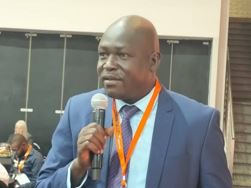
James Bidal: South Sudan Election Peace Crucial, Women Key to Stability
Summary
- James Bidal urged South Sudanese citizens to actively promote peace in their communities to prevent conflict ahead of the December general election.
- He emphasized that electoral violence originates from inflammatory rhetoric, hate speech, and disinformation, not solely from the ballot box.
- Advocates highlighted the indispensable role of women as leaders and peacebuilders in diffusing rumors and maintaining social stability.
- Officials stressed that thorough, continuous preparation across pre-election, polling, and post-election phases is crucial for a peaceful national outcome.
- A collective effort involving all stakeholders and proactive community engagement is deemed essential for delivering a successful and peaceful election.
Call for Peace Amidst Electoral Tensions
Empowering women as leaders and peacebuilders is crucial, as they serve as the primary defense against rumors, disinformation, and despair within their communities.
James Bidal, who leads the Secretariat for the South Sudan Human Rights Defenders Network (SSHRDN), has issued a strong call for citizens across South Sudan to actively disseminate messages of peace within their local communities. This urgent appeal comes as the nation prepares for its general election scheduled for December, with the aim of preemptively addressing and eliminating potential triggers of conflict. Speaking at a recent workshop, Bidal underscored the deep-seated causes of electoral instability, asserting that the seeds of violence are sown long before individuals cast their votes.
He articulated that conflict does not spontaneously erupt at polling stations but rather develops much earlier through the proliferation of inflammatory rhetoric, hate speech, and disinformation. Bidal's remarks highlighted the critical need for proactive engagement to counter these divisive elements before they escalate into widespread unrest. His intervention emphasizes a preventative approach to peacebuilding, focusing on community-level efforts to foster understanding and mitigate tensions in the run-up to the South Sudan December general election.
The Indispensable Role of Women in Peacebuilding
A central theme emerging from the discussions was the crucial and multifaceted role of women in fostering peace and stability. James Bidal highlighted that when women are empowered as leaders and active peacebuilders, they form the initial line of defense against societal fragmentation. He noted their unique capacity to diffuse rumors, effectively counter disinformation, and restore a sense of hope within their communities. Bidal further elaborated that women are indispensable throughout every stage of the electoral process, serving vital functions as voters, electoral officers, candidates, and community leaders. He posited that women are inherently leaders, by both nature and nurture, underscoring that every man reaching adulthood has been guided, nourished, and raised by a woman.
Echoing this sentiment, an official from the National Ministry of Peacebuilding stressed the pivotal role women play in maintaining social stability, particularly during politically charged periods. She observed that women live alongside and directly influence the choices of men who hold power or might resort to arms, including their brothers, husbands, fathers, and sons. The official asserted that it is the primary responsibility of women to stand firm, utilize their voices, and ensure the nation remains on a trajectory toward peace. Rosemary Kabaki, Head of Mission at Nonviolent Peaceforce, further reinforced this perspective, emphasizing that women possess the organizational power necessary to spearhead peace efforts across the entire country. She affirmed that women have a voice, actively engaging in speaking, planning, strategizing, and supporting one another, and insisted that their voices must continue to be heard. The collective emphasis on women's role in peacebuilding in South Sudan underscores their critical agency in preventing electoral instability.
Navigating Post-Election Divisions and Ensuring Continuous Preparation
Beyond the immediate pre-election phase, James Bidal also drew attention to the significant challenges that frequently emerge once election results are announced. He pointed out that communities often find themselves deeply divided, with supporters of unsuccessful candidates becoming disgruntled, thereby creating friction across various societal lines. Bidal posed a critical question regarding how the nation can effectively prepare to restore peace, foster harmony, and counteract potential violence in the aftermath of a contested election.
An official from the National Ministry of Peacebuilding further elaborated on the necessity of a comprehensive and ongoing approach to electoral readiness. She underscored that preparing for elections is not a singular event but a continuous process that encompasses the pre-election period, polling day itself, and the crucial post-election phase. The official emphasized that the thoroughness of current preparations will directly determine the ultimate outcome for the nation, highlighting the long-term implications of short-sighted planning. This holistic view is crucial for addressing the root causes of electoral instability and mitigating the impact of hate speech and disinformation that can persist beyond the voting period.
Collective Responsibility for a Peaceful Outcome
The workshop participants collectively affirmed that achieving a peaceful and successful election in South Sudan is a shared endeavor, transcending the capabilities of any single institution. An official from the National Ministry of Peacebuilding articulated that the workshop itself is vital for all stakeholders involved, stressing that a collective effort, shared responsibility, and proactive community engagement at every level are indispensable. She declared that everyone present in the room is a peacemaker, with a particular emphasis on the role of women in this capacity.
Rosemary Kabaki from Nonviolent Peaceforce reinforced the imperative for continuous and deliberate planning to ensure lasting peace. She expressed profound admiration for the spirit and resilience of the South Sudanese people, noting that it inspires immense hope for the future. Kabaki conveyed her heartfelt appreciation for being surrounded by individuals who deeply care for South Sudan, further solidifying the message that a unified approach is paramount for navigating the complexities of the upcoming December general election and securing a stable future.
Practical Implications
This article highlights the critical social and political risks associated with the upcoming South Sudan general election, particularly concerning electoral instability, hate speech, and disinformation. Lawyers advising clients operating in South Sudan should consider these factors in their risk assessments and due diligence, especially regarding potential disruptions or compliance challenges related to social unrest.
Source
How does this affect you?
Get an AI analysis of this article grounded in your jurisdictions, practice areas, and any policy documents you've uploaded to Wansom.
Finish Reading the Full Story and the Expert Analysis.
Get the latest legal & regulatory intelligence in South Sudan
Wansom is AI and can make mistakes.