
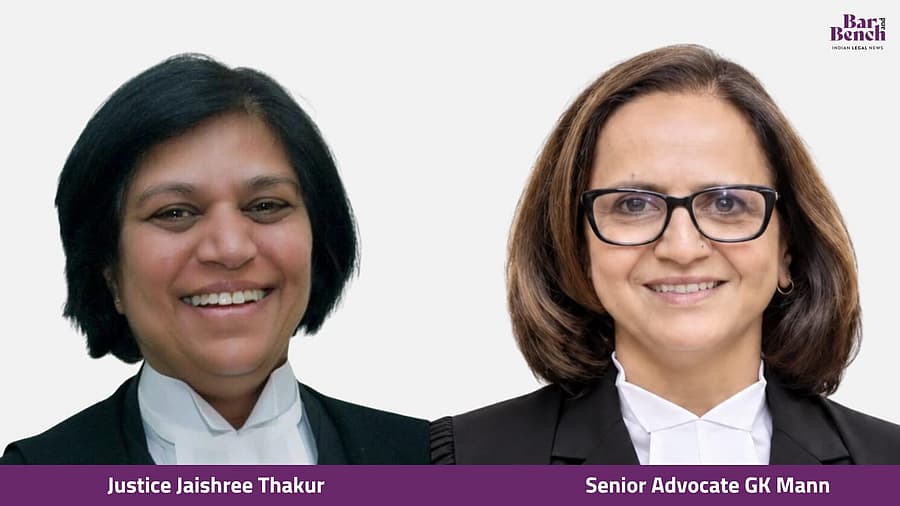
Punjab High Court: Jaishree Thakur, GK Mann Nominated to Punjab Bar Council
Summary
- Former Justice Jaishree Thakur and Senior Advocate Gursharan Kaur Mann have been nominated as members of the Bar Council of Punjab and Haryana.
- The nominations were made by the Chief Justice of the Punjab and Haryana High Court, following consultation with elected members and pursuant to an order dated September 12, 2026.
- These appointments align with Supreme Court directives issued in Yogamaya M.G. vs. Union of India and others, which mandate the co-option of women members to State Bar Councils.
- The High Court Registrar General formally communicated these selections through a memorandum.
- The move signifies a commitment to gender diversity within legal regulatory bodies, driven by Supreme Court guidance.
Key Nominations to Punjab & Haryana Bar Council
These appointments directly address the Supreme Court's mandate in Yogamaya M.G. vs. Union of India and others, which specifically called for the co-option of women members to State Bar Councils.
The Punjab and Haryana High Court has announced the nomination of two distinguished legal professionals, former Justice Jaishree Thakur and Senior Advocate Gursharan Kaur Mann, to serve as members of the Bar Council of Punjab and Haryana. These significant appointments underscore a commitment to enhancing representation within the legal regulatory body.
The formal communication regarding these selections was issued by the High Court Registrar General through a memorandum. This document clarified that the Chief Justice of the High Court was responsible for making these nominations. The Chief Justice's decision followed a consultative process involving the already elected members of the State Bar Council, ensuring a collaborative approach to these key appointments.
Crucially, these nominations were made pursuant to a specific directive, an order dated September 12, 2026. This forward-looking date indicates a proactive strategy in planning for the future composition of the Bar Council. The inclusion of both a former judge and a senior advocate brings a wealth of experience and diverse perspectives to the council's deliberations and governance.
Supreme Court Mandate for Gender Diversity
These appointments directly address the Supreme Court's mandate in Yogamaya M.G. vs. Union of India and others, which specifically called for the co-option of women members to State Bar Councils. The Supreme Court's directions aim to foster greater gender diversity and ensure that women legal professionals are adequately represented in the decision-making bodies that govern the legal profession across India.
The nominations of Jaishree Thakur and Gursharan Kaur Mann to the Punjab Haryana Bar Council are a clear demonstration of compliance with this judicial directive. By actively co-opting women members, the High Court is aligning with the broader national objective of promoting inclusivity and equitable representation within legal regulatory frameworks. This move reflects a growing recognition of the invaluable contributions women can make to legal governance.
Broader Implications for Legal Governance
The strategic appointments of former Justice Jaishree Thakur and Senior Advocate Gursharan Kaur Mann to the Bar Council of Punjab and Haryana carry significant implications beyond the immediate jurisdiction. They highlight a concerted effort to implement Supreme Court directives aimed at bolstering the presence of women members in State Bar Councils, thereby enriching the perspectives and efficacy of these crucial bodies.
This development serves as a compelling example of how judicial intervention can drive progressive changes in the composition of professional regulatory bodies. For legal systems globally, particularly in jurisdictions like those in Africa, where discussions around Bar Council composition and representation are ongoing, this precedent offers a relevant case study. It underscores the importance of actively seeking out and integrating diverse voices, especially women, into the governance structures of the legal profession. Such initiatives not only enhance legitimacy but also ensure that regulatory decisions are more reflective of the entire legal community and the society it serves.
Practical Implications
This development showcases a growing emphasis on gender diversity within legal regulatory bodies, driven by Supreme Court directives. African lawyers and compliance officers involved in legal profession governance or reform may find this a relevant precedent for discussions on Bar Council composition and representation in their own jurisdictions.
Source
How does this affect you?
Get an AI analysis of this article grounded in your jurisdictions, practice areas, and any policy documents you've uploaded to Wansom.
Finish Reading the Full Story and the Expert Analysis.
Get the latest legal & regulatory intelligence in India
Wansom is AI and can make mistakes.