
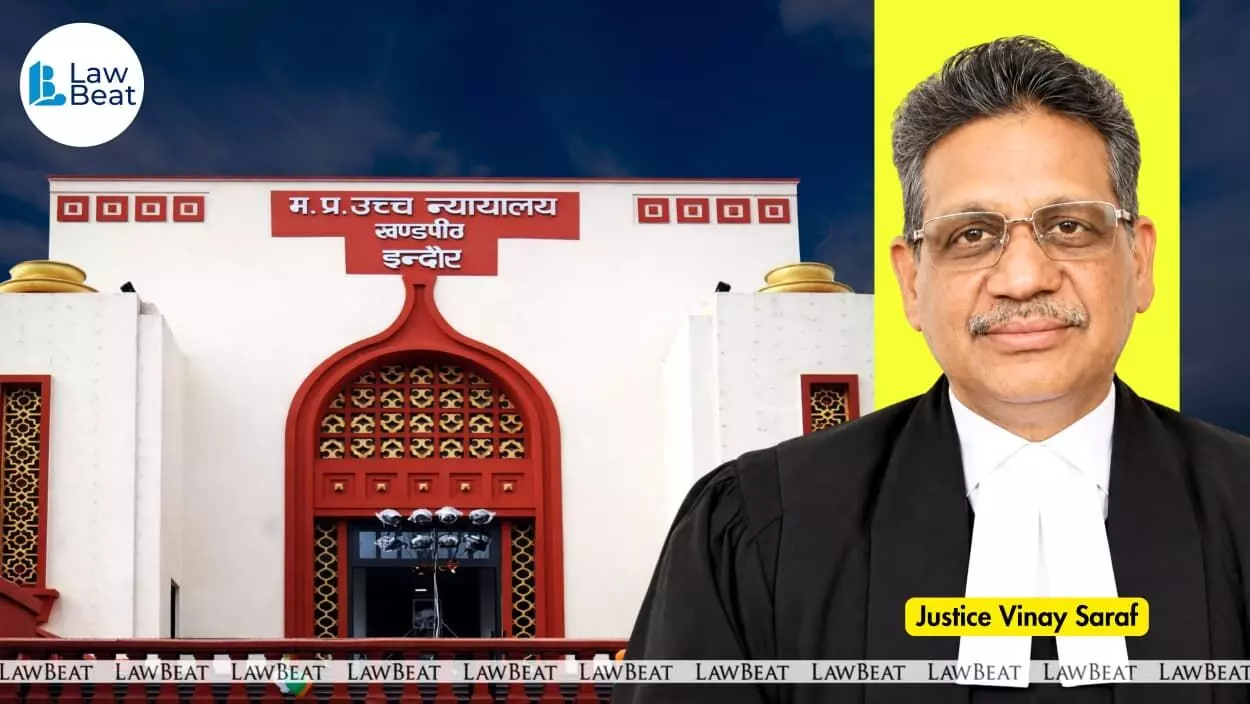
MP High Court: No Exclusive Bank Account for Accident Compensation
Summary
- The Madhya Pradesh High Court has ruled that motor accident claimants can receive compensation in any nationalized bank account, not solely Union Bank of India.
- Chief Justice Vinay Saraf set aside two Motor Accident Claims Tribunal orders that mandated UBI accounts for Fixed Deposit Receipts (FDRs).
- Registrars clarified that no High Court or Chief Justice directive ever forced claimants to use UBI accounts for compensation or FDRs.
- The Supreme Court's directions in Suo Motu Writ Petition (C) No. 7/2024 require tribunals to transfer funds directly to claimants' accounts in 'any nationalised bank'.
- While the dashboard for FDR creation is currently integrated only with UBI, FDRs not processed via the dashboard can be opened in any nationalized bank.
What Happened
The High Court affirmed that a claimant is free to open an account in any branch of any nationalized bank, and tribunals are legally bound to transfer the awarded amount directly to that chosen account.
The Madhya Pradesh High Court has determined that individuals receiving motor accident compensation are not obligated to establish an account with Union Bank of India (UBI) for either the direct disbursement of funds or the creation of Fixed Deposit Receipts (FDRs). This significant ruling, delivered by Chief Justice Vinay Saraf of the Madhya Pradesh High Court, specifically overturned two prior orders issued by the Motor Accident Claims Tribunal in Neemuch. The Tribunal's directives had previously insisted that any sums designated for investment in an FDR must exclusively be placed into a claimant's UBI account.
The revision petition was brought forth by Smt. Shahin and others, represented by Advocate Akhil Godha. Godha contended that no instructions from the Supreme Court, the Chief Justice, or the High Court Registry mandated the use of UBI, asserting that compensation could be transferred to any nationalized bank account. This particular dispute originated in MACC No. 141/2024. The Neemuch Tribunal had initially retracted its July 3, 2026 order on July 31, 2026, which had limited FDR investments to UBI accounts. However, on August 5, 2026, the Tribunal provided an explanation, stating that the High Court had developed an integrated online disbursement system, and that a Chief Justice's direction from September 25, 2025, along with a Registry letter dated October 8, 2025, necessitated the creation of FDRs solely through UBI.
Judicial Clarification
Recognizing the broad implications of this issue, the High Court requested the Principal Registrar to dispatch an officer to clarify the established procedures. Registrar (Judicial) Anil Kumar and Registrar (I.T.) Surya Prakash Sharma participated in the hearing via video conference, providing crucial testimony. They unequivocally stated that neither the Chief Justice nor the Registry had ever issued directives compelling tribunals to insist on Union Bank of India accounts for claimants.
Instead, they clarified that the existing instructions were designed to ensure compliance with a Supreme Court order mandating the direct transfer of compensation into claimants' accounts held with any nationalized bank, regardless of the specific branch. Further corroborating this, a compliance report dated October 27, 2026, was noted by the court, which explicitly stated that "there is no administrative instructions, which mandate to create Fixed Deposit Receipt in any particular or specific bank."
Legal Framework and Tribunal Obligations
The bench meticulously reviewed the Supreme Court's directions, which were issued on April 22, 2025, in Suo Motu Writ Petition (C) No. 7/2024. These directives specifically instruct tribunals to transfer funds directly to claimants' accounts and to invest deposited sums in fixed deposits "with any nationalised bank." The court also examined the Registrar General's operational procedures for the digital dashboard, which indicated that tribunals themselves, rather than the claimants, were expected to maintain accounts with either Union Bank of India or State Bank of India for administrative purposes.
Chief Justice Saraf ultimately concluded that there is no directive requiring the opening of a Union Bank of India account for the disbursement of awarded compensation or for the establishment of Fixed Term Deposits. The court emphasized that a claimant possesses the right to open an account in any branch of any nationalized bank, and tribunals are consequently under a clear obligation to transfer the awarded amount directly to the claimant's chosen account.
Claimant Choice and System Limitations
The High Court affirmed that a claimant is free to open an account in any branch of any nationalized bank, and tribunals are legally bound to transfer the awarded amount directly to that chosen account. This ruling significantly enhances flexibility for accident victims in receiving their compensation. However, the court did acknowledge a current practical limitation: the integrated dashboard system used for preparing FDRs is presently configured exclusively with Union Bank of India.
As a result, Fixed Deposit Receipts created through this specific dashboard can, for the time being, only be opened with UBI. The court noted that the integration of other nationalized banks into this system is actively underway, which will eventually broaden the available options. Crucially, the High Court clarified that if compensation is not disbursed through the dashboard system, FDRs can be created in any branch of any nationalised bank, providing an alternative for claimants.
Practical Implications
Lawyers representing motor accident claimants should advise their clients that compensation can be received in any nationalised bank account, not solely Union Bank of India, providing greater flexibility. While dashboard-integrated FDRs may still be limited to Union Bank of India for now, this ruling empowers claimants to challenge restrictive tribunal orders regarding account choice for direct compensation transfers.
Source
Source: Original reporting via Live Law
How does this affect you?
Get an AI analysis of this article grounded in your jurisdictions, practice areas, and any policy documents you've uploaded to Wansom.
Finish Reading the Full Story and the Expert Analysis.
Wansom is AI and can make mistakes.