
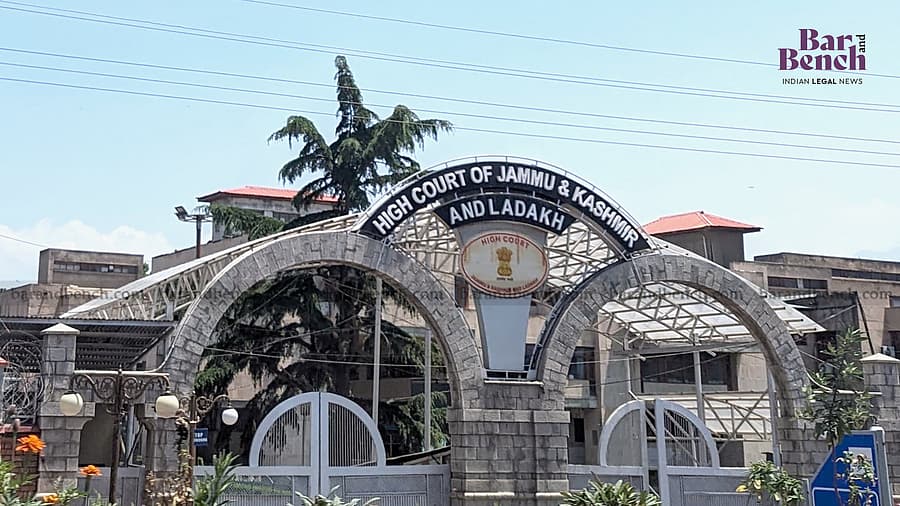
J&K High Court: UAPA Secessionist Slogans Are Unlawful Activity
Summary
- The J&K High Court reinstated UAPA charges against Mohd Yousuf Lone, ruling that secessionist slogans and leading a mob with separatist leaders prima facie constitute "unlawful activity."
- The court specified that sloganeering for secession by an accused leading a mob with a proscribed separatist organization head, coupled with public incitement and violence against security forces, falls under the UAPA's definition.
- Mohd Yousuf Lone was accused of leading a mob alongside Hurriyat Conference chairman Syed Ali Shah Geelani in Kupwara in November 2013, where anti-national slogans were allegedly raised and stones pelted.
- A trial court had previously discharged Lone from UAPA Section 13 and certain Ranbir Penal Code charges, transferring the case for trial on lesser charges of rioting and endangering personal safety.
J&K High Court Reinstates UAPA Charges
The court's decision specifically highlighted that the act of an accused person leading a mob while chanting slogans for secession, particularly when accompanied by the head of a proscribed separatist organization and coupled with the incitement of the public and violence targeting security forces, falls squarely within the definition of "unlawful activity" as outlined in the UAPA.
The High Court of Jammu and Kashmir and Ladakh recently determined that actions such as raising secessionist slogans, leading a crowd alongside separatist figures, and provoking violence against security forces can, on a preliminary assessment, be considered "unlawful activity" under the Unlawful Activities (Prevention) Act (UAPA). This significant observation came as a division bench, comprising Acting Chief Justice Sanjeev Kumar and Justice Mohd Yousuf Wani, moved to reinstate UAPA charges against an individual identified as Mohd Yousuf Lone.
The court's decision specifically highlighted that the act of an accused person leading a mob while chanting slogans for secession, particularly when accompanied by the head of a proscribed separatist organization and coupled with the incitement of the public and violence targeting security forces, falls squarely within the definition of "unlawful activity" as outlined in the UAPA. This ruling sets a notable precedent for interpreting the scope of the Unlawful Activities Prevention Act India, especially concerning public demonstrations and expressions of dissent in the region.
Background of the Case
The charges against Mohd Yousuf Lone stem from an incident in November 2013 in Kupwara. Lone was accused of leading a crowd in conjunction with Syed Ali Shah Geelani, who was then the chairman of the separatist Hurriyat Conference. During this event, the mob allegedly engaged in raising anti-national slogans and pelting stones at security forces, actions that the J&K High Court UAPA secessionist slogans ruling now directly addresses.
These allegations form the core of the case, illustrating the kind of public conduct that the High Court has now deemed to potentially attract serious legal consequences under the UAPA. The court's focus on the combination of leadership, association with separatist leaders UAPA prima facie, and direct incitement to violence underscores the gravity of the alleged actions.
Legal Interpretation of 'Unlawful Activity'
The J&K High Court's pronouncement offers a critical clarification on the UAPA unlawful activity definition. It emphasizes that the confluence of specific behaviors—namely, advocating for secession, directing a public gathering in the presence of a leader from a banned organization, and actively inciting violence—is sufficient for a prima facie finding of "unlawful activity." This interpretation broadens the scope of what constitutes an offense under the UAPA, particularly in the context of public assembly and expression.
The court's detailed observation serves as a guide for future cases involving similar allegations, particularly those concerning inciting violence UAPA J&K. It suggests that the mere presence of secessionist sloganeering, when combined with leadership and incitement, can trigger the application of this stringent anti-terror law, even at the initial stages of legal proceedings.
Procedural History and Reversal
Prior to the High Court's intervention, a trial court in Kupwara had discharged Mohd Yousuf Lone from prosecution under Section 13 of the UAPA, as well as Sections 171-C and 171-F of the Ranbir Penal Code (RPC), which pertain to undue influence during elections. This earlier decision by the trial court had effectively removed some of the more severe charges against Lone.
Following this discharge, the case was transferred to a Magistrate's court for trial on the remaining charges, specifically Sections 147 (rioting) and 336 (endangering personal safety) of the RPC. However, the recent ruling by the J&K High Court has now reversed the trial court's decision regarding the UAPA charges, thereby reinstating the more serious allegations against Lone and altering the trajectory of the legal proceedings.
Practical Implications
This ruling from the J&K High Court sets a precedent for what constitutes 'unlawful activity' under UAPA, particularly concerning public expression, secessionist slogans, and association with separatist leaders. Lawyers advising clients on freedom of speech, public assembly, or defending UAPA charges in India, especially in Jammu & Kashmir, must consider this expanded interpretation when assessing potential legal exposure.
Source
Source: Original reporting via Live Law
How does this affect you?
Get an AI analysis of this article grounded in your jurisdictions, practice areas, and any policy documents you've uploaded to Wansom.
Finish Reading the Full Story and the Expert Analysis.
Wansom is AI and can make mistakes.