
MP High Court: Long Cohabitation Presumption Marriage Validates Second Union
Summary
- The Madhya Pradesh High Court ruled that long cohabitation as husband and wife establishes a legal presumption of valid marriage, even if customary rites are unproven.
- The court upheld the two-fifths share of sons from a second marriage in ancestral property, dismissing an appeal challenging their legitimacy.
- Evidence of 26 years of cohabitation, corroborated by independent witnesses, was deemed sufficient to establish a valid marital union.
- The ruling cited the Supreme Court's precedent in *Chowdamma (dead) vs. Venkatappa*, which holds that a strong presumption of wedlock arises from partners living together for a long period.
- This decision reinforces the legal recognition of de facto relationships and impacts claims related to legitimacy of children and property rights in India.
Court Upholds Cohabitation as Valid Marriage
This significant judgment from the Madhya Pradesh High Court underscores that a prolonged period of cohabitation as husband and wife creates a robust legal presumption of a valid marriage, even in the absence of direct proof of specific ceremonial rites.
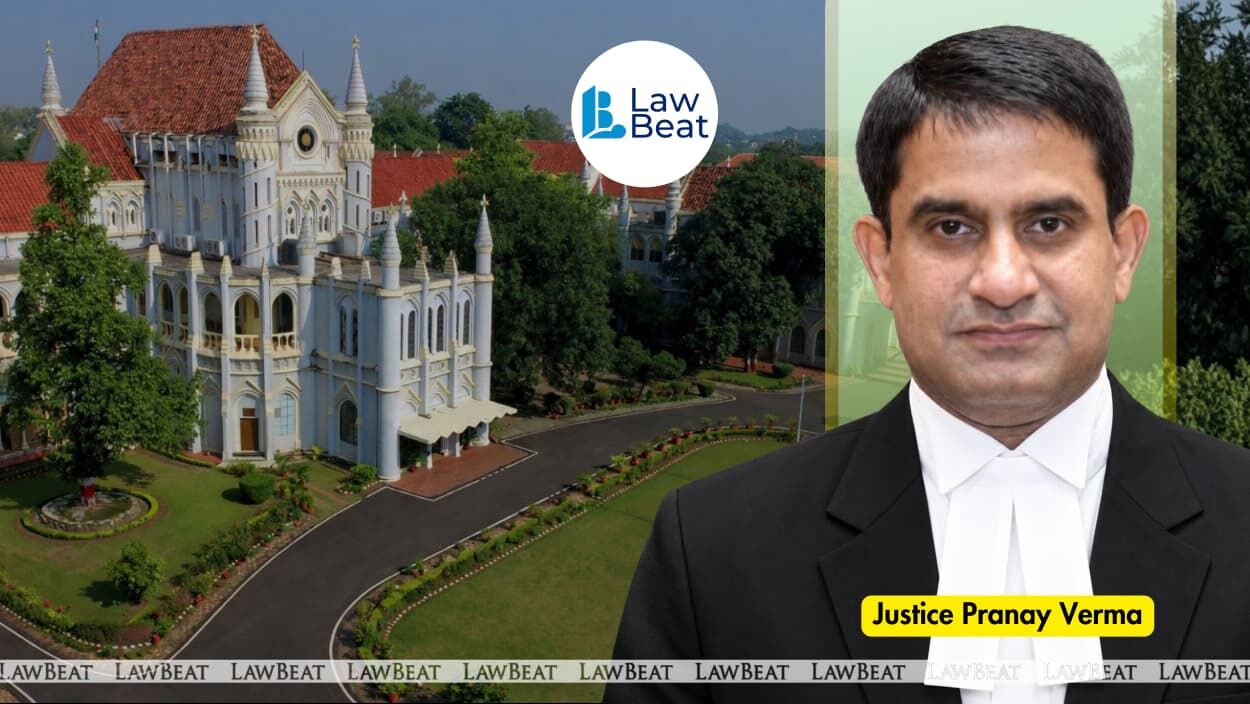
The Madhya Pradesh High Court at Jabalpur recently affirmed that a couple's long-term cohabitation as husband and wife establishes a legal presumption of a valid marriage, even when the specific customary form pleaded by the parties remains unproven. This significant ruling came as Justice Pranay Verma dismissed a second appeal, thereby upholding the entitlement of sons from a second marriage to a two-fifths share in ancestral land and a house. The court's decision reinforces the principle that sustained cohabitation can legally validate a marital union, impacting inheritance and property rights.
The case originated from a dispute involving Dhunna, his first wife Nimiya, and their son (identified as defendant no. 2), alongside Dhunna's second wife Rajiyabai (defendant no. 3) and their sons (the plaintiffs). After Nimiya's death, Dhunna reportedly married Rajiyabai under the Kari system. The plaintiffs, born from this union, sought their rightful share in land Dhunna had acquired through a partition with his brothers. The conflict escalated when defendant no. 2, born from Dhunna's first marriage, challenged the legitimacy of Rajiyabai's marriage and, consequently, the plaintiffs' claims, arguing they were illegitimate. This led to a legal battle over property shares, with the trial court partially decreeing the suit, and the first appellate court subsequently setting this aside to grant the plaintiffs a two-fifth share, prompting the appeal to the High Court.
Legal Arguments and Evidentiary Review
The High Court admitted the second appeal on two pivotal questions of law: whether a presumption of marriage could be drawn under Section 114 of the Evidence Act despite the failure to prove the Kari form, and if a compromise entered into by Dhunna as karta (manager of a joint family) was binding on the plaintiffs. The appellant's counsel, Nitin Kumar Agrawal, contended that the plaintiffs' failure to prove the pleaded Kari marriage weakened their case for an alternative presumption based on long cohabitation. He further argued that the property was joint family property, empowering Dhunna as karta to enter a binding compromise.
Conversely, Sanjeev Tuli, representing the respondent plaintiffs, submitted that the extensive cohabitation of Dhunna and Rajiyabai, widely recognized by society, was sufficient to raise a presumption of valid marriage, irrespective of the strict proof of the Kari Pratha. He also asserted that the land in question was Dhunna's self-acquired property from his partition, and therefore, the compromise decree, to which the plaintiffs were not made parties, could not be binding upon them. The court meticulously examined the evidence, noting Dhunna's testimony that Rajiyabai had resided with him as his wife for twenty-six years, a fact corroborated by independent witnesses who confirmed their long-standing relationship as husband and wife, even predating the birth of defendant no. 2.
Judicial Precedent and Presumption of Legitimacy
In its deliberation, the Madhya Pradesh High Court found no evidence suggesting that Rajiyabai lived as a 'keep' or that any legal impediment existed to their marriage. The court emphasized that the presumption would invariably favor the legitimacy of a marriage rather than its illegitimacy. This stance aligns with established legal principles and was strongly supported by the Supreme Court's decision in *Chowdamma (dead) vs. Venkatappa*.
That landmark Supreme Court ruling reiterated that "a strong presumption arises in favour of wedlock where the partners have lived together for a long spell as husband and wife." Drawing upon this precedent, the High Court concluded that such a powerful presumption of marriage, arising from prolonged cohabitation, could only be dislodged by unimpeachable evidence. The burden of providing such evidence rested squarely on the appellant, who ultimately failed to meet this stringent requirement, leading to the dismissal of the appeal and the affirmation of the plaintiffs' two-fifths share.
Broader Implications for Family Law
This significant judgment from the Madhya Pradesh High Court underscores that a prolonged period of cohabitation as husband and wife creates a robust legal presumption of a valid marriage, even in the absence of direct proof of specific ceremonial rites. The ruling provides crucial clarity for family law practitioners and individuals navigating complex relationships in India, particularly concerning the legal recognition of de facto unions. It reinforces the protection afforded to individuals in long-term relationships, ensuring their rights and the legitimacy of their children are recognized under the law.
The decision has profound implications for cases involving inheritance, property disputes, and the legitimacy of children from second marriages. By affirming the strength of the presumption of marriage based on long cohabitation, the court has provided a vital legal framework that safeguards the interests of parties who may lack formal marriage documentation but have lived as spouses for decades. This judicial stance ensures that the practical realities of social recognition and sustained partnership are given due weight in legal determinations, aligning with the spirit of Section 114 of the Evidence Act regarding the presumption of marriage long cohabitation India.
Practical Implications
Lawyers advising on family law, inheritance, or property disputes in India must recognize that long cohabitation can establish a valid marriage, even without direct proof of specific ceremonies. This strengthens the legal position of individuals in de facto relationships and impacts claims related to legitimacy and property rights, requiring careful consideration when assessing client cases.
Source
How does this affect you?
Get an AI analysis of this article grounded in your jurisdictions, practice areas, and any policy documents you've uploaded to Wansom.
Finish Reading the Full Story and the Expert Analysis.
Wansom is AI and can make mistakes.