
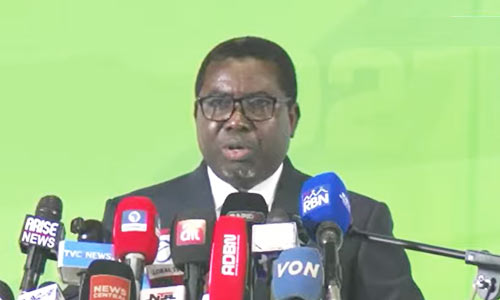
INEC to Announce Position on Supreme Court Electoral Act Judgment
The Independent National Electoral Commission (INEC) in Nigeria is set to announce its official position today regarding a Supreme Court judgment that affirmed the constitutionality of sections 77(5), 77(6), and 77(7) of the Electoral Act 2022, which also upheld INEC’s revised timetable and schedule of activities for the 2027 elections.
This announcement is of paramount legal significance for all stakeholders in Nigeria's political landscape, including political parties, aspirants, and electoral practitioners. It provides clarity on the legal framework governing candidate nomination and the electoral calendar, reinforcing the Supreme Court's definitive interpretation of key provisions of the Electoral Act. The affirmation of these sections by the apex court solidifies INEC's regulatory authority over party primaries and candidate submissions, ensuring a more structured and legally compliant electoral process. This clarity is vital for maintaining public confidence in the electoral system and preventing future disputes arising from ambiguities in the law.
The legal context for this development is firmly rooted in the Electoral Act 2022, particularly sections 77(5), 77(6), and 77(7), which address the conduct of party primaries, the submission of lists of candidates, and the powers of INEC to monitor and regulate these processes. The Supreme Court, as the highest judicial body in Nigeria, has delivered a binding judgment on the constitutionality of these provisions, meaning its pronouncement is final and must be adhered to by all lower courts and institutions. The Nigerian Constitution also provides the overarching legal framework for the establishment and functions of INEC, ensuring its independence and authority in electoral matters.
The key parties involved are the Independent National Electoral Commission (INEC), which is making the announcement, and the Supreme Court of Nigeria, whose judgment is the subject of the announcement. Additionally, four unnamed political parties are mentioned as protesting the omission of their candidates, indicating their direct interest in INEC's position and the implications of the Supreme Court ruling. While the specific litigants in the Supreme Court case are not named, their actions led to this definitive legal interpretation.
Electoral law practitioners and political parties must meticulously review INEC's forthcoming announcement for specific guidelines, deadlines, and any revised procedures for candidate nomination for the 2027 elections. Attorneys should advise their clients to ensure strict compliance with the Electoral Act 2022, as interpreted by the Supreme Court, and any subsequent directives from INEC, particularly concerning the conduct of primaries and the submission of candidate lists. The call for formal complaints from omitted candidates suggests a structured avenue for redress, which legal professionals should be prepared to navigate on behalf of their clients. The specific details of INEC's position are expected today, but the full outcome is not yet reported.
How does this affect you?
Get an AI analysis of this article grounded in your jurisdictions, practice areas, and any policy documents you've uploaded to Wansom.
Finish Reading the Full Story and the Expert Analysis.
Get the latest legal & regulatory intelligence in Nigeria
Wansom is AI and can make mistakes.