
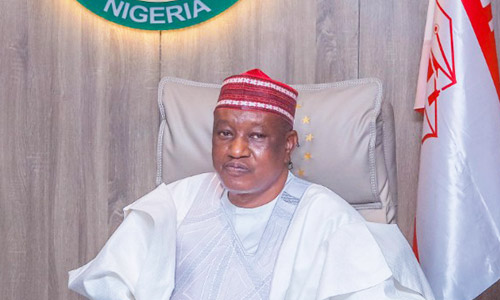
INEC: Gwarzo Omitted From Kano 2027 Governorship List By Court Order
Summary
- INEC excluded Aminu Abdussalam Gwarzo from its updated final list of candidates for the 2027 Kano governorship election.
- Gwarzo was the National Democratic Congress's governorship candidate for Kano State.
- The exclusion, which also affected the deputy governorship candidate, was explicitly attributed to a court order.
- The Independent National Electoral Commission published this updated list on October 31.
- This development emphasizes the judiciary's critical role in determining candidate eligibility for Nigerian elections.
Key Development in Kano Elections
The decision by the Independent National Electoral Commission highlights the significant influence of judicial directives on the final composition of candidate rosters for upcoming elections.
The Independent National Electoral Commission (INEC) recently released an updated final roster of candidates for the 2027 general elections, notably omitting the name of Aminu Abdussalam Gwarzo. Gwarzo, who was slated to contest for the governorship of Kano State under the banner of the National Democratic Congress (NDC), was excluded from this crucial publication. The electoral body's decision, made public on October 31, also extended to the NDC's deputy governorship candidate for the state.
This significant alteration to the list of prospective leaders for Kano State's top executive position stems directly from a judicial directive. INEC explicitly cited a court order as the basis for not including Gwarzo's name, indicating that the candidate's eligibility remains contingent upon the ultimate resolution of legal proceedings. The commission's stance reflects its adherence to judicial pronouncements that impact the electoral process.
Judicial Intervention and Candidate Eligibility
The exclusion of Aminu Abdussalam Gwarzo and his running mate from the 2027 Kano governorship list by INEC underscores the profound impact that judicial decisions can have on electoral outcomes. The electoral commission is mandated to uphold the rule of law, and as such, court orders regarding candidate eligibility or party disputes directly influence the final composition of candidate lists. This particular instance highlights a scenario where a candidate, despite being put forward by their party, cannot be officially recognized by the electoral body due to an ongoing or concluded legal challenge.
Such judicial interventions are not uncommon in Nigeria's political landscape, often arising from pre-election disputes concerning party primaries, constitutional requirements for candidates, or other legal technicalities. The Independent National Electoral Commission's public statement, implying that Gwarzo's inclusion is "subject to the final outcome of a court order," clearly articulates the provisional nature of candidate status when legal challenges are in play. This situation serves as a stark reminder of the legal hurdles aspirants must navigate beyond securing their party's nomination.
Implications for 2027 Polls
The decision by the Independent National Electoral Commission highlights the significant influence of judicial directives on the final composition of candidate rosters for upcoming elections. This development underscores the critical role of judicial pronouncements in shaping electoral outcomes and candidate eligibility in Nigeria. For political parties and their aspirants, the exclusion of a candidate like Aminu Abdussalam Gwarzo from the updated list for the Kano governorship race in 2027 signals the imperative of meticulous legal compliance throughout the pre-election phase.
Lawyers advising political parties and aspirants must closely monitor court orders pertaining to candidate lists and ensure all legal requirements are met to avoid last-minute disqualifications by INEC. The case of the National Democratic Congress candidate in Kano exemplifies how a court order can fundamentally alter the electoral landscape, even after initial lists have been published. This situation reinforces the need for comprehensive legal due diligence to safeguard candidacies against potential challenges that could lead to their removal from the ballot.
Practical Implications
This development underscores the critical role of judicial pronouncements in shaping electoral outcomes and candidate eligibility in Nigeria. Lawyers advising political parties and aspirants must closely monitor court orders pertaining to candidate lists and ensure all legal requirements are met to avoid last-minute disqualifications by INEC.
Source
How does this affect you?
Get an AI analysis of this article grounded in your jurisdictions, practice areas, and any policy documents you've uploaded to Wansom.
Finish Reading the Full Story and the Expert Analysis.
Wansom is AI and can make mistakes.