
Indian Supreme Court Must Protect Dissenting Speech, Says Abhay S Oka
Summary
- Retired Supreme Court Justice Abhay S Oka warned that India's democracy is at risk if the State continues to criminalize dissent.
- Justice Oka urged constitutional courts to quash prosecutions and protect freedom of speech and expression.
- The retired judge emphasized that it is not the function of courts to regulate or dictate what individuals should say or express.
A Warning on the Erosion of Democracy
It is not the function of the court to preach or teach the petitioner what he should say and what he should not have said,
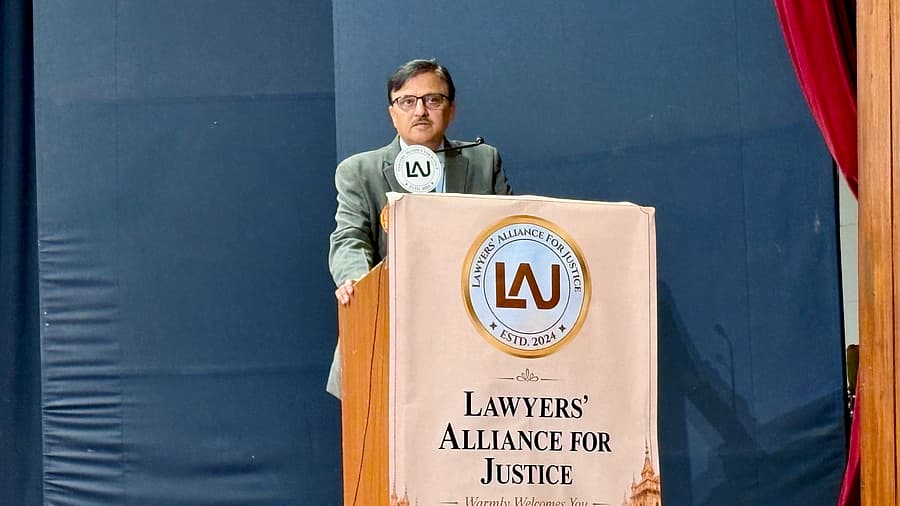
India's democracy is at risk of being undermined if the State continues to criminalize dissent, according to retired Supreme Court Justice Abhay S Oka. In a recent lecture, he emphasized that courts have a crucial role in protecting free speech and expression, particularly when fundamental rights are at stake.
Justice Oka's warning comes as the country grapples with increasing instances of peaceful protests being stifled or regulated by the State. He urged constitutional courts to quash such prosecutions and uphold the right to freedom of speech and expression.
The retired judge drew upon the Constituent Assembly debates, highlighting how the framers of the Constitution never envisioned a situation where citizens' demands would be ignored. Instead, they saw peaceful protests as an essential means for citizens to express their displeasure within constitutional bounds.
Free Speech and the Courts
Justice Oka's remarks underscored the delicate balance between free speech and the role of courts in regulating its content. He stressed that it is not the function of the court to preach or dictate what individuals should say or express, but rather to protect their fundamental rights.
The retired judge cited a crucial aspect of the Constitution: the right to freedom of speech and expression is not limited by the court's approval or disapproval of its content. Rather, it is the duty of the court to safeguard this right, even if the content may be unpopular or disagreeable.
This nuanced understanding of free speech is essential in a democratic society, where citizens have the right to express their opinions and dissent peacefully.
Implications for Lawyers and Compliance Officers
Justice Oka's warning on the erosion of democracy has significant implications for lawyers and compliance officers. As courts increasingly prioritize protection of free speech over criminalizing dissent, prosecution strategies related to peaceful protests may undergo a shift.
Lawyers and compliance officers should be aware of this potential change in precedent and adapt their approaches accordingly. This may involve re-examining existing policies and procedures related to peaceful protests and freedom of speech.
Ultimately, the protection of free speech is essential for maintaining a healthy democracy. As Justice Oka emphasized, it is not the function of courts to regulate or stifle dissent, but rather to safeguard the fundamental rights of citizens.
Practical Implications
Lawyers and compliance officers should watch for potential changes in prosecution strategies related to peaceful protests, as this ruling may set a precedent for courts to prioritize protection of free speech over criminalizing dissent.
Source
How does this affect your business?
Get an AI analysis of this article grounded in your jurisdictions, practice areas, and any policy documents you've uploaded to Wansom.
Wansom is AI and can make mistakes.