
Indian Supreme Court: Arbitral Award Modification Uncertainty Sparks Concern
Summary
- The Indian Supreme Court's ruling allowing modification of arbitral awards has caused uncertainty among international arbitration practitioners.
- VK Rajah, who previously served as the Vice President of the ICC International Court of Arbitration, expressed "consternation" over the unpredictability this creates.
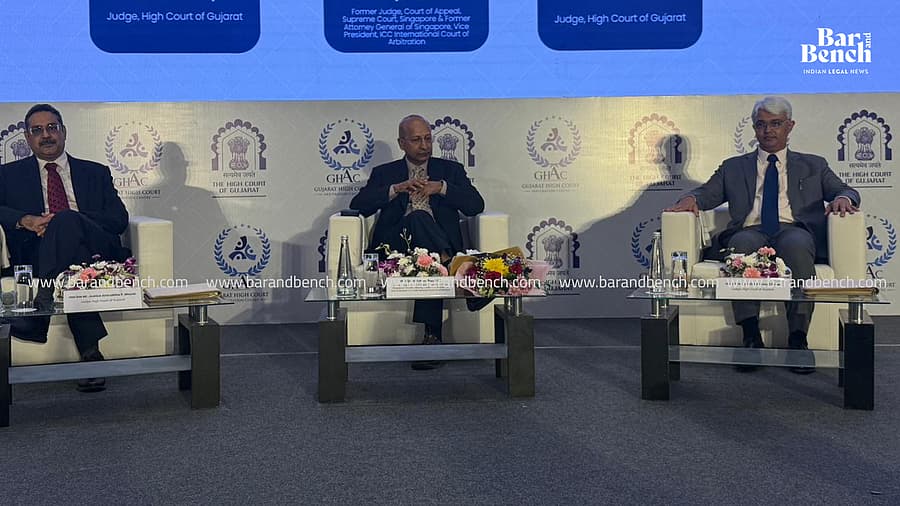
- He made these comments on Friday at the GHAC Arbitration Week 2026 in Gandhinagar.
- Rajah acknowledged India's "considerable progress" in international arbitration over 25 years, particularly since the 2012 BALCO ruling.
- Despite advancements, he described India's arbitration journey as a "jagged trajectory" with both progress and occasional setbacks.
International Concerns Over Award Modification
The Indian Supreme Court's recent decision, which permits the alteration of arbitral awards, has introduced a notable degree of apprehension among international arbitration professionals.
The Indian Supreme Court's recent decision, which permits the alteration of arbitral awards, has introduced a notable degree of apprehension among international arbitration professionals. This ruling has sparked questions regarding the precise circumstances and methods by which Indian courts might intervene to modify arbitration outcomes. VK Rajah, who previously served as the Vice President of the ICC International Court of Arbitration and previously held significant judicial and legal roles as a Judge of Appeal of the Supreme Court of Singapore and Attorney General of Singapore, articulated these concerns on Friday.
Speaking at the GHAC Arbitration Week 2026, an event hosted at the GIFT City Club in Gandhinagar, Rajah highlighted the international community's reaction. He specifically noted that many outside India view the Supreme Court's stance on award modification with "consternation." This sentiment stems from a perceived increase in unpredictability concerning the application of principles governing such alterations, making it difficult for practitioners to anticipate judicial intervention. The three-day conference, where these remarks were made, is a collaborative effort between the High Court of Gujarat and the Gujarat High Court Arbitration Centre, which handles both domestic and international cases.
India's Evolving Arbitration Landscape
Despite the current concerns surrounding the Indian Supreme Court arbitral award modification uncertainty, Rajah also acknowledged India's substantial advancements in the realm of international arbitration over the past quarter-century. He characterized India's journey in arbitration as a "jagged trajectory," indicating periods of significant progress interspersed with occasional setbacks. This perspective offers a broader context to the recent judicial development.
A pivotal shift in India's approach to arbitration, according to Rajah, occurred following the Supreme Court's 2012 BALCO ruling. Prior to this landmark decision, international arbitrations were largely treated in a manner akin to domestic proceedings, lacking distinct recognition or procedural frameworks. The changes implemented since 2012, encompassing both a shift in judicial mindset and the establishment of new legal precedents, have been described by Rajah as "more than impressive," marking a significant maturation of the country's arbitration framework.
Global Implications and Future Outlook
The comments from a figure of VK Rajah's stature, representing the ICC International Court of Arbitration, underscore the global impact of domestic judicial pronouncements on arbitral awards. The perceived unpredictability regarding the modification of awards by the Indian Supreme Court could influence how international parties assess the finality and enforceability of arbitration agreements and awards involving Indian entities. This situation necessitates careful consideration for those engaging in cross-border disputes with an Indian nexus.
While India has demonstrably made considerable progress in fostering a more robust and internationally aligned arbitration environment, as evidenced by the post-BALCO reforms, the recent ruling introduces a new layer of complexity. The challenge for India's arbitration ecosystem will be to reconcile this perceived uncertainty with its broader ambition to become a leading hub for international dispute resolution, ensuring that the impressive strides made over the last two decades are not undermined by concerns over judicial intervention in arbitral outcomes.
Practical Implications
Lawyers involved in international arbitration with an Indian nexus should be aware of the perceived uncertainty regarding the finality and enforceability of Indian arbitral awards, particularly concerning potential modifications by the Supreme Court. This necessitates careful risk assessment and strategic planning when drafting arbitration clauses or considering enforcement actions involving Indian parties or jurisdictions.
Source
How does this affect you?
Get an AI analysis of this article grounded in your jurisdictions, practice areas, and any policy documents you've uploaded to Wansom.
Finish Reading the Full Story and the Expert Analysis.
Wansom is AI and can make mistakes.