
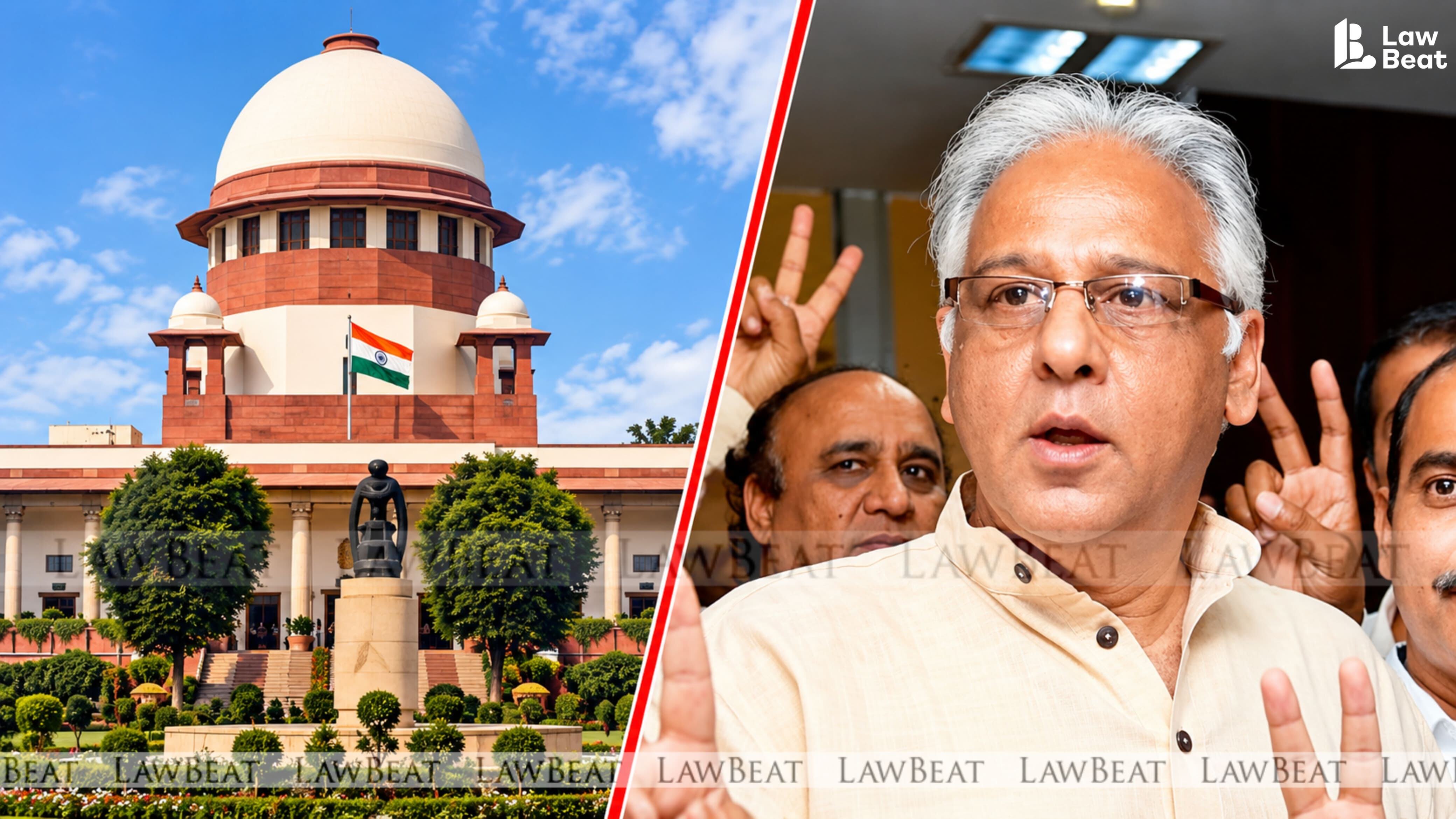
Farhad Suri: SC Petition for Interstate Police Raid Guidelines
Summary
- Former Delhi Mayor Farhad Suri has petitioned the Supreme Court alleging a UP Police team raided his Delhi residence at 1 AM without a warrant or local police coordination.
- The petition claims the August 2026 raid involved an ACP, five SIs, and about 30 other individuals, some not in uniform, initially claiming a "double-murder case" search.
- Suri seeks an FIR against the officers, a CBI probe into the incident, and compensation for alleged violation of his dignity and liberty.
- Crucially, he requests the Supreme Court to establish binding guidelines for interstate police raids, covering warrant verification and local police intimation.
- An interim application also seeks urgent preservation of CCTV, call, GPS, and vehicle records from the night of the alleged raid.
What Happened
This case presents a pivotal opportunity for the Supreme Court to clarify and solidify procedural requirements for interstate police operations, particularly those involving raids on private residences.
Former Delhi Mayor Farhad Suri has brought a significant complaint before the Supreme Court, detailing an alleged unauthorized midnight raid on his East Nizamuddin residence in Delhi. According to his Criminal Writ Petition, filed under Article 32 of the Constitution, a team of Uttar Pradesh Police personnel, led by Assistant Commissioner of Police Suryabali Maurya from Ghaziabad's Indirapuram police station, arrived at his home at approximately 1 AM on the night of August 22-23, 2026. The 68-year-old former civic chief and ex-Congress councillor states that this contingent included five named Sub-Inspectors and roughly 30 other individuals, some of whom were not in uniform.
Suri, who was alone at home, alleges that the officers demanded he come out, initially claiming they were searching for a suspect involved in a "double-murder case." However, when he requested to see a search warrant, none was produced. He later discovered that the operation was reportedly connected to FIR No. 678/2026, registered at the Indirapuram police station concerning an individual named Abhishek Upadhyay, a detail the petition highlights as central to its argument that the raid lacked lawful authority. Crucially, the petition asserts that the operation proceeded without any prior coordination with the local Delhi Police; the Station House Officer at Hazrat Nizamuddin, contacted by Suri around 12:54 AM and 1:06 AM, confirmed he had no information about the specific premises to be searched, only that a UP Police team had visited a nearby railway station. A corresponding police diary entry was made only at 1:11:59 AM, after the alleged raid had already commenced.
Following the incident, Suri filed a complaint with the Deputy Commissioner of Police, South-East Delhi, on the same day, requesting the registration of an FIR, identification of all accompanying individuals, and tracing of call records and the approximately 10-15 vehicles involved, many bearing Uttar Pradesh registrations. This complaint, however, was merely forwarded through the chain of command—from the Commissioner's office to the Special Commissioner (Law & Order) and then to the Joint Commissioner, Southern Range—without an FIR ever being registered. Suri also sought redress from the National Human Rights Commission on August 25 and the Uttar Pradesh Director General of Police on August 27, but reports receiving no effective response from either body.
Legal Context and Suri's Plea
Represented by Advocate-on-Record Anoop Prakash Awasthi, Farhad Suri's petition to the Supreme Court seeks several critical interventions. Primarily, it asks the apex court to direct the registration of an FIR against the named police officers and the unidentified persons who accompanied the raiding party. Furthermore, Suri requests that the investigation into the alleged misconduct be handed over to an independent agency, "preferably" the Central Bureau of Investigation (CBI), to ensure impartiality and thoroughness.
A central component of Suri's plea is the demand for the Supreme Court to establish binding, court-mandated guidelines specifically for interstate police raids conducted on residential premises. These proposed guidelines aim to address critical procedural gaps, including the requirement for prior written intimation to local police authorities, rigorous verification of search warrants, the explicit exclusion of unauthorized persons from raiding parties, and the mandatory preservation of crucial evidence such as CCTV footage and electronic records. Beyond these systemic reforms, the petition also seeks appropriate compensation for the alleged violation of Suri's dignity and personal liberty during the incident. An accompanying interim application has been filed, urging the court to issue urgent directions for the preservation of vital evidence, including CCTV footage, call detail records, GPS data, and vehicle records from the night in question, to prevent their potential overwriting or destruction before any investigation can properly commence.
Why It Matters
This case presents a pivotal opportunity for the Supreme Court to clarify and solidify procedural requirements for interstate police operations, particularly those involving raids on private residences. The absence of clear, uniformly enforced guidelines can lead to significant abuses of power, undermining fundamental rights to privacy and due process. If the Supreme Court intervenes to establish comprehensive protocols, it could set a crucial precedent, ensuring greater accountability for police forces operating across state lines and enhancing protections for citizens.
The petition's focus on issues like the necessity of search warrants, proper coordination with local authorities, and the exclusion of unauthorized individuals from police actions highlights systemic vulnerabilities that, if unaddressed, could facilitate unlawful detentions, searches, and harassment. The outcome of Farhad Suri's Article 32 petition could therefore have far-reaching implications, shaping how cross-jurisdictional investigations are conducted throughout India and reinforcing the constitutional safeguards against arbitrary state action. It underscores the critical need for robust legal frameworks that balance effective law enforcement with the protection of individual liberties.
Practical Implications
This case could establish crucial Supreme Court guidelines on interstate police raids, impacting the procedural requirements for search warrants and coordination between state police forces. Lawyers should closely follow this development as it may set new precedents for defending clients against unlawful police actions and ensuring due process during cross-jurisdictional investigations.
Source
How does this affect you?
Get an AI analysis of this article grounded in your jurisdictions, practice areas, and any policy documents you've uploaded to Wansom.
Finish Reading the Full Story and the Expert Analysis.
Wansom is AI and can make mistakes.