
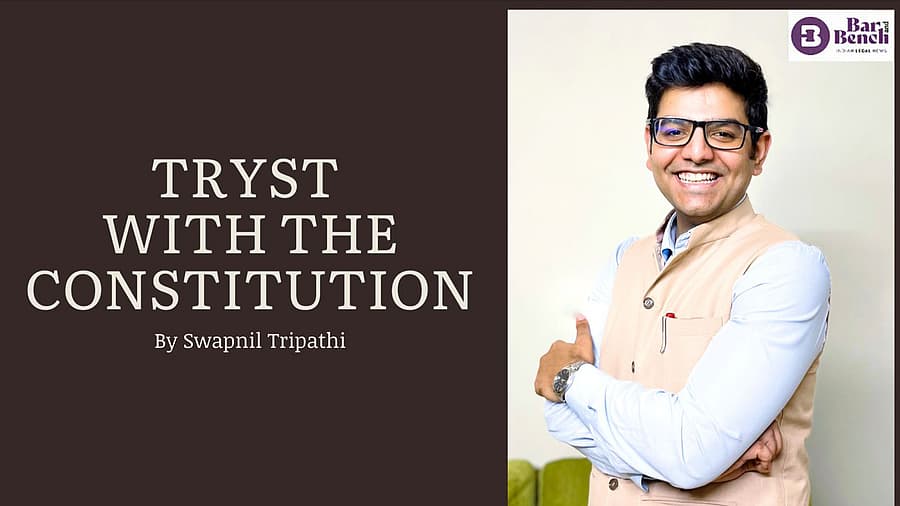
Indian Constituent Assembly Deliberation Spirit: Key to Constitution's Success
Summary
- Dr. B.R. Ambedkar emphasized that a constitution's success hinges on the people who implement it.
- The Indian Constituent Assembly demonstrated exceptional intellectual rigor and member dedication during its deliberations.
- The Constitution's drafting involved multiple committees, an initial draft by Sir B.N. Rau, and revisions by Dr. Ambedkar's committee.
- A draft of the Constitution was widely circulated for public and institutional feedback before final assembly discussions.
- This extensive process of deliberation, dissent, and consensus-building shaped the final form of the Indian Constitution.
The Genesis of India's Constitution
The profound observation by Dr. B.R. Ambedkar, delivered in his concluding address to the Constituent Assembly, underscored that the ultimate triumph of any constitutional framework is intrinsically tied to the individuals entrusted with its operation.
The formation of the Indian Constitution was characterized by an extraordinary depth of discussion and debate, setting it apart as a document meticulously crafted through extensive deliberation. Before the establishment of the pivotal Drafting Committee, the Constituent Assembly initiated a comprehensive process by forming numerous specialized committees. These bodies were tasked with scrutinizing distinct facets of the constitutional framework and formulating recommendations, laying the groundwork for the subsequent drafting stages.
These approved recommendations served as the foundational blueprint for the initial draft, which was meticulously prepared by Sir B.N. Rau. Following this crucial preliminary stage, the draft underwent rigorous examination and subsequent revision by the Drafting Committee, a body expertly guided by Dr. B.R. Ambedkar. This multi-layered approach ensured that the foundational principles were thoroughly vetted and refined by legal experts and constitutional scholars.
Crucially, the Draft Constitution was not immediately presented for Assembly discussion. Instead, it was published and disseminated broadly among various stakeholders, including members of the Assembly, provincial governments, the judiciary, and the general public. This widespread circulation was accompanied by an open invitation for comments and suggestions, fostering an inclusive environment for feedback. The Drafting Committee diligently reviewed these submissions, leading to the revision of several provisions based on the valuable input received from a diverse range of voices.
The Spirit of Deliberation and Its Legacy
The profound observation by Dr. B.R. Ambedkar, delivered in his concluding address to the Constituent Assembly, underscored that the ultimate triumph of any constitutional framework is intrinsically tied to the individuals entrusted with its operation. He articulated that even a constitution with inherent flaws could prove effective if implemented by a 'good lot' of people, highlighting the paramount importance of human agency in constitutional governance.
The functioning of the Constituent Assembly itself, marked by its rigorous intellectual engagement and the commendable disposition of its members, exemplified precisely such a 'good lot.' Their dedication to thorough debate and thoughtful consideration embodied the very spirit necessary for the successful implementation of a national charter. This commitment to principle and intellectual honesty is a cornerstone of the Indian Constituent Assembly deliberation spirit.
Seventy-seven years subsequent to these foundational efforts, as the nation commemorates Constitution Day, it becomes imperative to reflect upon and re-embrace this profound spirit of deliberation. The meticulous process of consensus-building and the willingness to engage in extensive parliamentary debate on constitutional matters in India during its formative years offer invaluable lessons for contemporary governance and legal interpretation, reminding us of the deep thought invested in every provision.
Foundational Principles of Consensus
A distinguishing characteristic of the Indian Constitution's development was the extensive scope of discussion and debate that preceded its finalization. This commitment to thoroughness ensured that the document was a product of collective wisdom rather than unilateral imposition. The process commenced with the formation of numerous committees, each tasked with specific constitutional areas, whose recommendations were then integrated into the initial draft prepared by Sir B.N. Rau.
This initial framework then underwent a critical phase of scrutiny and refinement by the Drafting Committee, under the leadership of Dr. B.R. Ambedkar. The subsequent public and institutional review of the Draft Constitution, involving its circulation to a broad spectrum of entities—from provincial administrations to the judiciary and the wider populace—was instrumental. This phase actively solicited comments and suggestions, demonstrating a commitment to democratic input.
The Drafting Committee’s responsiveness to this feedback, leading to the revision of multiple provisions, highlights the dynamic and adaptive nature of the Indian Constitution drafting process. This iterative approach, characterized by deliberation, constructive dissent, and ultimately, consensus, ensured that the final document was robust, reflective of diverse perspectives, and built upon a solid foundation of shared understanding and national purpose.
Practical Implications
This article serves as a historical reflection on the foundational principles of the Indian Constitution's making, emphasizing the critical role of deliberation and dissent. While not presenting an immediate actionable item, it reminds legal professionals of the intellectual rigor and intent behind constitutional provisions, which can be valuable for contextual interpretation and understanding legislative history in constitutional law arguments.
Source
How does this affect you?
Get an AI analysis of this article grounded in your jurisdictions, practice areas, and any policy documents you've uploaded to Wansom.
Finish Reading the Full Story and the Expert Analysis.
Get the latest legal & regulatory intelligence in India
Wansom is AI and can make mistakes.