
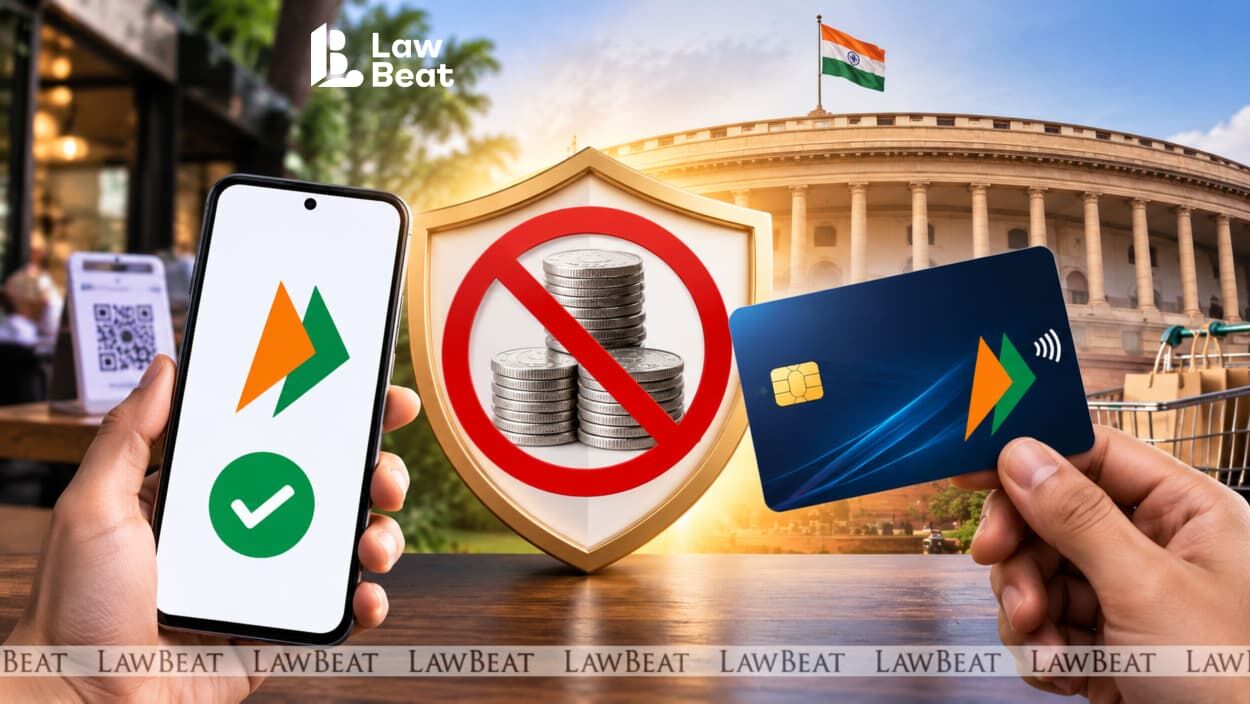
Indian Finance Ministry: No Fees on India UPI, RuPay Under ₹2000
Summary
- The Indian Finance Ministry has prohibited charges on UPI transactions up to ₹2,000 and all RuPay debit card payments.
- This directive designates these as 'protected electronic payment modes,' barring banks and payment providers from imposing fees.
- The policy follows the Taxation and Other Laws (Amendment) Bill, 2026, which empowered the government to specify protected payment methods.
- While small-value transactions are secured, a future policy framework for Merchant Discount Rate (MDR) on higher-value merchant transactions remains a possibility.
- Person-to-person UPI transfers will continue to be free of charge, regardless of the transaction amount.
New Directives on Digital Payment Charges
The Indian Finance Ministry has issued a significant notification, formally prohibiting banks and payment system providers from levying charges on Unified Payments Interface (UPI) transactions valued up to ₹2,000.
The Indian Finance Ministry has issued a significant notification, formally prohibiting banks and payment system providers from levying charges on Unified Payments Interface (UPI) transactions valued up to ₹2,000. This directive also extends the same protection to payments made using RuPay-powered debit cards, ensuring that these widely used digital payment methods remain free for consumers and recipients within this specified threshold.
Under the new mandate, these two categories are explicitly designated as 'protected electronic payment modes.' This means that no financial institution or service provider can, either directly or indirectly, impose any fee on individuals or entities making or receiving payments through these channels, provided the transaction amount does not exceed ₹2,000. This measure effectively establishes a clear boundary: transactions below this amount are guaranteed to be free, while those exceeding it no longer automatically fall under a blanket statutory exemption from potential charges.
For compliance officers at banks and payment service providers in India, this notification necessitates an immediate review of their systems to ensure no charges are applied to UPI transactions under ₹2,000 or RuPay debit card payments. The clarity provided by the `Indian Finance Ministry UPI charges` ruling is crucial for operational adherence, particularly concerning `RuPay debit card transaction fees`.
Legislative Background and Future Policy
This recent development stems from the Parliament's approval of the Taxation and Other Laws (Amendment) Bill, 2026, which was passed in August. This legislation granted the government the authority to identify specific electronic payment modes that would continue to be exempt from charges. The introduction of this Bill had initially sparked concerns that UPI, a platform long promoted as a free service, might eventually incur costs for users.
However, Finance Minister Nirmala Sitharaman moved to allay these fears at the time, clarifying that the amendment was merely an 'enabling provision.' She assured the public that ordinary consumers would not be subjected to `UPI charges`. The government had also previously indicated that any potential Merchant Discount Rate (MDR), if implemented, would be restricted to a select group of merchant transactions exceeding a predetermined value. Crucially, such an MDR would be imposed on merchants, not on the consumers initiating the payments. An MDR is essentially a fee charged by a bank or payment service provider to a merchant for processing a digital transaction.
It is important to note that this notification does not imply that all `UPI` transactions above ₹2,000 will automatically incur a charge. The ₹2,000 figure serves as a ceiling below which transactions are guaranteed to be free. Any future `MDR high-value merchant transactions` would require a distinct policy framework to be introduced. The government has consistently affirmed that person-to-person (P2P) UPI transfers, irrespective of their value, will continue to remain free of cost, reinforcing the commitment to accessible `digital payments regulation India`.
Impact and Scale of India's Digital Payments
The distinction between person-to-person transfers and merchant payments will be increasingly significant moving forward. Everyday `India UPI RuPay no fees under ₹2000` usage, such as sending money to friends, paying rent, or splitting bills, falls squarely within the category of person-to-person transfers. The government has repeatedly confirmed that these transactions will remain free, regardless of the amount involved.
For ordinary users, this assurance means that small-value digital payments, which constitute a large portion of daily transactions for groceries, transportation, or utility bills across India, will not become chargeable. For banks and payment service providers, the introduction of an MDR on specific high-value merchant transactions could potentially open up a new revenue stream, especially as UPI transaction volumes continue their steady ascent. Compliance officers should monitor for future policy frameworks regarding `MDR high-value merchant transactions`.
The sheer scale of UPI operations underscores why any adjustments to its fee structure attract considerable attention. Operated by the National Payments Corporation of India (NPCI), UPI is recognized as the world's largest retail fast-payment system by transaction volume, according to a 2025 International Monetary Fund report. In August alone, the platform processed an astounding 24.51 billion transactions, totaling ₹29.82 trillion. Major players like Google Pay and PhonePe collectively accounted for approximately three-quarters of this monthly volume, highlighting the platform's pervasive influence on `digital payments regulation India`.
Practical Implications
Compliance officers for banks and payment service providers in India must ensure their systems do not levy charges on UPI transactions under ₹2,000 or RuPay debit card payments, and should monitor for future policy frameworks regarding Merchant Discount Rate (MDR) on higher-value merchant transactions.
Source
Source: Original reporting via Livemint
How does this affect you?
Get an AI analysis of this article grounded in your jurisdictions, practice areas, and any policy documents you've uploaded to Wansom.
Finish Reading the Full Story and the Expert Analysis.
Get the latest legal & regulatory intelligence in India
Wansom is AI and can make mistakes.