
India Supreme Court: Refuses HPEC Reconstitution, Calls CJP Protests Challenge Premature
Summary
- The India Supreme Court refused to reconstitute the High-Powered Enquiry Committee (HPEC) investigating violence during July CJP student protests.
- A bench including Chief Justice of India Surya Kant dismissed the application, stating objections were premature and based on mere conjecture.
- The five-member HPEC, chaired by former Supreme Court judge Justice R Subhash Reddy, was constituted on August 18.
- The committee's mandate includes examining allegations of excessive police force against protestors and violence against security personnel at Jantar Mantar.
- The Supreme Court emphasized the HPEC's role in assisting with fairness and transparency, operating under its direct supervision and reporting findings directly to the Court.
What Happened
The Court's insistence on allowing the Justice R Subhash Reddy HPEC to proceed without early disruption highlights a judicial preference for substantive findings over speculative concerns, reinforcing the integrity and independence of its investigative mechanisms.
The India Supreme Court recently dismissed an application seeking the reconstitution of a High-Powered Enquiry Committee (HPEC) tasked with investigating the violence that occurred during the July Cockroach Janata Party (CJP) student protests. A bench comprising Chief Justice of India Surya Kant, alongside Justices Joymalya Bagchi and V Mohana, rejected the plea, characterizing the objections raised against the panel as premature. This decision underscores the Court's stance against speculative challenges to its appointed investigative bodies.
The application, which sought to alter the composition of the HPEC, was deemed by the Court to be based on insufficient grounds. The judicial body expressed "disquiet" regarding the nature of the aspersions cast upon the committee, noting they were both "premature and precipitate." This firm refusal by the Supreme Court of India to reconstitute the HPEC signals a clear directive that its investigative mechanisms are to be given the necessary space to conduct their work without undue interference at an early stage.
The Inquiry Committee's Mandate
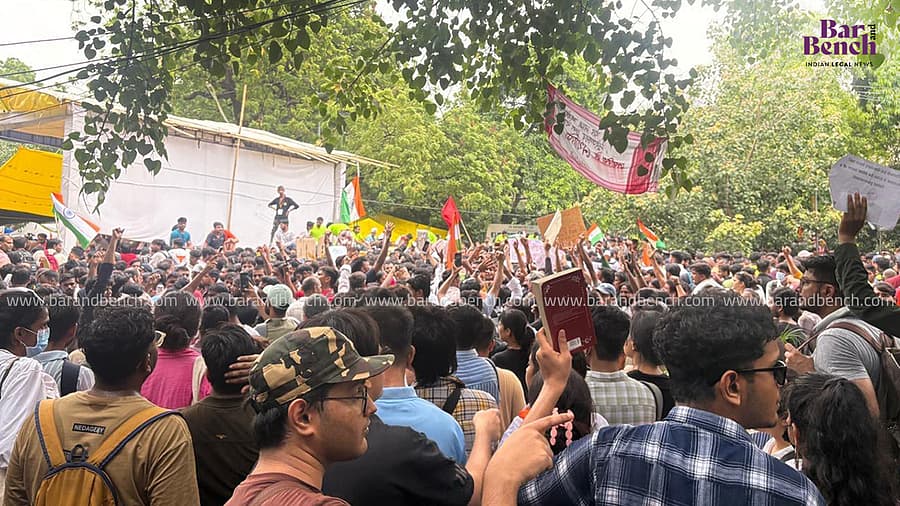
The High-Powered Enquiry Committee (HPEC) at the center of this legal challenge was originally established by the Supreme Court on August 18. This five-member body was specifically formed to provide assistance to the Court in understanding the complex events surrounding the CJP protests at Jantar Mantar. Its mandate is comprehensive, covering allegations of excessive force used by police against protestors, both at Jantar Mantar and other locations, as well as instances of violence directed towards security personnel during the demonstrations.
Former Supreme Court judge Justice R Subhash Reddy chairs the HPEC, bringing significant judicial experience to the inquiry. The committee operates under the direct supervision of the Supreme Court and is mandated to report its findings directly back to the apex court. This structure emphasizes the HPEC's role as an independent fact-finding body, designed to furnish the Court with an impartial account of the incidents. The Supreme Court of India CJP violence inquiry is thus designed to be thorough and directly accountable to the highest judicial authority.
Legal Rationale and Implications
In its recent order, the bench led by CJI Surya Kant explicitly stated that the request for reconstitution was founded on "mere conjecture," given that the HPEC had "only just begun its enquiry." The Court emphasized that the committee was constituted with the expectation of upholding the "highest standards of fairness and transparency" and adopting a "dispassionate approach." It further clarified that the HPEC's purpose is not to advocate for any particular party involved in the proceedings.
This ruling provides significant clarity regarding the Supreme Court's approach to challenges against its appointed inquiry committees, particularly concerning a premature challenge inquiry committee India. It sets a high bar for those seeking to question the composition or functioning of such bodies before they have had an opportunity to conduct their work. The Court's insistence on allowing the Justice R Subhash Reddy HPEC to proceed without early disruption highlights a judicial preference for substantive findings over speculative concerns, reinforcing the integrity and independence of its investigative mechanisms.
Practical Implications
This ruling clarifies the Supreme Court's stance on the premature challenging of its appointed inquiry committees, indicating that objections based on conjecture will be dismissed. Lawyers advising parties involved in or affected by such inquiries should note the high bar for challenging committee composition or function before its work has progressed, emphasizing the need for substantive grounds over speculative concerns.
Source
How does this affect you?
Get an AI analysis of this article grounded in your jurisdictions, practice areas, and any policy documents you've uploaded to Wansom.
Finish Reading the Full Story and the Expert Analysis.
Get the latest legal & regulatory intelligence in India
Wansom is AI and can make mistakes.