
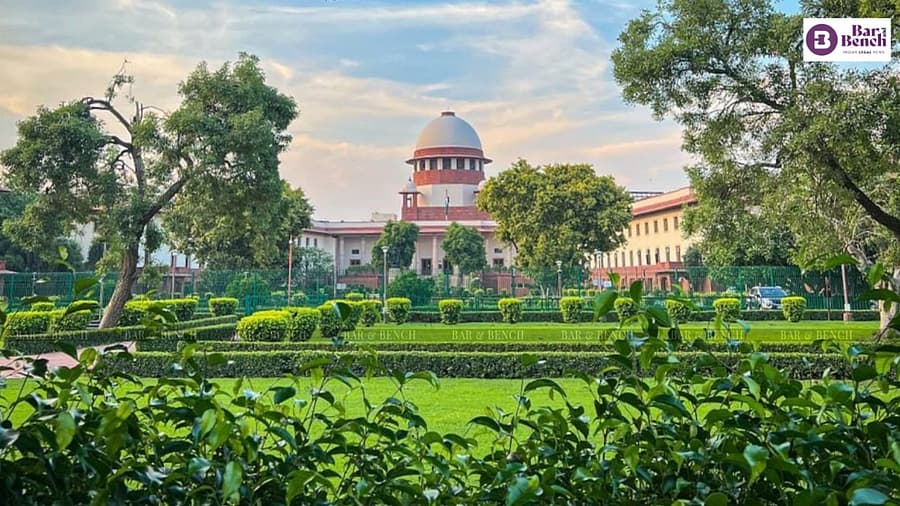
India Supreme Court: Orders Private University Financial Disclosure
Summary
- India's Supreme Court directed federal and state governments to collect detailed financial and operational data from private universities and colleges.
- The Court unequivocally declared that private universities cannot be run as profit-making institutions.
- Surplus funds must be used for institutional functioning and employee compensation, not diverted for governing board members or their facilities.
- The ruling, issued on September 17 by Justices Ahsanuddin Amanullah and NV Anjaria, originated from the case of Ayesha Jain v. Amity University.
- The case's scope expanded to examine the broader establishment, regulation, and functioning of private universities nationwide.
Landmark Directive on University Finances
Central to the Court's pronouncement is the unequivocal declaration that private educational institutions are not to be operated as commercial enterprises.
India's Supreme Court has issued a far-reaching directive, compelling the Central government, along with all States and Union Territories, to systematically collect comprehensive data from private universities and colleges nationwide. This significant order, delivered on September 17 by a bench comprising Justices Ahsanuddin Amanullah and NV Anjaria, mandates the disclosure of detailed information spanning institutional finances, admission processes, fee structures, the utilization of surplus funds, staff recruitment practices, and established grievance-redressal mechanisms. This ruling marks a critical development in the landscape of "India Supreme Court private university financial disclosure order," aiming to bring greater transparency to the sector.
The directive originated from the case of Ayesha Jain v. Amity University, Noida and Others, though its implications extend far beyond the initial dispute. Central to the Court's pronouncement is the unequivocal declaration that private educational institutions are not to be operated as commercial enterprises. This principle underpins the entire order, signaling a robust stance against the commodification of higher education and setting a new precedent for "private college financial reporting India" by demanding a thorough accounting of their operations.
The Non-Profit Imperative in Education
The Supreme Court explicitly clarified that the fundamental purpose of any private university must be to serve an educational objective, rather than generating profit. While acknowledging the necessity for financial stability, the Court stated that institutions require a sufficient "cushion" to responsibly manage their resources, ensuring smooth operational functioning and the appropriate compensation of both teaching and non-teaching staff. This nuanced approach permits financial prudence but strictly prohibits commercial exploitation.
Crucially, the order imposes strict limitations on the deployment of any funds exceeding these essential operational and compensation requirements. The Court specifically prohibited the diversion of such surplus funds for purposes like remunerating members of governing boards or providing them with special facilities. This aspect of the ruling strongly reinforces the "private university non-profit India" ethos and provides clear guidance on the permissible uses of "university surplus funds India," preventing their misuse for private gain.
Expanding Judicial Scrutiny Over Education Regulation
The legal proceedings that culminated in this landmark order began with a petition filed by Ayesha Jain against Amity University in Noida. The initial grievance centered on the university's handling of a change in her name within its records and the subsequent academic consequences she allegedly faced. This individual complaint, while specific, served as the catalyst for a much broader judicial inquiry into the operational integrity of private higher education.
As the case progressed through the judicial system, the Supreme Court deliberately expanded its scope. It moved beyond the specific details of Jain's petition to undertake a comprehensive examination of wider issues concerning the establishment, overall regulation, and day-to-day functioning of private universities throughout the country. This expansion highlights the Court's commitment to ensuring robust "Supreme Court education regulation India" and underscores the systemic importance of the financial and operational transparency now mandated across the private higher education sector, signaling a new era of oversight.
Practical Implications
Lawyers advising private universities and colleges in India must prepare clients for imminent government requests for detailed financial, admission, and operational data. This ruling necessitates a review of institutional financial practices, surplus fund utilization, and governance structures to ensure compliance with the Supreme Court's mandate against profit-making and to mitigate potential regulatory exposures.
Source
How does this affect you?
Get an AI analysis of this article grounded in your jurisdictions, practice areas, and any policy documents you've uploaded to Wansom.
Finish Reading the Full Story and the Expert Analysis.
Get the latest legal & regulatory intelligence in India
Wansom is AI and can make mistakes.