
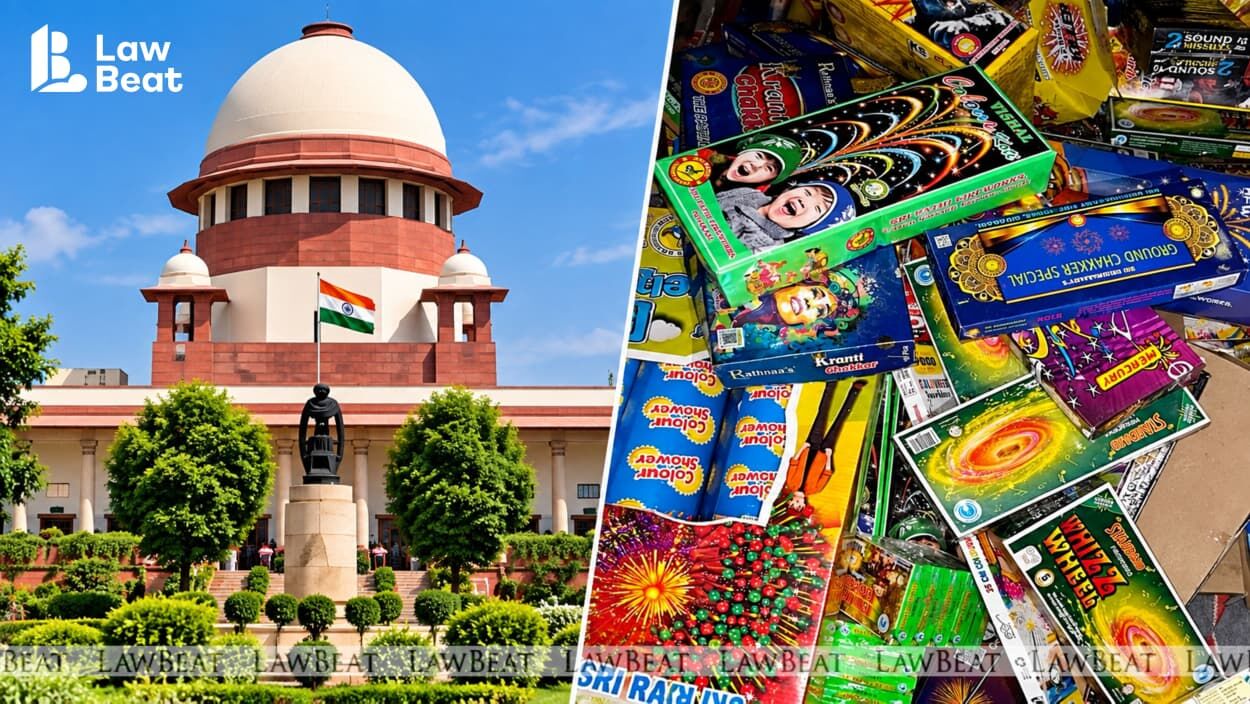
India Supreme Court: To Set Diwali Firecracker Timings, No Full Ban
Summary
- The India Supreme Court indicated it will not impose a total ban on Diwali firecrackers but will restrict their use to specific timings.
- The Court emphasized that unrestricted firecracker use throughout the day would significantly harm public health, especially for vulnerable groups.
- Justices MM Sundresh and PB Varale are overseeing proceedings concerning firecracker use and air pollution in the Delhi-NCR region.
- Previous directives include a 2025 ban on barium-containing crackers, joined series crackers, and online sales.
- Manufacturers approved by NEERI and PESO can produce green crackers but are prohibited from selling them in Delhi-NCR.
Recent Judicial Directives on Diwali Firecrackers
The Supreme Court has consistently sought to strike a delicate balance between preserving the cultural significance of festive celebrations and mitigating the severe public health and environmental consequences of unchecked firecracker use.
The India Supreme Court has indicated it will not impose a complete prohibition on firecrackers for the upcoming Diwali celebrations, acknowledging that such a ban could negatively impact festive sentiments. However, the Court, comprising Justices MM Sundresh and PB Varale, made it clear during a September 30, 2026, hearing that unrestricted bursting of firecrackers throughout the day would also not be permitted. This stance reflects an ongoing effort to find a middle ground in the long-running proceedings concerning firecracker use and air pollution, particularly in the Delhi-NCR region.
The bench observed that allowing firecrackers to be used without any time limits would have a significant adverse impact on the general public, including children, elderly persons, and those with health vulnerabilities. Consequently, the Court emphasized the necessity of prescribing specific time windows during which firecrackers could be used, thereby confining their deployment to designated periods. This approach aims to mitigate the detrimental effects on ambient air quality while still allowing for traditional festivities.
Further, the Supreme Court is actively considering the integration of specified next-generation joint green crackers. In this regard, the Centre and various expert bodies have been granted time to thoroughly assess the environmental impact of barium-containing variants, which are a particular concern due to their potential contribution to air pollution. This directive underscores the Court's commitment to promoting safer, more environmentally friendly alternatives within the existing regulatory framework.
Evolving Regulatory Framework and Past Precedents
The current deliberations by the India Supreme Court build upon a series of previous orders aimed at curbing air pollution, especially during the winter months in Delhi-NCR. A significant directive in 2018 mandated that only improved and green crackers, meeting prescribed standards, could be manufactured and sold. This ruling, stemming from the Arjun Gopal judgment, also introduced restrictions on the timing of firecracker use, setting a precedent for the current focus on specific Diwali firecracker timings.
In a test-case scenario last year, the Supreme Court permitted the sale and use of approved green crackers in the National Capital Region for a limited period, subject to specified timings and other safeguards. Expanding on these measures, the 2025 directions explicitly prohibited crackers containing barium, joined series crackers (commonly known as “laris”), and the online sale of any firecrackers. To ensure compliance, the Court also mandated that patrol teams conduct regular checks on green cracker manufacturers and that QR codes of approved green crackers be uploaded to a public website.
While allowing for the manufacture of green crackers by certified entities approved by the National Environmental Engineering Research Institute (NEERI) and the Petroleum and Explosives Safety Organisation (PESO), the Court has upheld a ban on their sale within the Delhi-NCR region. Senior Advocate K Parameshwar, representing manufacturers, affirmed their commitment to adhering to stringent environmental and safety norms, aligning with the principles established in the 2018 Arjun Gopal judgment. This nuanced approach reflects the complexities of India environmental law concerning firecrackers.
Balancing Public Health, Economic Interests, and Festive Sentiments
The Supreme Court has consistently sought to strike a delicate balance between preserving the cultural significance of festive celebrations and mitigating the severe public health and environmental consequences of unchecked firecracker use. The bench acknowledged that an outright ban on firecrackers could lead to unintended consequences, particularly impacting the economic interests of manufacturers and retailers, while also affecting the sentiments associated with festivals like Diwali.
To address these multifaceted concerns, the Central government has been directed to engage in consultations with all relevant stakeholders, including the Delhi government, manufacturers, and sellers. The objective is to present a balanced policy to the Court at a subsequent hearing, ensuring that both public health imperatives and economic realities are considered. This ongoing dialogue is crucial for developing sustainable Diwali firecracker restrictions in Delhi-NCR that are both effective and equitable.
Ultimately, the Court’s directives underscore a commitment to a pragmatic solution that avoids extremes. By allowing for the manufacture of approved green crackers while maintaining a ban on their sale in Delhi-NCR and focusing on specific usage timings, the judiciary aims to manage air pollution without completely stifling traditional practices. Compliance officers and legal advisors in the firecracker industry must closely monitor these evolving guidelines to ensure adherence to the Supreme Court green crackers India framework and avoid potential penalties.
Practical Implications
Lawyers advising firecracker manufacturers, retailers, or event organizers in India, particularly in Delhi-NCR, must monitor the Supreme Court's final directives on specific Diwali firecracker timings and approved 'green cracker' types. Compliance officers should prepare for evolving restrictions on barium-containing crackers and ensure adherence to manufacturing and sales guidelines to avoid penalties.
Source
Source: Original reporting via Live Law
How does this affect you?
Get an AI analysis of this article grounded in your jurisdictions, practice areas, and any policy documents you've uploaded to Wansom.
Finish Reading the Full Story and the Expert Analysis.
Get the latest legal & regulatory intelligence in India
Wansom is AI and can make mistakes.