
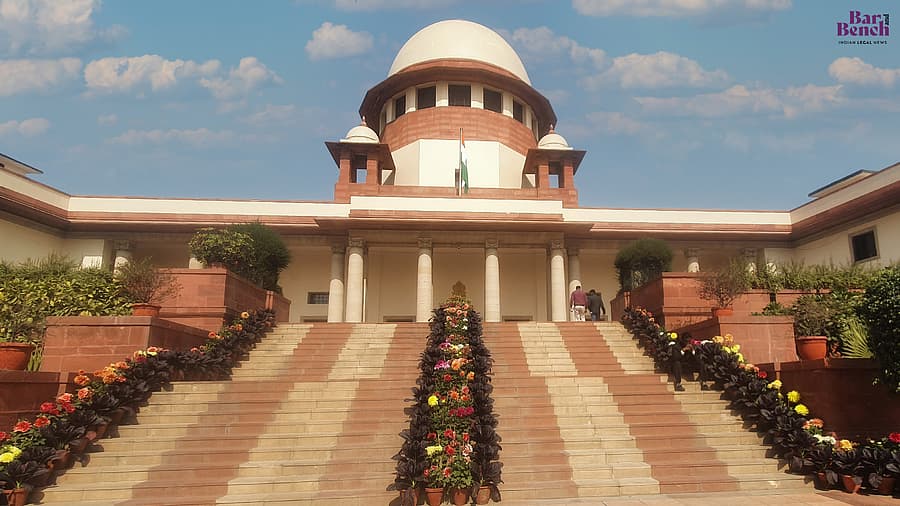
India Supreme Court: Final Chance for Child Porn Online Steps
Summary
- India's Supreme Court issued a final warning to the Central government for failing to explain steps taken against online child sexual exploitation and abuse material (CSEAM).
- Justices JB Pardiwala and K Vinod Chandran noted that the Ministry of Electronics and Information Technology and the Ministry of Law and Justice had not filed a requested report since August 14.
- The directive arose from a plea by the Just Rights for Children Alliance, which seeks criminal action against social media intermediaries that do not report CSEAM.
- The Alliance's petition also calls for a uniform Standard Operating Procedure (SOP) for detecting and reporting CSEAM, citing non-uniform compliance with a September 2024 Supreme Court judgment.
- That 2024 judgment mandated social media intermediaries to report CSEAM offenses to police authorities under the Protection of Children from Sexual Offences Act, 2012 (POCSO Act).
Court Issues Final Warning to Government
This development signals the Supreme Court's continued insistence on government action against online child sexual abuse material, indicating that social media intermediaries should anticipate stricter enforcement and potentially new, uniform Standard Operating Procedures for detecting and reporting CSEAM, impacting their compliance obligations under the POCSO Act.
India's Supreme Court recently delivered a stern directive to the Central government, granting it a final opportunity to detail the measures undertaken to combat the pervasive issue of child sexual exploitation and abuse material (CSEAM) circulating on social media platforms. The order was issued by a bench comprising Justices JB Pardiwala and K Vinod Chandran during the ongoing hearing of a significant case, Just Rights for Children Alliance & Anr. v. S. Harish & Ors.
The Court expressed considerable dismay over the government's failure to comply with previous requests. Specifically, it noted that neither the Ministry of Electronics and Information Technology (MeitY) nor the Ministry of Law and Justice had submitted the required response, which had been sought as far back as August 14. This lack of a formal report prompted the Justices to underscore the gravity of the situation.
In a pointed statement, the Court declared, "Unfortunately, till this date, no such counter or report has come on record. The matter before us is extremely serious. We grant one last opportunity to both the ministries to file that counter/report." This emphasizes the judiciary's growing impatience with the perceived inaction from the executive branch on this critical issue.
Advocacy for Stricter Intermediary Accountability
The Supreme Court's recent intervention stems from a plea filed by the Just Rights for Children Alliance (JRCA). This organization is advocating for stringent criminal action against social media intermediaries that fail to report instances of CSEAM to the appropriate authorities. The JRCA's petition highlights a critical gap in the current enforcement landscape, arguing that despite existing legal frameworks, compliance remains inconsistent.
Central to the Alliance's argument is the implementation of a September 2024 Supreme Court judgment. This landmark ruling unequivocally mandated that social media intermediaries must report offenses involving CSEAM to the police authorities as specified under the Protection of Children from Sexual Offences Act, 2012 (POCSO Act) and its accompanying rules. However, subsequent developments, as detailed in the JRCA's plea, indicate that social media intermediaries have not been uniformly adhering to these crucial directions, necessitating further judicial oversight.
Call for a Uniform Standard Operating Procedure
To address the observed inconsistencies in reporting and enforcement, the Just Rights for Children Alliance has specifically called for the formulation and notification of a uniform Standard Operating Procedure (SOP). This proposed SOP aims to standardize the processes for detecting and reporting CSEAM across all social media platforms operating in India, ensuring a consistent and effective response to online child abuse. The Alliance believes that a clear, unified framework is essential to overcome the current fragmented approach.
The absence of such a uniform SOP for detecting and reporting CSEAM has been identified as a significant impediment to effectively combating the spread of child sexual abuse material online. The Supreme Court's engagement with this aspect of the plea underscores its recognition of the need for systematic improvements in how these platforms handle such sensitive and illegal content. The push for a standardized approach reflects a broader effort to enhance the efficacy of the POCSO Act 2012 CSEAM reporting mechanisms.
Broader Implications for Online Safety in India
This development signals the Supreme Court's continued insistence on government action against online child sexual abuse material, indicating that social media intermediaries should anticipate stricter enforcement and potentially new, uniform Standard Operating Procedures for detecting and reporting CSEAM, impacting their compliance obligations under the POCSO Act. The Court's firm stance underscores the judiciary's commitment to protecting children in the digital realm and holding both the government and private entities accountable.
The outcome of this case will likely shape future regulatory frameworks for India social media intermediaries child abuse prevention. Should the Central government fail to provide a satisfactory response or implement the requested SOP, it could lead to more direct judicial interventions, potentially setting new precedents for how online platforms manage illicit content. This ongoing legal scrutiny highlights the critical need for robust and consistent measures to safeguard children from online exploitation.
Practical Implications
This development signals the Supreme Court's continued insistence on government action against online child sexual abuse material, indicating that social media intermediaries should anticipate stricter enforcement and potentially new, uniform Standard Operating Procedures for detecting and reporting CSEAM, impacting their compliance obligations under the POCSO Act.
Source
How does this affect you?
Get an AI analysis of this article grounded in your jurisdictions, practice areas, and any policy documents you've uploaded to Wansom.
Finish Reading the Full Story and the Expert Analysis.
Get the latest legal & regulatory intelligence in India
Wansom is AI and can make mistakes.