
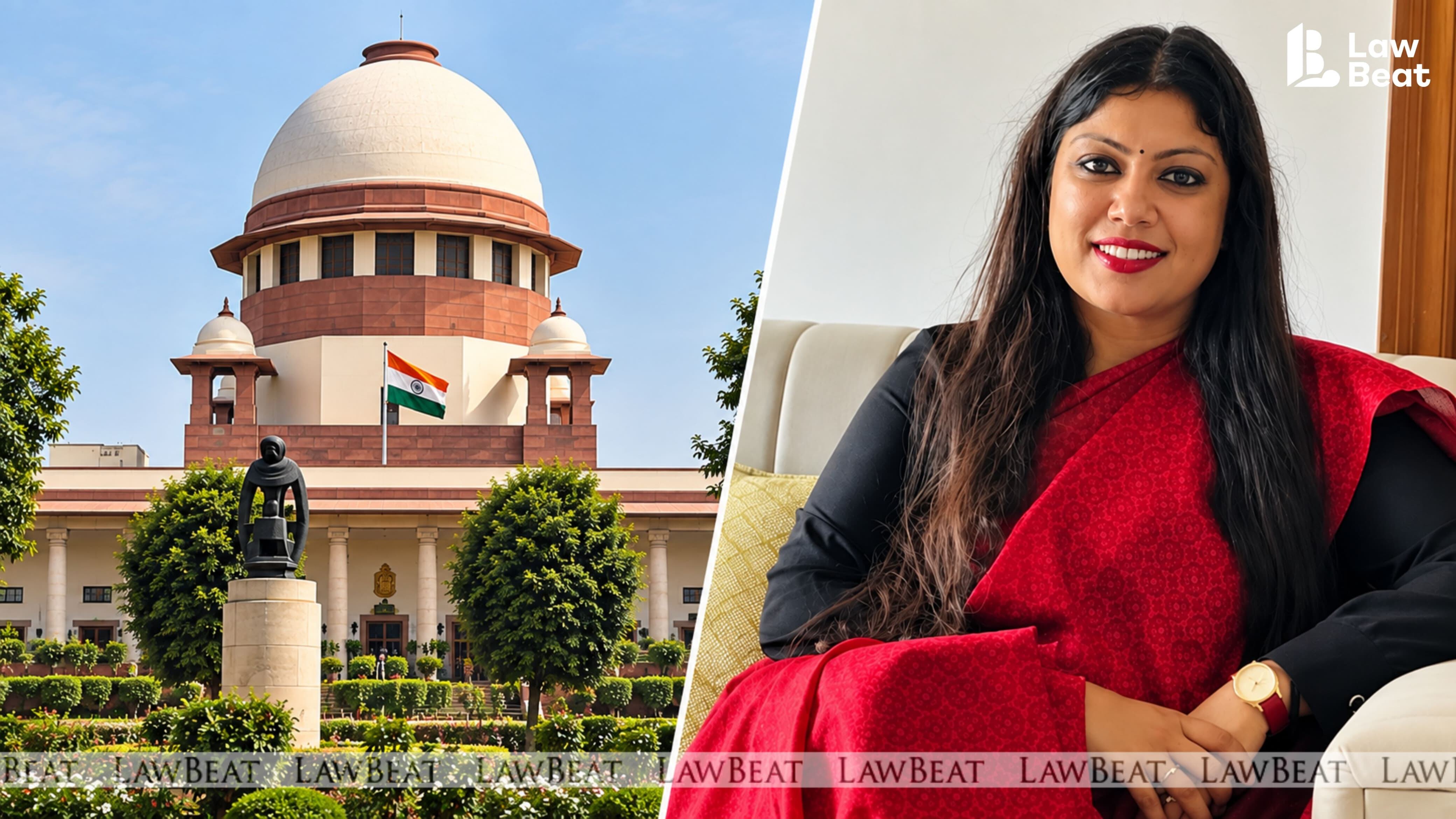
Supreme Court Clarifies Noida DM Medha Roopam NSA Stay Scope
Summary
- The Supreme Court clarified its interim stay in the plea by Noida DM Medha Roopam, limiting it to strictures and a ₹5 lakh compensation order.
- The Allahabad High Court's judgment quashing the National Security Act (NSA) detention of student Akriti Chaudhary remains in force.
- The High Court had ordered ₹5 lakh compensation for Chaudhary, to be recovered from DM Roopam's salary, for her detention related to a 2026 Noida protest.
- The Allahabad High Court also made strong observations about IAS/IPS officers' loyalty to the Constitution over the political executive.
- The Supreme Court has reserved its order on the challenge to the High Court's judgment, but the quashing of the NSA detention remains effective.
Supreme Court Clarifies Scope of Interim Stay
This clarification from the Supreme Court holds significant weight for legal practitioners and individuals challenging executive actions, especially those involving the National Security Act.
The Supreme Court has issued a crucial clarification regarding its interim order in a plea filed by Gautam Buddh Nagar District Magistrate Medha Roopam, specifically addressing the scope of a stay related to an Allahabad High Court judgment. This clarification confirms that the apex court's interim stay is narrowly confined to the adverse remarks and strictures passed by the Allahabad High Court against DM Roopam, as well as the High Court's directive for her to pay ₹5 lakh in compensation to a student. Crucially, the Supreme Court's ruling ensures that the Allahabad High Court's substantive judgment, which quashed the National Security Act (NSA) detention of student Akriti Chaudhary, remains fully in effect and has not been stayed.
The initial interim order, which had been uploaded by the Supreme Court, broadly stated that "Till the matter is heard on merits, the operation of the impugned judgment, particularly, para Nos. 27 to 33 shall remain stayed." This wording led to some ambiguity regarding the extent of the stay. However, the order was subsequently revised to provide precise clarity. The updated directive now specifies: "Till the matter is heard on merits, the operation of paras nos. 27 to 33 of the impugned judgment including award of costs and strictures against the petitioner shall remain stayed."
This revision by the Supreme Court, involving a Bench of Justice Satish Chandra Sharma and Justice N.K. Singh, explicitly limits the stay to paragraphs 27 to 33 of the Allahabad High Court's judgment. These particular paragraphs contained the critical adverse observations and strictures directed at the Noida District Magistrate, alongside the instruction for the ₹5 lakh compensation to be recovered directly from her salary. The distinction drawn by the Supreme Court is vital: while the personal liabilities and criticisms against the officer are on hold pending a full hearing, the core decision to quash the NSA detention of Akriti Chaudhary stands unchallenged by this interim order.
Background of the Allahabad High Court Ruling
The legal proceedings stem from the Allahabad High Court's decision to quash the detention of Akriti Chaudhary under the National Security Act, a measure taken in connection with the Noida workers' protest that occurred in April 2026. This protest saw demonstrations turn violent, leading to Chaudhary's detention. The High Court, in its ruling, not only ordered her immediate release—unless she was required in any other case—but also mandated the payment of ₹5 lakh in compensation to her.
The Division Bench of the Allahabad High Court, comprising Justice Atul Sreedharan and Justice Achal Sachdev, had directed that this compensation amount be recovered from the salary of the District Magistrate, Medha Roopam, and all other officers deemed responsible for preparing the report that ultimately led to Chaudhary's NSA detention. The High Court's judgment was underpinned by a critical examination of the evidence, as it questioned the material relied upon by the State to attribute a specific role to Chaudhary in the violence that transpired during the protest.
Furthermore, the High Court delivered strong observations regarding the professional responsibilities of Indian Administrative Service (IAS) and Indian Police Service (IPS) officers. It emphatically stated that the loyalty of these bureaucrats and police officers must be directed towards the Constitution of India, rather than towards the political executive. The court also noted instances where bureaucrats and police officers appeared to disregard their constitutional duties, underscoring the gravity of their roles in upholding fundamental rights, particularly in cases involving the National Security Act detention India.
Implications for National Security Act Challenges
This clarification from the Supreme Court holds significant weight for legal practitioners and individuals challenging executive actions, especially those involving the National Security Act. By explicitly stating that the quashing of Akriti Chaudhary's NSA detention remains in force, the apex court has provided a clear precedent for lawyers contesting similar detention orders. This confirms that the substantive decision to invalidate an NSA detention, when found to be without sufficient basis by a High Court, retains its legal standing even while ancillary matters, such as strictures against officers or compensation, are under review.
The Supreme Court's nuanced approach to the interim stay highlights a critical distinction between the personal liabilities and adverse remarks against an officer, and the fundamental legality of a detention order itself. While DM Medha Roopam and the State of Uttar Pradesh have challenged the Allahabad High Court's judgment, the Supreme Court's current directive ensures that the core finding of an unlawful detention is preserved. This distinction is crucial for maintaining public confidence in judicial oversight of executive powers, particularly concerning stringent laws like the NSA.
The ongoing nature of the challenge, with the Supreme Court having reserved its order on the matter, means that while the strictures against the DM and the compensation order are temporarily stayed, the legal victory for Akriti Chaudhary regarding the quashing of her detention remains intact. This reinforces the principle that the liberty of an individual, once found to be unlawfully curtailed, takes precedence, and the Supreme Court Medha Roopam stay does not undermine this core aspect of the Allahabad High Court's judgment.
Practical Implications
This clarification is critical for lawyers challenging NSA detentions, as it confirms that the Allahabad High Court's decision to quash the detention itself remains in force, providing a valid precedent for challenging similar executive actions. It also highlights the Supreme Court's nuanced approach to interim stays, distinguishing between personal liabilities of officers and the substantive quashing of a detention order.
Source
How does this affect you?
Get an AI analysis of this article grounded in your jurisdictions, practice areas, and any policy documents you've uploaded to Wansom.
Finish Reading the Full Story and the Expert Analysis.
Get the latest legal & regulatory intelligence in India
Wansom is AI and can make mistakes.