
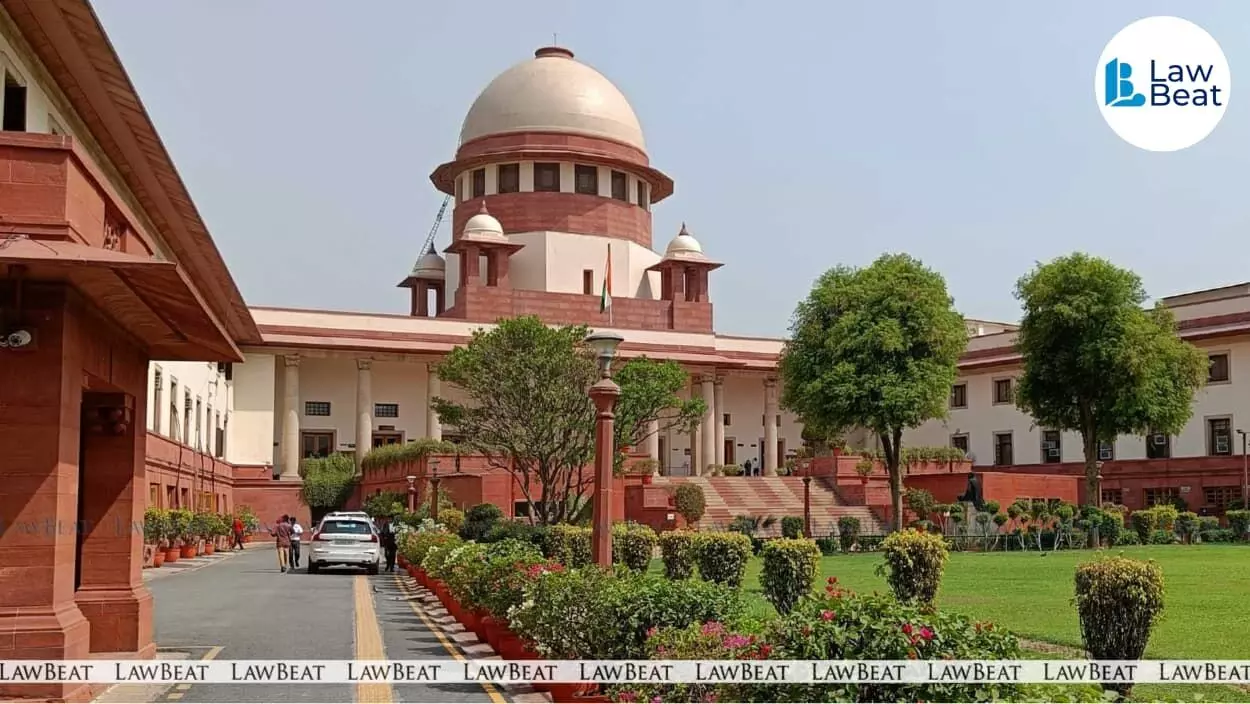
India Supreme Court: Validated Pre-GST Additional Sales Tax, Academic Due to GST
Summary
- The India Supreme Court's seven-judge bench declared a long-standing reference on states' power to levy additional sales tax academic due to the 2017 GST regime.
- Despite this, the Court clarified that additional sales tax or surcharge, calculated as a percentage of sales tax, was an enhancement of the sales tax rate.
- Such levies were affirmed to be within states' legislative competence under the erstwhile Entry 54 of List II of the Seventh Schedule to the Constitution.
- The ruling in S. Kodar v. State of Kerala was reaffirmed as good law, distinguishing it from India Cement Ltd. v. State of Tamil Nadu.
- This clarification is vital for interpreting pre-GST tax liabilities and understanding historical state taxation powers in India.
The Supreme Court's Ruling on State Tax Powers
Crucially, the Court held that such levies fell squarely within the legislative competence of the states under the erstwhile Entry 54 of List II of the Seventh Schedule to the Constitution.
The India Supreme Court, through a seven-judge Constitution Bench, recently addressed a long-standing legal question concerning the power of states to levy an additional sales tax. The bench, comprising Chief Justice of India Surya Kant and Justices K.V. Viswanathan, S.V.N. Bhatti, Joymalya Bagchi, N.V. Anjaria, Arun Palli, and V. Mohana, ultimately deemed the nearly three-decade-old reference academic. This determination was made in light of the 2017 introduction of the Goods and Services Tax (GST) regime, which fundamentally altered the indirect tax landscape in the country. The Court noted that the constitutional provisions and state laws relevant to the disputed levies had since been superseded, rendering the original reference without future practical significance.
Despite declaring the reference academic, the Supreme Court provided an important clarification. It affirmed that any additional tax or surcharge imposed by a state, when calculated as a percentage of the sales tax payable by a dealer, effectively functions as an increase in the sales tax rate itself. Crucially, the Court held that such levies fell squarely within the legislative competence of the states under the erstwhile Entry 54 of List II of the Seventh Schedule to the Constitution. This ruling, while acknowledging the current irrelevance of the specific reference, firmly established the constitutional validity of these types of state-imposed taxes during the pre-GST era.
Historical Context and the Genesis of the Dispute
The legal dispute that led to this significant reference originated from the case of Arjun Flour Mills v. State of Odisha. At its core, this challenge targeted Section 5A of the Odisha Sales Tax Act, 1947. This particular provision mandated an additional tax on dealers, with the rate varying based on their annual turnover. Specifically, dealers with an annual turnover ranging between Rs 10 lakh and Rs 1 crore faced an additional tax of 10%, while those whose turnover exceeded Rs 1 crore were subject to a 15% additional levy.
The central constitutional question posed by this challenge was whether states possessed the authority to impose such an additional levy, calculated as a percentage of the sales tax, under their legislative powers to tax the sale or purchase of goods, as outlined in Entry 54 List II of the Constitution. The alternative argument contended that such a levy amounted to a tax on income, a subject reserved for Parliament's legislative domain under Entry 82 of List I. The perceived conflict among earlier Supreme Court decisions on this matter led to its referral to a larger bench in 1999, setting the stage for the recent seven-judge bench pronouncement.
Reaffirming Legislative Competence and Precedent
In its recent pronouncement, the Supreme Court unequivocally stated that the five-judge Constitution Bench ruling in S. Kodar v. State of Kerala remains good law and continues to be a guiding precedent. This affirmation underscores the consistent judicial view on the scope of states' legislative competence sales tax. Justice K.V. Viswanathan, in a separate but concurring opinion, further reinforced this position, asserting that the S. Kodar decision was correctly rendered and found no conflict between it and the Hoechst Pharmaceuticals case.
The Court also took the opportunity to distinguish its current stance from the earlier seven-judge bench decision in India Cement Ltd. v. State of Tamil Nadu. That case, which had struck down a cess linked to mining royalty, had raised questions about the boundaries of state taxation powers. The Supreme Court clarified that India Cement pertained to a different legislative field and did not establish a general principle that any levy calculated as a percentage of another tax would automatically fall outside the legislative competence of a state. Furthermore, the Court noted that the fundamental premise in India Cement, which considered royalty as a tax, had subsequently been overturned by a nine-judge Bench in Mineral Area Development Authority v. Steel Authority of India, thereby weakening its applicability to the present sales tax dispute. This distinction is crucial for understanding the historical context of pre-GST tax liabilities India.
Lingering Questions and Broader Implications
While the specific reference on states' power to levy additional sales tax is now academic due to the advent of GST, the Supreme Court's reaffirmation that such levies were within states' legislative competence under Entry 54 of List II holds significant weight. This clarification is crucial for interpreting pre-GST tax liabilities India, offering a definitive legal basis for understanding historical tax disputes and the constitutional scope of state taxation powers. The ruling provides clarity for past assessments and challenges related to additional sales tax imposed by states prior to the GST regime.
Despite resolving the primary reference, the Bench deliberately left certain specific issues open for future adjudication. These include questions regarding the validity of a surcharge imposed under the Punjab General Sales Tax Act, 1948, particularly on industrial units that were otherwise exempt from sales tax. Another unresolved matter concerns the transfer of cess proceeds under the Punjab Social Security Act, 2000, directly to the State Social Security Fund without first crediting them to the consolidated fund. These outstanding points indicate that while the broad constitutional question on additional sales tax has been settled, nuanced aspects of state taxation from the pre-GST era may still require judicial review.
Practical Implications
While the specific reference on states' power to levy additional sales tax is now academic due to GST, lawyers should note the Supreme Court's reaffirmation that such levies were within states' legislative competence under Entry 54 of List II. This clarification is crucial for interpreting pre-GST tax liabilities, understanding historical tax disputes, and analyzing the constitutional scope of state taxation powers in India.
Source
How does this affect you?
Get an AI analysis of this article grounded in your jurisdictions, practice areas, and any policy documents you've uploaded to Wansom.
Wansom is AI and can make mistakes.