
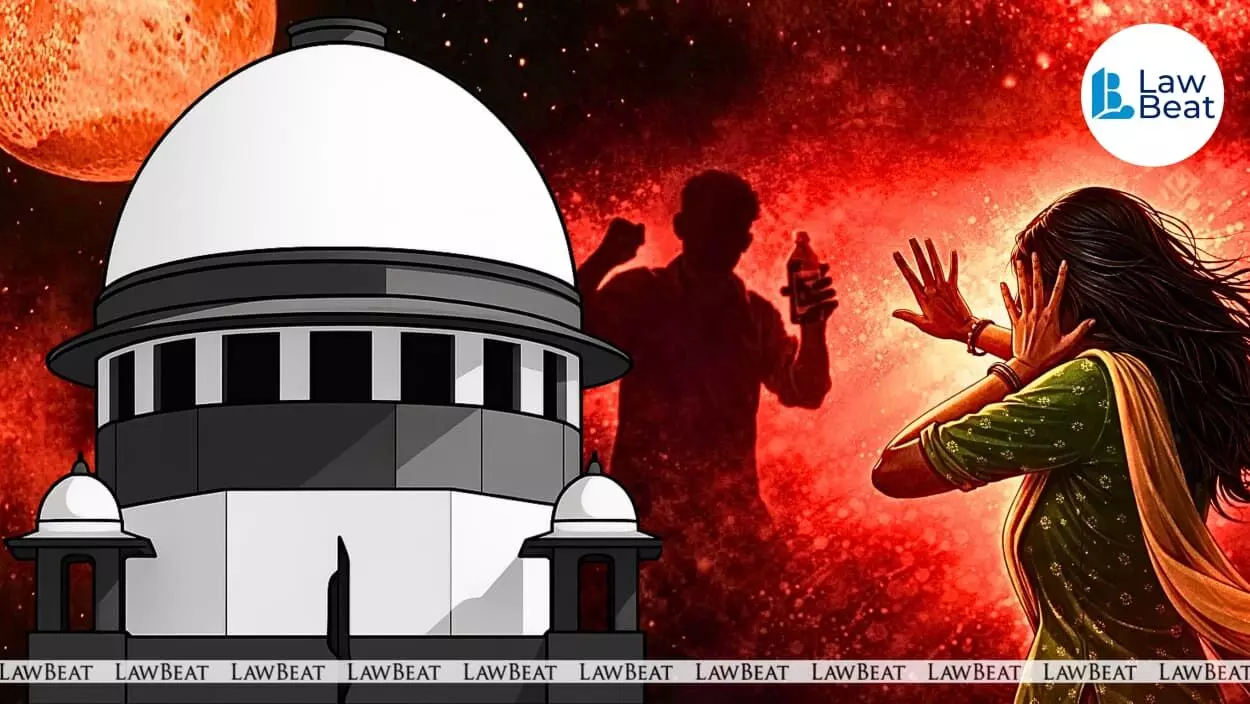
India Supreme Court: Proposes Complete Acid Retail Ban, Medical Exception
Summary
- The India Supreme Court has proposed a complete ban on the retail sale of acid by private individuals, including online and door-delivery platforms, and impressed upon the Union and State Governments to implement it through appropriate legislative or rule-making interventions.
- A CJI Surya Kant-led bench issued the directive following a Public Interest Litigation filed by acid attack survivor Shaheen Malik.
- Acid sales for medical purposes are permitted only through government hospital pharmacies, requiring prior approval from a Chief Medical Officer or Civil Surgeon.
- Permitted medical sales necessitate a prescribed form detailing buyer identification, purpose, quantity, and include provisions for vicarious liability and asset attachment for misuse.
- The court also directed the Union government to consider forming an Expert Committee to develop educational materials on acid attack prevention and survivor rights for school and college curricula.
Landmark Ruling on Acid Sales
The Supreme Court of India has issued a comprehensive directive proposing a complete ban on the retail sale of acid across the country and impressing upon the Union and State Governments to implement it through appropriate legislative or rule-making interventions.
The Supreme Court of India has issued a comprehensive directive proposing a complete ban on the retail sale of acid across the country and impressing upon the Union and State Governments to implement it through appropriate legislative or rule-making interventions. This significant ruling, delivered by a bench led by Chief Justice of India Surya Kant, specifically prohibits private individuals from selling acid, including through online platforms or door-delivery services. The decision aims to curb the rampant misuse of corrosive substances that has led to numerous acid attacks.
While proposing a broad prohibition, the court carved out a narrow exception for medical purposes. Under the new regulations, acid may only be sold for medical use through pharmacies or medical stores directly affiliated with government hospitals. Such sales are contingent upon obtaining prior written approval from either the Chief Medical Officer or the Civil Surgeon, depending on the specific jurisdiction. This stringent control reflects the court's intent to tightly regulate acid sale regulation India.
Furthermore, each permitted medical sale must be documented on a prescribed form. This form requires detailed particulars of the buyer, including their Aadhaar number or another government-issued photo identity, the precise quantity of acid purchased, and the stated purpose for its acquisition. Buyers must also provide their address and contact details to facilitate easy identification. A crucial element of this process is a mandatory declaration by the buyer, affirming that the acid will be used exclusively for the stated purpose. The order, issued on November 23rd, explicitly states that buyers will be held legally accountable for any diversion or misuse of the purchased acid. This accountability extends to vicarious liability, meaning the buyer can be held responsible for misuse by any other person, regardless of whether they had knowledge of the act. The form may also require details of the buyer's immovable property, which could be attached to provide treatment or compensation to victims in the event of misuse.
The Catalyst for Change
This pivotal judgment stems from a Public Interest Litigation (PIL) initiated by Shaheen Malik, an acid attack survivor whose personal ordeal has brought the issue to the forefront of judicial scrutiny. The Supreme Court had previously urged the Union government to consider establishing a framework for strict regulation of acid sales in the market, signaling its growing concern over the matter. The court had also impressed upon both the Union and State Governments the necessity of implementing appropriate legislative or rule-making interventions to create a comprehensive system for regulating acid sales and preventing their misuse.
In August, the Supreme Court had specifically sought a response from the central government regarding the feasibility and desirability of imposing a complete ban on the retail sale of acid. The court's resolve was significantly strengthened by a powerful and emotional submission from an acid attack survivor, who articulated the profound despair and constant fear experienced by victims. This testimony underscored the devastating impact on lives, highlighting cases where victims lost their sight and educational opportunities, and expressed frustration over perceived governmental inaction.
The court has consistently taken a stern view of the increasing number of acid crimes, particularly those involving forced ingestion. Earlier in January, the judiciary had contemplated the novel approach of selling the assets of individuals accused of acid attacks to provide compensation to victims, emphasizing the critical need for more effective financial rehabilitation for survivors. In a direct response to Shaheen Malik's revelation that all accused in her case had been acquitted by a lower court, Chief Justice Kant personally assured her that the court would ensure she received the best legal representation for her High Court proceedings. Furthermore, the court had previously directed the Jammu and Kashmir High Court to expedite five pending trials related to acid attacks, and Malik herself highlighted a particularly brutal case involving a 28-year-old woman who was allegedly forced to drink acid, resulting in severe health deterioration.
Broader Societal Impact and Education
Beyond the immediate retail acid sale restrictions India, the Supreme Court's directive extends to a proactive approach aimed at preventing future incidents and supporting survivors. The court has instructed the Union of India, specifically through the Ministry of Education and the Ministry of Health and Family Welfare, to explore the establishment of an Expert Committee. This committee would be tasked with developing crucial educational materials.
The proposed Expert Committee is envisioned to collaborate with a wide array of stakeholders, including the National Council of Educational Research and Training (NCERT), the University Grants Commission (UGC), the National Medical Commission, the National Legal Services Authority (NALSA), the National Commission for Women, various State authorities, burn-care specialists, and organizations led by survivors. Their collective expertise would be leveraged to create a model module of educational content. This module would cover vital topics such as acid attack prevention, effective emergency response protocols, and the fundamental rights of survivors, with the ultimate goal of integrating this material into school and college curricula nationwide. This forward-looking measure underscores the court's commitment not only to regulating the availability of harmful substances but also to fostering a more informed and empathetic society capable of preventing such atrocities and supporting those affected.
Practical Implications
Lawyers advising businesses involved in chemical sales, particularly those selling acid retail or via online platforms, must immediately assess the impact of this Supreme Court directive, which mandates a complete ban on such sales. Compliance officers in healthcare settings must prepare for new stringent approval processes and record-keeping requirements for any permitted medical-purpose acid sales, including buyer identification and vicarious liability provisions.
Source
How does this affect you?
Get an AI analysis of this article grounded in your jurisdictions, practice areas, and any policy documents you've uploaded to Wansom.
Finish Reading the Full Story and the Expert Analysis.
Get the latest legal & regulatory intelligence in India
Wansom is AI and can make mistakes.