
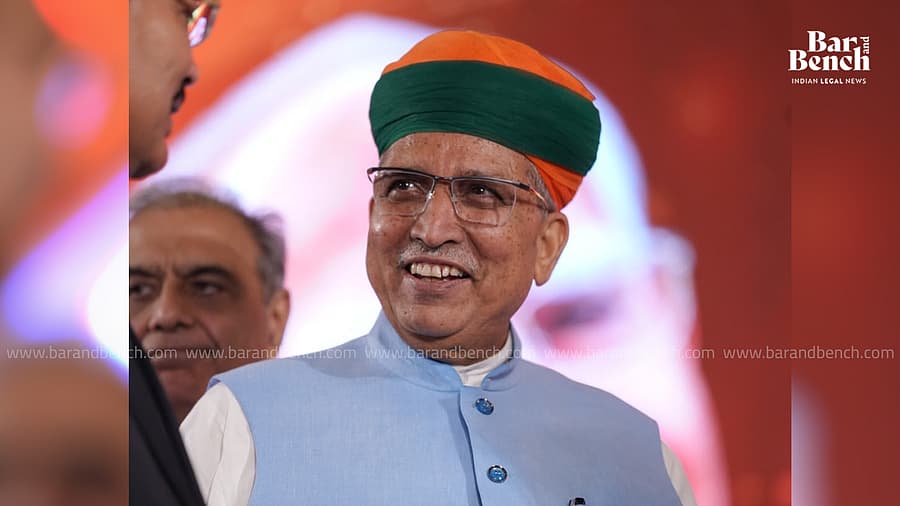
India: Evening Courts Pilot in Delhi, Bihar, Andhra to Tackle Pendency
Summary
- The Union government will launch a pilot program of "evening courts" in Delhi, Bihar, and Andhra Pradesh to address case pendency.
- Union Minister Arjun Ram Meghwal announced that existing courts will extend their sittings into the evening to clear pending matters.
- Retired judges will be engaged to preside over these evening sessions.
- The initiative is set to begin shortly, in collaboration with the respective High Courts.
- The government also plans to assess the pilot's performance before considering expansion to other states and union territories, alongside promoting Lok Adalats and ADR.
New Initiative to Tackle Case Backlog
The Union government has unveiled plans to introduce a pilot program of "evening courts" across three key regions: Delhi, Bihar, and Andhra Pradesh.
The Union government has unveiled plans to introduce a pilot program of "evening courts" across three key regions: Delhi, Bihar, and Andhra Pradesh. This strategic move aims to directly address the persistent challenge of case pendency within the Indian judicial system. The initiative was publicly disclosed by Union Minister of State for Law and Justice (Independent Charge), Arjun Ram Meghwal, during an interview with The New Indian Express, where he detailed the government's comprehensive approach to accelerating case resolution.
This initial phase will see existing judicial facilities extend their operational hours into the evening. These additional sittings are specifically designated for hearing and clearing the backlog of pending legal matters, thereby creating new capacity without requiring entirely new infrastructure. The minister emphasized that this pilot project represents a focused effort to enhance the efficiency of the judicial process in these selected states.
Operational Framework and Judicial Staffing
Under the proposed framework, courts that typically conclude their proceedings during standard daytime hours will continue to function for several additional hours each evening. This extension is exclusively dedicated to processing and resolving cases that have accumulated over time. A crucial aspect of this operational model involves the engagement of retired judges, who will be specifically tasked with presiding over these newly established evening sessions. This approach leverages the experience of seasoned legal professionals to manage the increased workload.
The implementation of these evening courts is slated to commence in the near future, following collaborative efforts with the respective High Courts in Delhi, Bihar, and Andhra Pradesh. This partnership is vital for integrating the new sessions smoothly into the existing judicial administration and ensuring their effective functioning. The government's intention is to create a streamlined process that can significantly contribute to reducing the overall burden on the court system.
Broader Strategy and Future Expansion
Following a thorough evaluation of the pilot program's performance in Delhi, Bihar, and Andhra Pradesh, the Central government intends to consider expanding the evening court model to additional States and Union Territories across the nation. This phased approach allows for an assessment of efficacy and necessary adjustments before a wider rollout. The success of this initial phase will therefore be critical in determining the future scope of the initiative.
Beyond the introduction of these specialized evening courts, Union Minister Meghwal underscored the government's ongoing commitment to utilizing alternative mechanisms to alleviate the institutional pressures on the judiciary. This broader strategy includes a heightened focus on resolving disputes through established Alternative Dispute Resolution (ADR) frameworks and the continued promotion of Lok Adalats. These complementary approaches collectively aim to enhance access to justice and expedite the resolution of legal disputes throughout India.
Practical Implications
Lawyers practicing in Delhi, Bihar, and Andhra Pradesh should monitor the implementation of these pilot evening courts, as they may offer new avenues for expediting case resolution and impact litigation timelines. The use of retired judges and extended hours could alter court availability and scheduling, requiring adjustments to case management strategies. This initiative also reinforces the government's broader focus on alternative dispute resolution mechanisms.
Source
How does this affect you?
Get an AI analysis of this article grounded in your jurisdictions, practice areas, and any policy documents you've uploaded to Wansom.
Finish Reading the Full Story and the Expert Analysis.
Get the latest legal & regulatory intelligence in India
Wansom is AI and can make mistakes.