
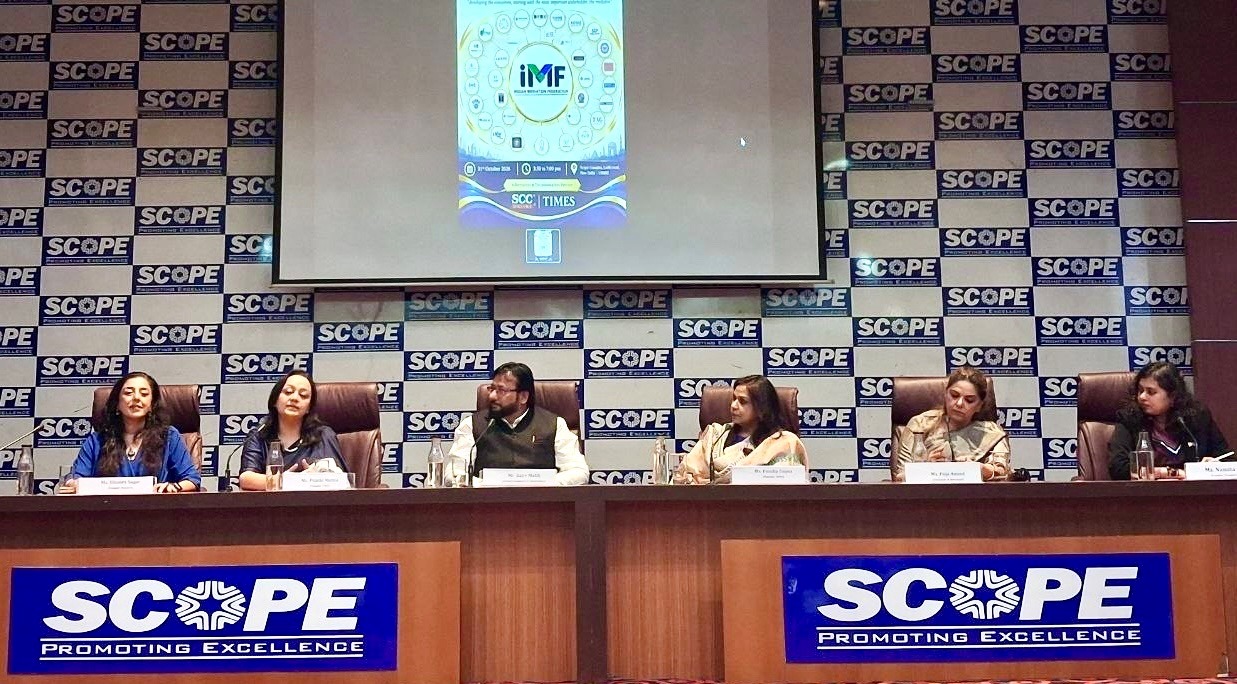
IMF Event Explores AI Co-Mediator Role in India's Future Mediation
Summary
- Experts at the International Monetary Fund's 'An Evening with Mediators' discussed the future of dispute resolution in India.
- A key topic was the potential for artificial intelligence to serve as an AI co-mediator in dispute resolution processes.
- Discussions also covered the necessity for institutional reforms and the professionalisation of mediators in India.
- The event emphasized the importance of building a trusted mediation ecosystem within the country.
A Forward Look at Indian Mediation
The integration of AI in mediation, particularly as an AI co-mediator, presents both opportunities and challenges.
The International Monetary Fund (IMF) recently hosted a significant event titled 'An Evening with Mediators', which brought together experts to deliberate on the evolving landscape of dispute resolution in India. This gathering served as a crucial platform for exploring various facets shaping the future of mediation within the nation. Discussions at the event spanned critical areas including the necessity for institutional reforms, the potential integration of artificial intelligence, and the ongoing drive towards the professionalisation of mediators.
A central theme throughout the evening was the imperative to cultivate a robust and trusted mediation ecosystem across India. Experts emphasized that achieving this goal requires a multi-pronged approach, addressing not only technological advancements but also foundational structural changes and the enhancement of human expertise. The dialogue underscored a collective vision for a more efficient, accessible, and credible mediation framework.
Exploring AI's Role in Dispute Resolution
A particularly salient point of discussion at the IMF's 'An Evening with Mediators' revolved around the provocative question: "Can AI be a co-mediator?" This inquiry delved into the potential for artificial intelligence to play an active, supportive role alongside human mediators in resolving disputes. The conversation highlighted the transformative possibilities that AI could introduce to the field of dispute resolution in India, from streamlining administrative tasks to providing data-driven insights.
The integration of AI in mediation, particularly as an AI co-mediator, presents both opportunities and challenges. While AI could enhance efficiency and potentially offer unbiased analysis of complex information, experts also considered the ethical implications and the irreplaceable human elements of empathy, nuance, and trust-building inherent in the mediation process. This forward-looking discussion at the IMF event signals a growing interest in leveraging technology to augment traditional mediation practices, impacting the future of mediation India AI.
Reforms and Professional Standards
Beyond technological considerations, the experts at the IMF's 'An Evening with Mediators' also focused on the broader need for comprehensive Indian mediation reforms. These reforms are seen as essential to underpin any technological advancements and to ensure the long-term viability and credibility of mediation as a primary method of dispute resolution. The discussions touched upon the legal and regulatory frameworks that would be necessary to support an evolving mediation landscape, including the ethical guidelines for incorporating tools like an AI co-mediator.
A significant emphasis was placed on the professionalisation of mediators in India. This involves establishing clearer standards for training, certification, and ongoing professional development to ensure that mediators possess the requisite skills and ethical grounding. Such professionalisation is critical for building public confidence and ensuring that mediation services, whether human-led or AI-assisted, maintain high levels of quality and integrity. The future of mediation in India, especially with the advent of AI, hinges on these foundational improvements.
Cultivating a Trusted Ecosystem
Ultimately, the diverse discussions at the IMF's 'An Evening with Mediators' converged on the overarching goal of fostering a deeply trusted mediation ecosystem in India. This encompasses not only the effective resolution of disputes but also ensuring that all stakeholders perceive the process as fair, impartial, and reliable. The introduction of new technologies, such as an AI co-mediator, must be carefully managed to enhance, rather than diminish, this fundamental trust.
The insights shared by experts underscore that the path forward for dispute resolution in India involves a careful balance between embracing innovation and upholding core principles. As the nation considers the implications of artificial intelligence dispute resolution India, the focus remains on creating an environment where mediation is not just an alternative, but a preferred and respected mechanism for resolving conflicts, supported by both human expertise and intelligent tools.
Practical Implications
Lawyers and compliance officers in India should monitor the discussions and developments around AI integration in mediation, as it may soon impact dispute resolution processes, client advisory on ADR strategies, and the ethical considerations of using AI as a co-mediator.
Source
Source: Original reporting via SCC Times
How does this affect you?
Get an AI analysis of this article grounded in your jurisdictions, practice areas, and any policy documents you've uploaded to Wansom.
Wansom is AI and can make mistakes.