
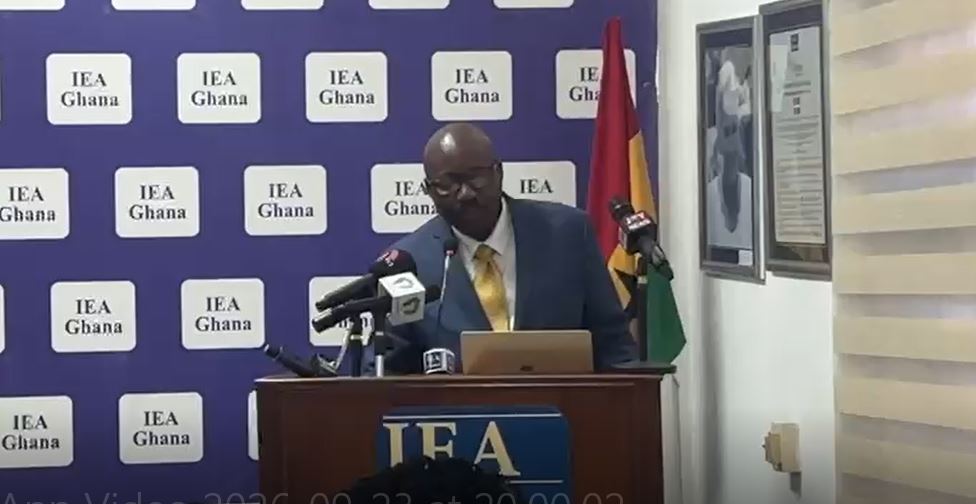
IEA Ghana: Constitution Amendment Warning Issued Amidst Review
Summary
- The Institute of Economic Affairs (IEA) has cautioned against amending Ghana's Constitution merely because a certain number of years have passed.
- The IEA advocates for continuous assessment of the Constitution's functioning rather than fixed-interval amendments.
- This warning comes amid ongoing national discussions and proposals to review Ghana's 1992 Constitution and address governance gaps.
- An IEA representative stated that constitutional maintenance should be continuous, even if amendments are occasional.
- The Institute emphasizes focusing on the Constitution's effective operation as the primary basis for any changes.
IEA Issues Constitutional Amendment Warning
An IEA representative articulated this nuanced position, stating that while the operational effectiveness of the Constitution should be under constant scrutiny, this does not imply that changes must be enacted simply because a certain number of years have passed.
The Institute of Economic Affairs (IEA) has issued a significant caution regarding the ongoing `Ghana constitutional reform debate`, specifically advising against amending the nation's foundational legal document solely due to the passage of time. This `IEA Ghana constitution amendment warning` comes amidst broader discussions concerning the review of the 1992 Constitution, with various proposals circulating to address perceived shortcomings in the country's governance framework.
The Institute acknowledges that valid arguments exist on both sides of the constitutional review discussion. However, its core message emphasizes the necessity of a continuous and thorough evaluation of how the Constitution is currently operating. This proactive assessment, according to the IEA, should be the primary driver for any potential changes, rather than an arbitrary timeline. The organization firmly believes that the focus must remain on ensuring the Constitution's continued effective functioning, rather than treating elapsed years as an automatic trigger for amendments.
Context of Ghana's 1992 Constitution Review
The IEA's intervention is particularly timely, as Ghana is actively engaged in a process to review its 1992 Constitution. This comprehensive `Ghana 1992 Constitution review` aims to identify and rectify gaps within the existing governance structure, reflecting a national desire to refine the legal and administrative foundations of the state. The discussions encompass a wide range of potential reforms, all intended to enhance the efficiency and responsiveness of Ghana's institutional framework.
However, the `Institute of Economic Affairs Ghana` stresses that while such continuous examination of the Constitution's performance is vital, it does not inherently necessitate amendments at predetermined intervals. An IEA representative articulated this nuanced position, stating that while the operational effectiveness of the Constitution should be under constant scrutiny, this does not imply that changes must be enacted simply because a certain number of years have passed. The emphasis is on functional necessity rather than chronological milestones.
Implications for Constitutional Maintenance
The IEA's stance underscores a critical principle for `Ghana constitutional maintenance`: that oversight should be perpetual, even if formal amendments are infrequent. This perspective suggests a shift from a periodic overhaul mentality to one of ongoing vigilance and targeted adjustment. For legal professionals and compliance officers in Ghana, this approach implies that future constitutional reforms are likely to be driven by demonstrable functional requirements rather than a general sense that the document is 'old.'
This `IEA Ghana constitution amendment warning` highlights the importance of a stable and predictable legal environment. The call for continuous assessment, rather than fixed-interval amendments, suggests a more deliberate and evidence-based approach to constitutional evolution. Lawyers and compliance officers should therefore closely monitor the evolving debate, as the IEA's caution indicates that any significant changes will likely emerge from a rigorous analysis of the Constitution's practical application, impacting the long-term stability and interpretation of Ghana's legal framework.
Practical Implications
Lawyers and compliance officers in Ghana should closely monitor the ongoing debate surrounding the 1992 Constitution's review, as the IEA's caution against arbitrary amendments suggests that any future reforms will likely be driven by functional necessity rather than mere passage of time, impacting the stability and predictability of the legal framework.
Source
How does this affect you?
Get an AI analysis of this article grounded in your jurisdictions, practice areas, and any policy documents you've uploaded to Wansom.
Finish Reading the Full Story and the Expert Analysis.
Get the latest legal & regulatory intelligence in Ghana
Wansom is AI and can make mistakes.