
ICC: Sudanese Refugees Call for Faster Justice in Sudan Cases
In eastern Chad, Sudanese refugees have urged the International Criminal Court (ICC) to accelerate its proceedings and arrest those accused of crimes in Sudan, expressing profound frustration over the perceived slowness of justice and the court's failure to apprehend suspects, which they believe encourages further violations. This plea was made during a visit by an ICC delegation to the Gaga camp, where refugees highlighted that only one defendant has been tried after surrendering, while others remain at large, despite ongoing investigations into grave crimes. The refugees' sentiments underscore the deep impact of delayed justice on victim communities and their perception of international accountability mechanisms.
This development carries significant legal implications for practitioners in international criminal law, human rights, and humanitarian law, as it highlights the persistent challenges faced by the International Criminal Court in fulfilling its mandate. The ICC, lacking its own enforcement arm, is critically dependent on the cooperation of states for the arrest and surrender of suspects, a reliance that often leads to protracted delays and victim dissatisfaction. The refugees' assertion that slow proceedings encourage further atrocities underscores the preventative and deterrent functions of international justice, which are undermined when accountability is not swift and decisive. This situation also brings into sharp focus the political complexities inherent in international prosecutions, particularly when dealing with non-state actors or uncooperative governments.
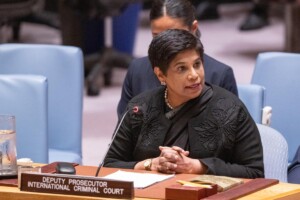
The legal context for this situation is primarily the Rome Statute of the International Criminal Court, which grants the ICC jurisdiction over genocide, crimes against humanity, and war crimes committed in Sudan. The ICC operates on the principle of complementarity, intervening when national jurisdictions are unwilling or unable to prosecute. The excerpt references ICC Deputy Prosecutor Nuzhat Shameem Khan's report to the United Nations Security Council, which is the body responsible for maintaining international peace and security and can exert political pressure or impose sanctions to facilitate cooperation with the ICC. The ongoing investigations into crimes in El Geneina, El Fasher, and surrounding areas, and the call for the Sudanese government to hand over three wanted suspects, are central to the court's current efforts in the region. The lack of cooperation from the Rapid Support Forces (RSF) further complicates the enforcement of justice.
Key parties involved in this complex scenario include the Sudanese refugees in eastern Chad, who are the primary victims and advocates for justice; the International Criminal Court, represented by its delegation and Deputy Prosecutor Nuzhat Shameem Khan, which is tasked with investigating and prosecuting international crimes; the Sudanese government, which has an obligation to cooperate with the ICC under UN Security Council resolutions; and the Rapid Support Forces (RSF), whose alleged non-cooperation is hindering investigations. The United Nations Security Council also plays a crucial role as the body to which the ICC Prosecutor reports and which can influence state cooperation.
Practitioners should closely monitor the ICC's ongoing investigations in Sudan, particularly any progress in securing the arrest and surrender of suspects, and the outcomes of reports to the UN Security Council. Attorneys advising states or international organizations should be aware of the obligations under the Rome Statute regarding cooperation with the ICC and the potential diplomatic and political ramifications of non-compliance. For human rights advocates and refugee lawyers, this situation underscores the critical need to continue advocating for victim participation, protection, and timely justice, while also highlighting the systemic limitations of international criminal justice when state cooperation is lacking. The call for international action to prevent further crimes also presents an opportunity for policy advocacy and engagement with international bodies.
How does this affect you?
Get an AI analysis of this article grounded in your jurisdictions, practice areas, and any policy documents you've uploaded to Wansom.
Finish Reading the Full Story and the Expert Analysis.
Get the latest legal & regulatory intelligence in Sudan
Wansom is AI and can make mistakes.